Part 2
Springer is a stage show now. Maury retired. Cops has been bounced around and pulled and revived. Cheaters is the last one of that entire ecosystem still operating in its original, totally unapologetic form.
That's not a defense of the ethics. It's an observation about form. And it's why the kayak episode deserves better than a laugh and a scroll.
The 'No Craft' Claim Collapses Against This Episode's Three-Act Structure
The laziest version of the anti-Cheaters argument is that there's no form here. It's just a camera and a scream. Watch one full episode and that argument dies in about four minutes.
This episode has three acts, and they're deliberate.
Act one is the surveillance log, narrated day by day like a field report. "Investigation day two." "Investigation day five." "Investigation day six." The audience is never shown the affair. We're shown the tracking of the affair — a car leaving a job, a change of clothes, a driveway, a value meal.
Act two is the handover. Investigators return to headquarters with the documentation and put in a call to Rita. The evidence becomes a case file. The case file becomes a conversation at a table.
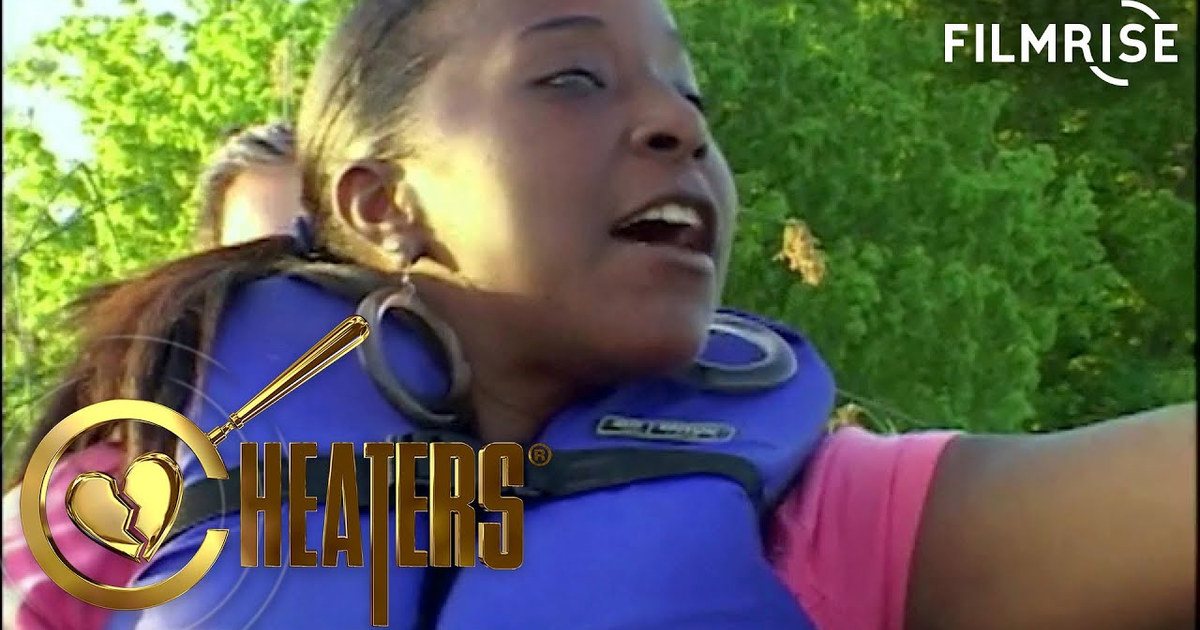
Act three is the confrontation itself. Which is the kayak.
Setup, escalation, payoff. That is a structure. Somebody sat in an edit bay and built it, and they built it knowing exactly which detail would land and which would not.
The detective-agency framing isn't just branding either. It's a formal choice, and it's the smartest thing the show ever did.
Listen to the language. "Exercise your right to be informed." "Investigative charges may apply." The parental advisory card up front, warning that the program may contain adult themes and strong language. Legal vocabulary wrapped around the messiest possible human behavior.
That's the same trick Errol Morris pulled in The Thin Blue Line in 1988 — fuzzy reenactments plus dry procedural language, and suddenly a story about a murder becomes a story about how institutions construct truth. Cheaters is doing a bargain-bin version of that, and it is doing it on purpose.
Turning a private life into paperwork isn't a shortcut. It's a point of view.
The Show Actually Watches People, and That's Documentary Work
Here's the detail that convinced me. Forget the shouting for a second and look at what the camera bothers to record.
A grocery list, held in a hand, in an aisle. Value meals at a restaurant. A 12-pack from a beer store. A small cooler carried out of an apartment. A man changing his clothes at home before going anywhere.
None of that is a talking point. Nobody scripted "he bought a 12-pack." These are observed behaviors, and observing behavior is the whole job — it's what Salesman does when it just watches a man wipe his shoes before a house call.
Now put Rita's line next to it. "I was his Bonnie, and he was my Clyde." That isn't a producer's sentence. That's a woman reaching for the biggest, most romantic reference she's got, and using it to describe something small and sad. It's the kind of line a fiction writer would be proud to write, and it arrived for free because the camera was running.
Same with her telling the cameras that he comes over and immediately takes a shower, that he doesn't want to be touched. She has a theory for it — that men act different when they cheat — and she's building her case out loud, on camera, in real time.
That is documentary behavior. It's doing documentary work whether the show admits it or not.
Fine, But It's Just a Meme. No — the Meme Needs the Bureaucracy.
Okay, pre-empting the obvious objection: nobody remembers the surveillance log. Nobody remembers the value meals. The clip that travels is the boat.
[[AD]]
True. But here's why the boat clip lands.
It lands because of the tail. Because we spent an entire act watching a man get followed from a job to a driveway to a grocery store to a beer store, and because we watched a pregnant woman in an interview chair say "I love George a lot, I can't lie about that." The kayak isn't funny in a vacuum. It's funny because the show front-loaded twenty minutes of paperwork first.
That's how clip culture works, and Cheaters is not special for being a victim of it.
Jersey Shore ran on MTV from 2009 and is remembered almost entirely by its worst arguments. The Real World started on MTV in 1992 and has the same problem — the fights are canon, the episodes are not. Nobody quotes the good parts. They quote the fights.
Then people conclude the fights were all there was. That conclusion is a failure of memory, not a fact about the show.
Trash Is a Genre, Not a Verdict
So let's talk about the word itself, because it's doing all the heavy lifting.
Trash is not a criticism. Trash is a genre, and critics have been defending it for decades when they like the taste of it.
John Waters built Pink Flamingos in 1972 out of exactly the material people sneer at here, and the same people who sneer at Cheaters will happily hang a poster of it. Tabloid photography — Weegee, the National Enquirer, the entire mid-century New York crime-beat economy of it — gets museum shows.


