Part 1
The Consensus Says 'Cheaters' Is Cheap Trash. I Think the Consensus Is Wrong.
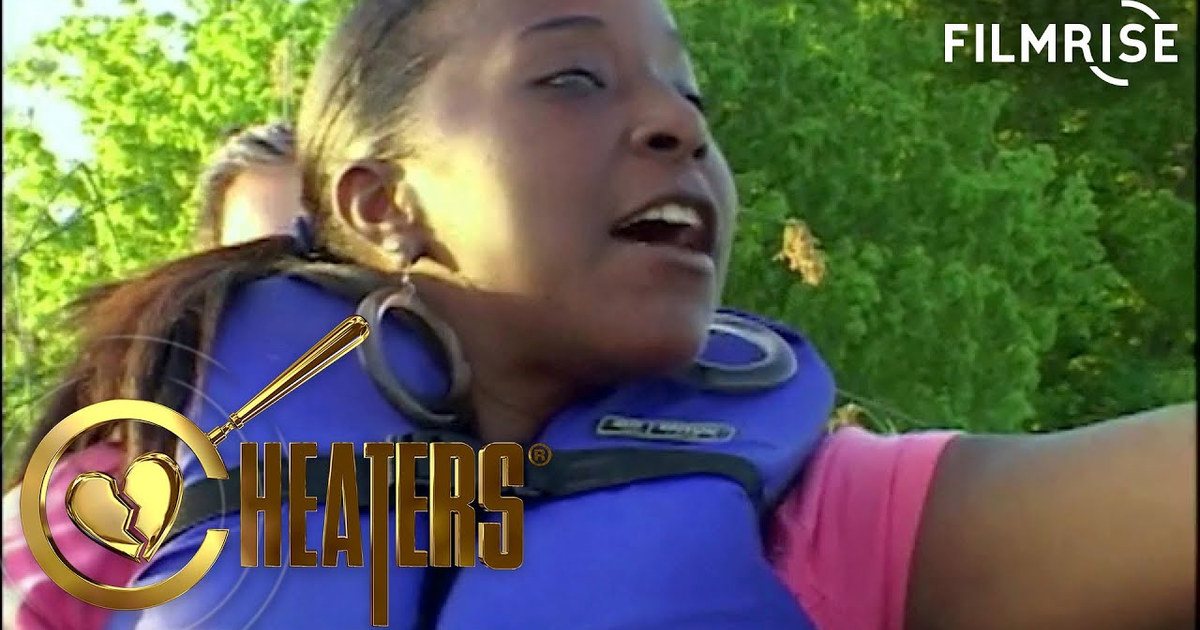
It's Memorial Day weekend at White Rock Lake in Dallas, and there are four people in this story. Two of them are in a kayak.
The kayak is a rental from the White Rock Paddle Company. The man paddling is George — 30 years old, a supervisor, described by the show's narrator as being "accused of packaging himself as an available man." The woman next to him is Corinne Matthews. They stopped for a 12-pack on the way.
Standing on the shore is Rita Stout. She is pregnant, near her due date, and she is George's fiancée. She is the mother of his unborn child. She is also the woman who told a national television audience, "I was his Bonnie, and he was my Clyde."
And then there's the fourth person: Joey Greco, host of Cheaters, on a phone, mid-stakeout, asking a producer a question about the pregnant woman on the shore.
"Does she need to sit in the middle?"
That's the line. That's the one that has been bouncing around the internet for two decades.
Not "does she know." Not "is she going to swing." Seating. Capacity planning. A grown man in a rented kayak on a holiday weekend, calmly working out where the betrayed girlfriend should physically park herself before the cameras start rolling.
It's funny. It's also a production solving a genuine logistical problem in real time, on camera, with no second take.
And that is the exact moment the internet made its ruling on this show.
The ruling was: trash.
I think the ruling is wrong. Not wrong because the show is classy — it isn't. Wrong because "trash" has been used as a substitute for actually watching, and the guy in the kayak is doing something with a camera that a lot of prestige television can't pull off.
Let Me State the Other Side Better Than It Usually Gets Stated
Cheaters is low-rent syndicated television. It's a guilty pleasure at best, an exploitation machine at worst.
It pays the bills by paying strangers to have their worst afternoon in front of a crew. The narrator reads lines about "the pain of a spouse or lover caused by infidelity" in the tone of a nature documentary narrating a lion taking down a gazelle.
And the White Rock Lake thing? It's a meme. It's a GIF. It's the video your group chat sends at 1 a.m. Nobody watches it for craft. They watch it because a woman gets onto a boat she should not get onto.
That's the consensus, and I want to be clear: the people who hold it are not stupid, and they are not wrong about the ethics. The format genuinely monetizes humiliation. Real people with real families get filmed at their worst, and a production company in Dallas cashes the check. Nobody should pretend otherwise.
So this is not me telling you it's secretly a masterpiece. This is me telling you the second half of the sentence is missing.
The subject matter of Cheaters may be cheap. The television is not.
Cheaters Is a Direct Descendant of American Direct Cinema
Here's the lineage nobody wants to claim, so I will.
In 1969 the Maysles brothers released Salesman, an 85-minute documentary about Bible salesmen knocking on doors in Florida and Massachusetts. It has no narrator explaining the stakes. It just follows men doing a job, and the job is quietly monstrous.
Six years later, Albert and David Maysles gave us Grey Gardens (1975), 94 minutes inside a crumbling East Hampton mansion with Edith Beale and her daughter, two women performing their own lives for a camera that refuses to look away.
Meanwhile Frederick Wiseman was building institutional documentaries out of nothing but observation — Titicut Follies in 1967, High School in 1968 — where the camera simply plants itself inside a system and lets the system incriminate itself.
And then there's An American Family, which PBS aired in 1973. Twelve episodes. The Loud family of Santa Barbara, filmed through a divorce. The first time a real family's breakup was broadcast as a series.
Everything about that tradition — long lenses, no score telling you how to feel, ordinary people performing for a camera they can see — is sitting right there in a rented kayak on White Rock Lake.
The consensus wants Cheaters to be a tabloid. Fine. But the Maysles were accused of tabloidism too. So was Wiseman. So were the Louds, who got asked for decades whether they had destroyed their own family on purpose.
It's Also the Last Honest Survivor of a Broadcast Ecosystem
The TV side matters just as much.
Cops hit Fox in 1989. America's Most Wanted hit Fox in 1988. Both took the documentary camera and handed it to law enforcement as a co-author. Both turned procedure into entertainment, and both were massive hits.
On the daytime side, The Jerry Springer Show launched in 1991, Maury in 1991, and Ricki Lake in 1993. That whole block ran on the same engine: put a real person in a chair, tell them what someone did, and let the room react.
Cheaters premiered in syndication in 2000, out of Bobby Goldstein's Dallas-based Cheaters Detective Agency. An actual detective business spun off a television show, or a television show spun off an actual detective business — the order barely matters. Joey Greco hosted for most of the run, and he became the face of the whole enterprise.


