Part 3
This technique isn't new. True-crime docs like 'The Jinx' (2015) use similar sound design to build tension. But 'Cheaters' pioneered it in reality TV. The show's editors understood that juxtaposing calm visuals with damning audio creates a cognitive dissonance that hooks viewers. It's a trick borrowed from cinema—think of the baptism scene in 'The Godfather' (1972), where the serene organ music contrasts with the violent murders. Here, the railroad tracks are the church, and Tiara's phone call is the hit.
The editing rhythm is deliberate: long, slow takes of surveillance build tension, then quick cuts to the phone call audio create dissonance. It's a push-pull that mirrors the emotional arc of the episode. We start with suspicion, move to anger, and end with catharsis. The editors are puppet masters, pulling our strings with every cut.
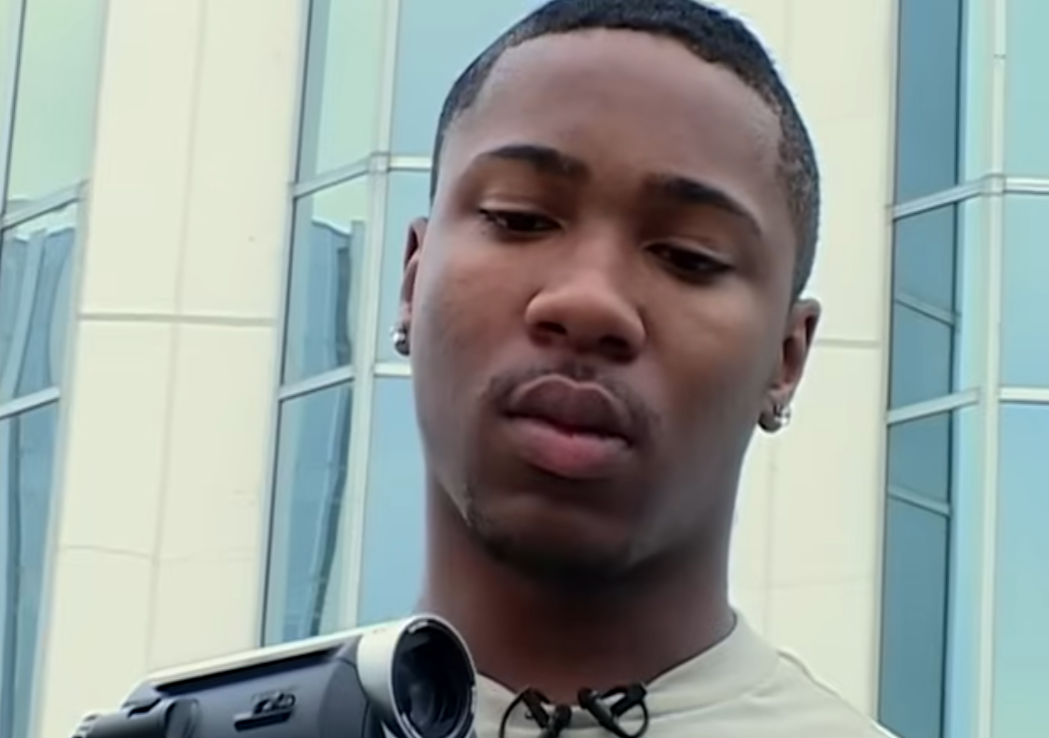
The episode follows a classic three-act structure: Act 1 (setup and investigation), Act 2 (surveillance and evidence gathering), Act 3 (confrontation). But the editing blurs the lines by intercutting past and present, surveillance and interview. At 07:19, Joey Greco meets with J'Zon to review findings. The editing cuts between the camcorder playback and J'Zon's reactions. It's a meta-narrative—we're watching J'Zon watch the evidence. His face crumples, his jaw tightens. The editors could have just shown the footage, but by cutting to his reactions, they make us complicit in his pain. It's a technique straight out of 'Survivor' (2000–present), where contestant reactions are intercut with challenge footage to heighten drama. But 'Cheaters' lacks the game element; it's purely emotional revelation.
The intro montage (00:45–01:19) sets the tone: fast-paced, chaotic, with dramatic music. It's a highlight reel of past confrontations—screaming, fighting, a woman in a wedding dress hitting someone. This montage style influenced shows like 'Unsolved Mysteries' (1987–2010) and even 'Cheaters' spin-offs. It's a promise: you're about to see something wild. And at 07:06, we get a preview of the confrontation, teasing the climax. The editing here isn't just storytelling; it's building anticipation and delivering catharsis.
Compare this to the editing in 'Big Brother' (2000–present), where the game mechanics drive the narrative. In 'Cheaters', there's no game—just raw emotion. The editors use every tool: jump cuts, split screens, slow motion. They stretch time when it suits them, compress it when they need to. It's a masterclass in manipulation, and it's why the show remains a guilty pleasure.
The editing rhythm is the unsung hero of 'Cheaters'. It transforms raw footage into a compelling, if ethically questionable, narrative. Without it, the show would just be a series of sad, sordid encounters. With it, it's a symphony of suspicion and schadenfreude.
The Host as Anchor: Joey Greco and the Performance of Objectivity
At timestamp 01:27, Joey Greco stands in front of a blue digital background, the flat, even lighting with a slight blue gel matching the backdrop—a classic studio setup that screams control. It’s the visual equivalent of a news anchor’s desk, and Greco delivers his lines with a calm, measured cadence that feels almost clinical. He’s not just introducing the case; he’s setting the tone. In a show built on chaos, Greco is the eye of the storm.
Greco’s role goes beyond mere presentation. He’s a character in the drama, appearing at key moments to provide exposition and facilitate confrontations. His presence adds a layer of legitimacy, like a detective briefing in a procedural. Compare him to Jeff Probst on Survivor or Chris Harrison on The Bachelor, but Greco’s background as an actor—he appeared on The Young and the Restless—informs his performance. He’s playing a role, but it’s a role that requires him to seem genuine. And he nails it.
The genius of Greco’s hosting is how he anchors the narrative while letting the raw emotion of the participants take center stage. He’s the narrator, the guide, the moral compass. When he speaks, you listen. It’s a performance of objectivity, but it’s a performance nonetheless—one that shapes the entire show.
Nowhere is this more evident than in his interactions with J’Zon. At timestamp 07:37, Greco sits with J’Zon, guiding him through the surveillance footage. His questions are leading, his demeanor calm. He’s not just a host; he’s a therapist, a confidant, and a director all in one. He steers J’Zon toward the inevitable confrontation, his stoic authority contrasting with J’Zon’s emotional turmoil.
At 08:00, Greco explains the surveillance findings, and J’Zon points at the screen, exclaiming, “That’s my cousin.” Greco’s response is measured, almost empathetic, but he’s also driving the story forward. This is the host-as-anchor technique at its finest—a performance of objectivity that keeps the narrative on track while the subject unravels.
Greco’s active involvement is further highlighted at 09:55 when he says, “We’re on the move right now.” He’s not just a studio host; he’s in the field, orchestrating the confrontation. This hands-on approach blurs the line between presenter and participant, making Greco an integral part of the drama.
This host-as-anchor technique was later adopted by Cheaters imitators and even scripted series like The Office, which parodied reality TV tropes. But Greco was there first, setting the standard for how a host can shape a show’s tone and pacing. He’s the unsung auteur of Cheaters, and his influence is felt in every episode.
So next time you watch Cheaters, pay attention to Greco. He’s not just a pretty face—he’s the glue that holds the chaos together.


