Part 2
This technique was later refined in shows like 'Cops' (1989–present) and 'Live PD' (2016–2020), but Cheaters did it first with a focus on intimate betrayal. The long lens and night vision weren't just tools; they were a thesis. At 05:14, when Ace is identified, the camera zooms in on the couple's embrace. It's a classic surveillance trope—the slow creep of the zoom, the violation of personal space—and it heightens the sense of intrusion. You're not just watching; you're spying. And you can't stop.
The technical limitations of the equipment actually enhance the emotional impact. The low-light capability of the Sony Handycam with NightShot creates an eerie, voyeuristic aesthetic that no 4K drone could replicate. The grain, the green, the shaky framing—it all adds up to a gritty, immediate window into infidelity. This is not cinema. It's evidence. And that's exactly why it works.
The Confrontation: Raw Cinema and the Aesthetics of Chaos
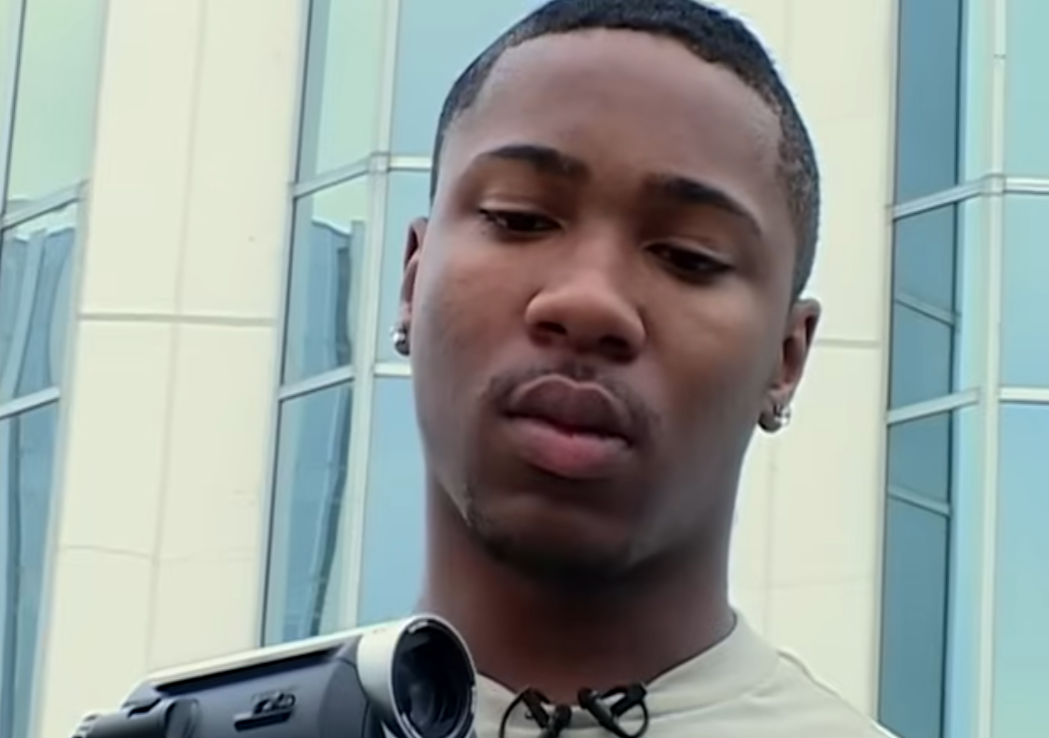
At timestamp 00:16, the episode teases a parking lot confrontation that erupts four minutes later. J'Zon Warner, a 22-year-old club promoter, spots his fiancée Tiara Gibbs with another man. He raises a camcorder and shouts, "That's my cousin! Hey yo, what's good coz?" The camera cuts to the lot, and all hell breaks loose. By 09:42, J'Zon says, "Let's go," and the crew sprints toward the action. What follows is not polished television. It's raw, handheld chaos—and it's exactly why Cheaters works.
As a cinematographer who's shot second-unit, I can tell you: this is the opposite of the controlled night-vision surveillance from earlier. The camera operator is running. The frame is loose, tilting wildly as they dodge bodies. The lighting is whatever's available—streetlights casting orange pools, car headlights cutting through the dark, and the harsh, overexposed glare of a camera-mounted light that blows out faces and creates deep, ugly shadows. There's no time for a bounce board or a flag. This is cinema verité at its most extreme, reminiscent of the Dardenne brothers' handheld style in 'Rosetta' (1999, 95 min) or the raw documentary feel of 'Harlan County USA' (1976, 103 min). But here, it's unscripted and ethically murky.
The audio is just as raw. Wind noise batters the mic. Shouts clip and distort. You hear every scuffle, every scream. At 00:20, J'Zon confronts Tiara and Ace. The camera shakes as people push each other. A wide-angle lens captures the entire scene, but it also distorts the edges of the frame—a visual metaphor for the emotional distortion happening in real time. This isn't a composed shot. It's a fight for footage.
Compare this to the polished confrontation scenes in scripted dramas like 'Marriage Story' (2019, 137 min, Netflix). In that film, every frame is composed, every line rehearsed. The camera sits still, letting the actors' performances carry the weight. Cheaters sacrifices composition for immediacy. And that's precisely why it works. The messiness is the point. You're not watching a performance; you're watching a moment.
But this raw style subverts traditional documentary ethics. The subjects are not consenting to being filmed in this moment. They are ambushed. The camera becomes a weapon, capturing every flinch, every push, every scream. There's no release form signed in the heat of battle. The crew is not a neutral observer; they are active participants, provoking and recording. This is the fine line between documentary and spectacle, and Cheaters gleefully crosses it.
Yet, amidst the chaos, Joey Greco provides a narrative anchor. At 01:27, he stands in front of a blue digital background, calm and composed. His demeanor contrasts sharply with the bedlam. He's the host, the guide, the one who tells us what we're seeing and why it matters. Without him, the confrontation footage would be just a brawl. With him, it's a story.
This raw style influenced later reality shows like 'Jerry Springer' and 'Maury', but Cheaters took it to the streets. Springer and Maury kept their chaos in a studio, with controlled lighting and multiple cameras. Cheaters went mobile, using handheld rigs and available light. It's a precursor to the found-footage aesthetic of 'The Blair Witch Project' (1999, 81 min) and the vérité style of 'Cops' (1989–2020, Fox/Paramount Network). But Cheaters added a layer of emotional intimacy—and exploitation—that those shows rarely matched.
So, are these confrontation scenes just exploitative? Yes. But they are also a form of raw, unfiltered cinema that captures human emotion in its most primal state. The shaky camera, the blown-out highlights, the distorted wide-angle—they all serve to put you in the middle of the action. You feel the adrenaline, the anger, the heartbreak. It's not pretty, but it's real. And in an age of overproduced reality TV, that rawness is a rare commodity.
[[AD]]
When you watch the J'Zon and Tiara episode, pay attention to the camera work during the confrontation. Notice how the operator struggles to keep up, how the light shifts from harsh to dark, how the audio peaks and distorts. This is not a mistake; it's a style. A style that Cheaters perfected and that continues to influence reality television today. It's chaotic, it's messy, and it's undeniably compelling.
Editing Rhythm: Juxtaposing Surveillance and Explosion
At 05:27, we're watching Tiara and Ace at the railroad tracks. The footage is almost romantic—they're sitting on the trunk of a car, eating, laughing. The camera is steady, the takes are long, and the ambient sound of wind and distant traffic creates a calm, intimate atmosphere. Then, at 06:21, the scene cuts to Tiara on the phone with J'Zon. Her voice is defensive, sharp. The audio is crisp, foregrounded. The editing doesn't just show us the lie; it makes us feel the betrayal. The contrast is jarring—the peaceful surveillance footage is muted, while the phone call audio is amplified. This is editing as manipulation, guiding us from suspicion to anger.


