Part 1
The Thesis: Cheaters Turns Betrayal into a Masterclass in Surveillance Aesthetics
Cheaters isn’t just guilty-pleasure TV—it’s an accidental masterclass in surveillance cinema, and the J’Zon and Tiara episode is its Citizen Kane.
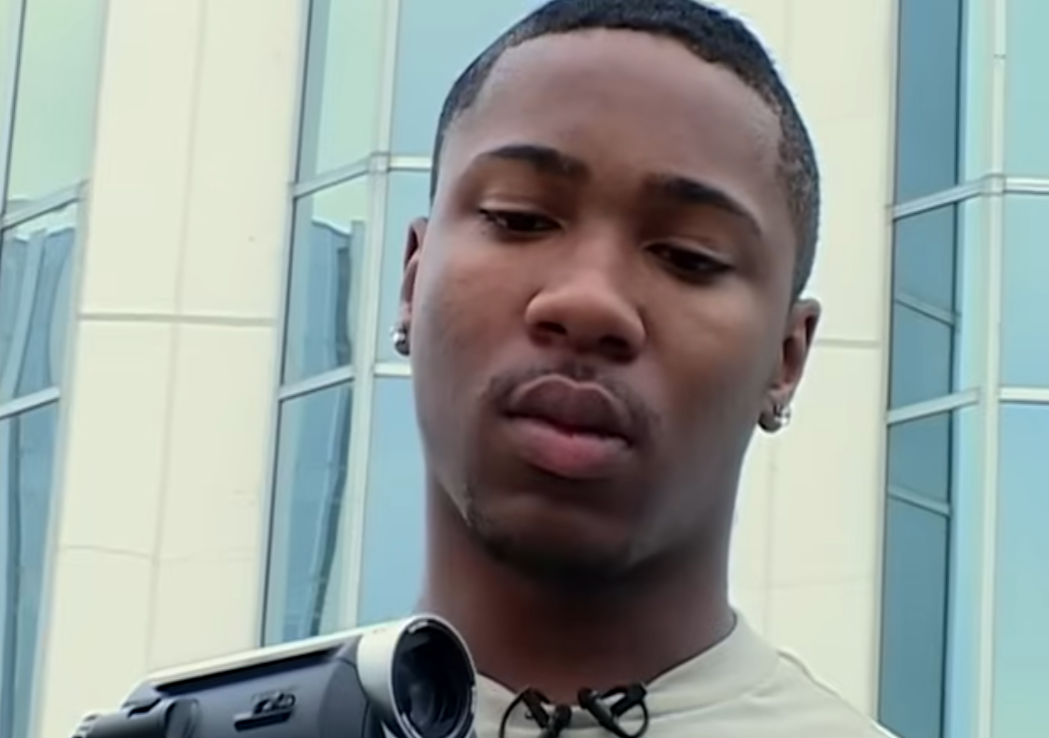
I’ve shot second-unit on enough thrillers to know when a frame is doing more than it lets on. At 08:26 in this episode, J’Zon Warner stares at a camcorder screen replaying footage of his cousin Ace getting cozy with his fiancée, Tiara. The monitor’s cold, blueish glow carves his face out of the dark, and the camera racks focus from the LCD to his eyes—a move you’d expect in a David Fincher joint, not a syndicated reality show. That shallow depth of field, the slow pull, the way the ambient light dies around him… it’s pure noir. And it’s the moment you realize Cheaters wasn’t just filming drama; it was inventing a visual language for betrayal.
The show aired in the early 2000s, a time when prosumer camcorders like the Sony DSR-PD150 were the weapon of choice for guerrilla filmmakers. That camera—with its 1/3-inch CCDs and 12x zoom—gave Cheaters a gritty, immediate texture. It’s the same rig that would show up in indie docs and, later, in the first wave of YouTube confessional videos. But here, it’s deployed with surprising intentionality. The J’Zon and Tiara episode, now streaming on platforms like FilmRise, is a case study in how low-budget tools can yield high-stakes visual storytelling.
Let’s break down the three technical pillars that make this episode a Rosetta Stone for reality TV cinematography. First, night vision and long lenses. The investigation sequences are shot with green-tinted IR, turning suburban streets into a predator’s playground. The long lens compresses space, making Tiara’s walk to the mall feel like a stakeout in The French Connection. Second, the confrontation footage is raw, handheld, and deliberately uncomposed. When J’Zon screams “That’s my cousin!” at 00:16, the camera shakes, the frame loses its subject, and you’re thrust into the chaos. It’s the opposite of a polished studio shoot—and that’s the point. Third, the editing rhythm. The show cuts from calm, voyeuristic surveillance to explosive arguments in a heartbeat. That juxtaposition manipulates your empathy: you’re complicit in the spying, then blindsided by the fallout.
This isn’t hyperbole. The visual grammar Cheaters pioneered—remote cameras, night vision, long-lens voyeurism—predates and directly influences shows like 90 Day Fiancé and Love Island, which use similar remote setups to capture “authentic” moments. But Cheaters did it first, and with a raw, tabloid energy that later shows sanitized. The J’Zon and Tiara episode, with its 08:26 thesis moment, is the purest expression of that aesthetic. It’s surveillance as spectacle, and it’s shot like a thriller.
So next time you dismiss Cheaters as trash, remember: someone was operating that camera, framing that shot, and cutting that sequence. And they were doing it with the same tools and instincts as the cinematographers behind your favorite true-crime docs. The J’Zon and Tiara episode isn’t just a guilty pleasure—it’s a masterclass in accidental art.
Night Vision and Long Lenses: The Technical Grammar of Suspicion
Investigation Day Two, timestamp 03:33. The perimeter team is parked outside the apartment J'Zon shares with Tiara and their infant daughter. The footage kicks in with that unmistakable green wash—Sony's NightShot infrared mode doing the heavy lifting. Tiara slips out of the building and into a white sedan, her silhouette glowing like a ghost in a thermal scan. The camera operator is shooting from at least fifty yards away, probably through a chain-link fence or from the back of an unmarked van. The image is grainy, low-res, and absolutely hypnotic. You can't look away.
This isn't cinematic polish. It's surveillance grammar, and it's brutally effective. The infrared illuminator on a early-2000s Sony Handycam—likely a TRV series or similar consumer-grade unit—floods the scene with invisible light, turning darkness into a monochrome green dreamscape. The grain isn't a bug; it's a feature. It tells your brain: this is real, this is raw, this is happening right now. You're not watching a movie. You're complicit.
The lens choice matters just as much. The Cheaters team is almost certainly running long telephoto glass—think 200mm or beyond—which compresses distance and flattens the image. Tiara and her mystery man look like they're on a stage, isolated from the world around them. Shooting through windows, across parking lots, from the far end of a mall food court: every frame is a stolen glance. The long lens doesn't just magnify; it moralizes. It says: you shouldn't be seeing this, but you are.
Compare this to the noir cinematography of 'The Conversation' (1974, dir. Francis Ford Coppola, 113 min) or Michelangelo Antonioni's 'Blow-Up' (1966, 111 min). In those films, surveillance is both plot device and visual motif—Harry Caul's paranoia rendered in long lenses and muffled audio; Thomas the photographer's enlargements revealing a crime. But Cheaters lacks the artistic pretension. Its power comes from the unvarnished reality. When Tiara is followed up an escalator at 04:05, the camera operator struggles with framing. The shot wobbles. The focus hunts. And that imperfection adds authenticity. A Steadicam would have ruined it.
The ethical implications are unavoidable. The audience becomes a peeping tom, hidden in the dark, watching a woman who doesn't know she's being filmed. But the show's disclaimer at timestamp 00:05—'Cheaters may contain adult themes and strong language'—positions this as a moral tale. You're not a voyeur; you're a witness. The infrared green doesn't just illuminate; it judges. It turns infidelity into a nocturnal hunt, and you're on the team.


