Part 1
The Consensus: “It’s All Fake, So None of It Counts” — and Why That’s a Category Error
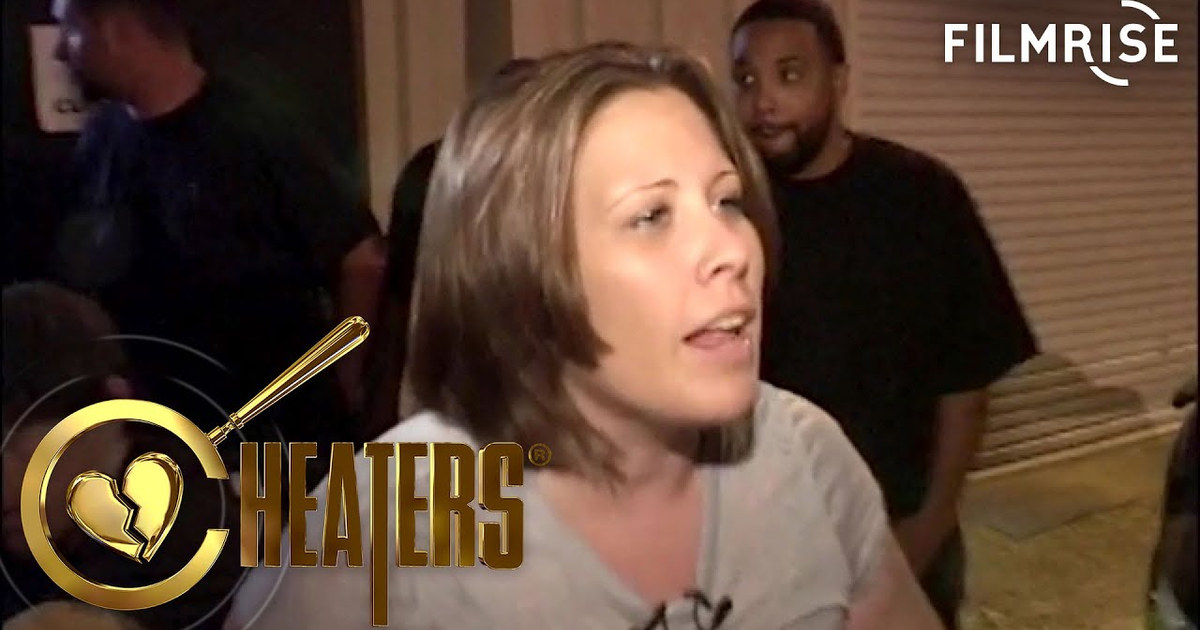
Go find the Thelma Gosling episode of Cheaters on YouTube. Scroll to the comments.
You already know what’s there, because it has been there since roughly 2005: staged. Actors. Fake. Trash TV with a boom mic and a theme song.
The consensus has a longer form too — the version that shows up in half-hearted think pieces written by people who watched eight minutes and then opened a Google Doc. Cheaters is exploitative. Cheaters is classist. Cheaters is poverty television dressed up as investigation. And because it’s staged, none of it counts as documentary.
Case closed. Next topic.
I think that’s wrong — and I think the wrongness is structural, not a matter of taste.
Here’s the position I’m taking for the rest of this piece. The “is it fake?” debate is a category error. It asks a question about authenticity when the only question this episode can actually answer is about coherence. And once you run that test on the Thelma Gosling case — Thelma, her husband Brandon Gosling, and the woman the surveillance keeps finding, Cassie Potts — the episode holds. It holds harder than a lot of prestige true crime that would never in a million years be accused of being staged.
None of that means the skeptics are stupid. They earned their skepticism the hard way, and they earned it honestly.
The Skeptics Earned It. That’s Exactly Why It’s Time to Move On.
Let’s actually credit the case against the show, because it is a good case and it deserves to be stated properly.
In 2003, Joey Greco — the host who took the Cheaters chair in 2000 and became the face of the entire franchise — appeared to be stabbed on camera during a confrontation. The footage aired. For two decades, viewers have argued about whether it was real, and that argument has never fully resolved.
That episode alone justifies a certain amount of lifelong side-eye.
And the skepticism has older roots than Cheaters. Robert Flaherty’s Nanook of the North (1922) sold itself as a record of Inuit life and staged much of it, including the hunt sequences. PBS’s An American Family (1973) put the Loud family on television and turned a documentary into a story with arcs and heroes. MTV’s The Real World (1992) put seven strangers in a house and handed them a production schedule. By the time Cheaters was in syndication, audiences had already learned the lesson: cameras change the room they’re in.
That lesson is correct. I’m not arguing with it.
What I’m arguing with is the leap that follows — the leap from “this is produced” to “there is nothing here.” Those are two very different claims, and only one of them is actually defensible.
Cheaters Was a Detective Agency That Built a TV Show. That’s the Actual Invention.
Here’s the part almost nobody credits, and it’s the part that matters most.
Cheaters was created by Bobby Goldstein, launched in Dallas in 1996, and pushed into national syndication from 1997. The original host was Tommy Habeeb, billed as “T. Tommy.” Joey Greco took the chair in 2000 and made the role his own for the rest of the show’s recognizable life.
But the franchise wasn’t only a show. It was produced in tandem with Goldstein’s Cheaters Detective Agency — an actual private-investigation business — and the in-episode pitch says the quiet part out loud: “If you suspect infidelity in your relationship, Cheaters Detective Agency may be able to provide you assistance.”
That isn’t an ad read bolted onto a reality show. That’s a functioning PI firm folding itself into a broadcast format. The Cheaters TV show and the Cheaters Detective Agency are the same organism wearing two different hats.
That hybrid is the real innovation of syndicated reality TV history, and it’s the reason the lazy “it’s all fake” take keeps sliding off. A staged show doesn’t need a detective agency. A staged show doesn’t route its own casework through a business that has to exist whether or not the cameras show up that week.
Now, I know exactly what the counter-argument is here, and it’s fair. A detective agency can be a production company with a license. Paperwork proves a business exists; it does not prove that any particular confrontation that aired was spontaneous. Granted. Fully granted, no hedging.
But notice what that argument is actually about. It’s a claim about the franchise’s reputation. It is not a claim about this episode.
The Best Case for “Fake” — and Why It Still Doesn’t Settle Thelma Gosling
So let’s hand the “fake” crowd their strongest material, and then do the thing nobody does: narrow the question.
The strongest material is the Greco stabbing. Real footage, real dispute, two decades of unresolved argument. Add Nanook of the North, add An American Family, add The Real World, and you have a legitimate pattern in television history — documentary that massages itself toward story.
Fine. Assume the worst about some Cheaters segments. Assume the stabbing is exactly as staged as its harshest critics claim.
That tells you something about the franchise. It tells you almost nothing about the Thelma Gosling case, because franchises are not monoliths. Every episode is its own separate evidence problem, and treating twenty years of television as one blob is how you end up with an opinion instead of a reading.


