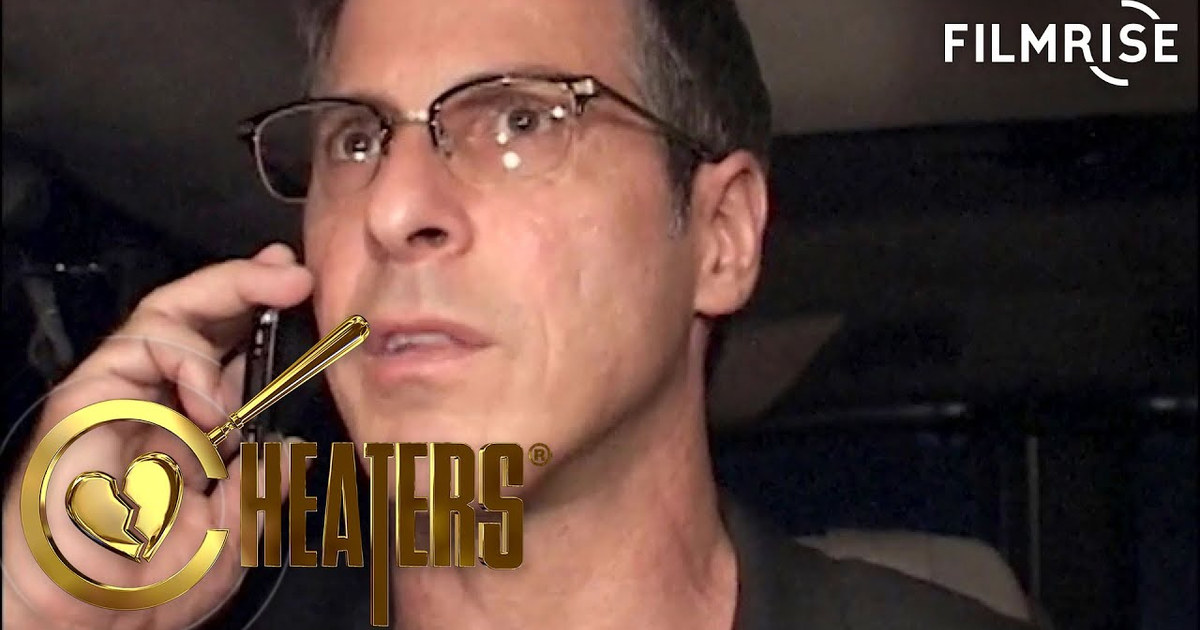
Part 5
Think about how many episodes of Cheaters end with a confrontation that we never actually see resolved. The show is a machine for generating anticipation. It's a cliffhanger factory. And the cliffhanger is always the same: will they get caught? Will they admit it? Will the truth come out? But the truth never really comes out. Because the truth is not a thing that can be captured on camera. The truth is what Brian calls it. And Brian is not talking. At least, not in the footage we have.
Now, let's talk about the commercial frame that surrounds all of this. Before the footage even starts, you get the sponsorship. 'Real reality television is brought to you by Cheaters Detective Agency's Private Eyes.' That's not just an ad. That's a statement of purpose. The show is selling a service. The service is surveillance. And the show is performing that service on camera. It's a closed loop. You watch the show, you see the surveillance, you learn that you can hire the surveillance. 'Exercise your right to be informed,' the voice says. And then, at the bottom of the screen, in small print: 'investigative charges may apply.'
[[VIDEO]]
This is the commercial frame that makes the whole thing possible. The camera is not just a witness. It's an advertisement. It's a demo reel. Every kiss, every combo meal, every long goodbye is a sales pitch. It says: look what we can do for you. Look how we can watch your loved one. Look how we can turn their lunch date into your prime-time entertainment. The show is not investigating infidelity. It's marketing paranoia. And business is good.
So when the narrator says 'clandestine companion,' he's not just describing. He's selling. He's telling you that this is the kind of thing you need to be worried about. He's telling you that your boyfriend might be doing this right now. He's telling you that you need Cheaters. The footage is the bait. The sponsorship is the hook. And the disclaimer is the legal cover. 'Investigative charges may apply.' Of course they do. It's a business. It's always been a business.
And that's the real limit of surveillance. It's not just that the camera can't capture meaning. It's that the camera is being used to sell something. The footage isn't neutral. It's framed. It's edited. It's narrated. It's sponsored. Every second of it is designed to make you feel a certain way. And the feeling it wants you to feel is suspicion. Not certainty. Suspicion. Because suspicion is what makes you watch. Suspicion is what makes you hire. Suspicion is what makes the whole thing go.
So if the footage is this thin—if all we have is a kiss, two combo meals, an elevator ride—then what is the show really trafficking in? It's not proof. Proof would require knowing what Brian calls any of it. It's not truth. Truth would require a confession, a confrontation, a resolution. The show doesn't give you those things. It gives you permission. Permission to look. Permission to suspect. Permission to hire someone to watch. Cheaters is not a detective agency. It's a licensing bureau. It licenses your suspicion. It tells you it's okay to spy on your loved one, as long as you pay for it.
And that permission is what we'll be talking about in the next section. Because if the surveillance is this thin, then the show isn't really about catching cheaters. It's about creating them. It's about turning ordinary people into suspects. It's about turning a lunch date into a crime scene. And it's about selling you the tools to do the same. So who is this really for? The faithful? The false-hearted? Or the people who just want an excuse to look? We'll get into that next. But for now, just remember: a camera can record a kiss. It cannot record a betrayal. The gap between those two things is where Cheaters lives. And it's never going to close.
'Dedicated to the Faithful, Presented to the False-Hearted': Who Is This Really For?
The warning card comes first. It always does. 'Cheaters may contain adult themes and strong language. Parents are cautioned that this program may not be suitable for children.' Then, after the theme music and the promise of surveillance cameras, comes the second sentence, delivered with the gravity of a legal disclaimer and the confidence of a sermon: 'This program is both dedicated to the faithful and presented to the false-hearted to encourage their renewal of temperance and virtue.' That is not a throwaway. That is the show's thesis statement. And it deserves a trial.
Put it on trial. Read it again. It claims two audiences: the faithful and the false-hearted. It promises service to one and correction to the other. It sounds like a church bulletin written by a lawyer. It wants to condemn the cheaters, comfort the cheated, and sell the carnage all at once. That is a lot of moral work for a sentence that runs before a show about hidden cameras in parking lots.
But the sentence is not really a disclaimer. It is a permission structure. It tells you that watching is not exploitation. It tells you that the hallway confrontation is not voyeurism. It tells you that the tears are virtue. The show knows you might feel bad about watching. This sentence is here to make you feel good about it. It is the alibi that arrives before the crime.


