Part 1
The Accusation Arrives First: Cheaters and the Question of Proof
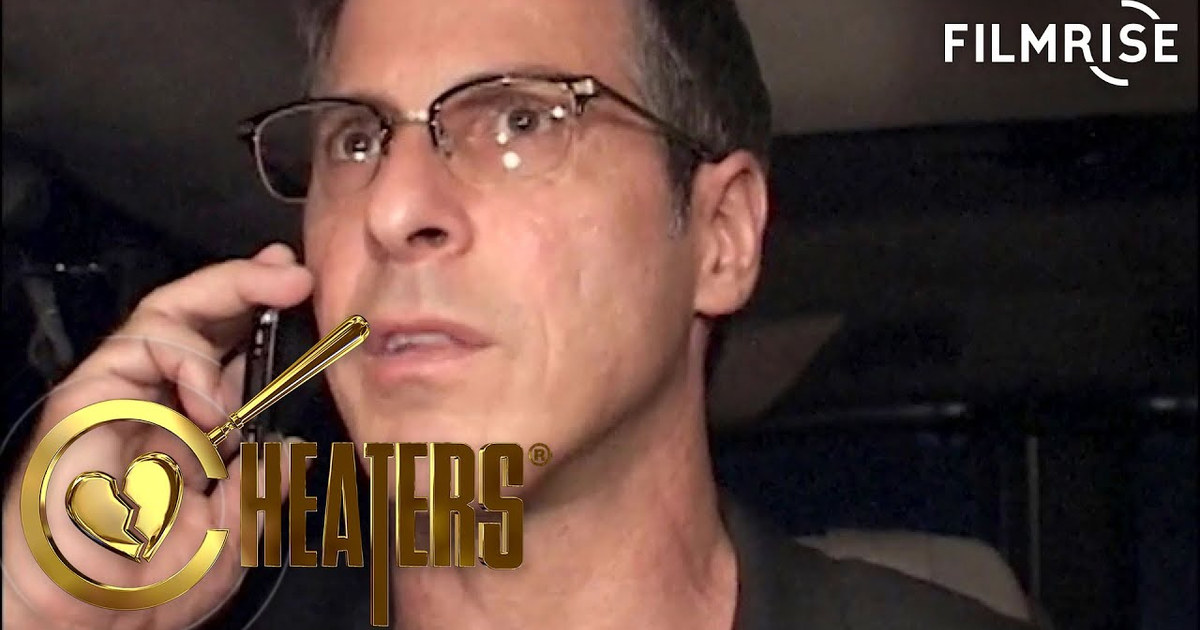
You have probably seen the trailer. There is a parking lot at dusk, or a cul-de-sac, or a strip mall with one sign flickering against a wall. There is a person walking toward a car they do not know is being filmed. There is a voice from off frame — patient, almost gentle — explaining that somebody is about to find out. And then the door opens, and whatever comes next comes loudly. That is the brand. Cheaters, the syndicated hidden-camera institution created by Bobby Goldstein that has been televising other people's worst afternoons since 2000, does not sell mystery. It sells the exact moment the mystery stops. Every episode runs on one promise, and it is a promise about proof: you will not hear about it. You will see it.
Then the actual episode starts, and the first thing it does is change the subject. "Arkansas dead ends into a lake," a voice announces over quick-cut footage, "and that's where they are." It's a great sentence — flat, fatal, delivered like a man reading a map aloud. It promises water, a final destination, a place with no exit. "What the hell is this lovely from Cheaters surveillance cameras." Cue the logo. Cue the sirens. Except the lake is not in this segment. The lake belongs to somebody else's story, cut in here to do the job a trailer does: get you to stay. What we actually get is an apartment, a phone with a changed passcode, and a boyfriend who came home with marks on his neck. The tease is for a different story than the one we're handed. And that displacement — one episode promised, another delivered — is the right place to walk into this hour, because it turns out to be the exact problem the hour cannot solve.
Before anything else, the ritual. "You are about to view actual true stories," the disclaimer intones, "filmed live documenting the pain of a spouse or lover caused by infidelity. This program is both dedicated to the faithful and presented to the false-hearted, to encourage their renewal of temperance and virtue." Listen to that vocabulary. Temperance. Virtue. Renewal. That is not the register of a syndicated tabloid hour; that's a nineteenth-century moral tract, the kind of page handed out at a revival tent. Then Joey Greco — the host who took over the show in the early 2000s and became its face — steps in with the benediction: "I'm Joey Greco, and this is Cheaters." The show dresses surveillance in the language of instruction. It wants to be understood as a lesson.
Keep that in mind, because here is the question this episode raises, and it is a much bigger question than the episode.
Is catching a cheater the same thing as knowing the truth?
Cheaters promises revelation — "actual true stories, filmed live." What it actually delivers is evidence, which is a lighter substance. Evidence can be collected, stacked, labeled, driven across town in a van, and set down in front of somebody. Revelation is heavier. Revelation changes what a person knows about their own life, and it cannot be handed over in a manila envelope. A camera can prove that two people kissed. It cannot prove what a relationship was. Every hidden-camera show since Cops went on the air in 1989 lives in that gap, but Cheaters lives there more comfortably than most, because it never has to prove anything to a court. It only has to prove it to you.
Meet Sebastian. The narration introduces him before he says a word: "Alarmed by his live-in boyfriend's lack of affection, Sebastian Asner is starting to believe there's something sinister behind his cold demeanor. Needing answers instead of deception, Sebastian wants to bring the truth to light." Read that twice and notice the order of operations. The conclusion arrives before the evidence. The suspicion is voiced by the show's narrator — we are told he's starting to believe something sinister — and only then do we meet the man doing the believing. Nobody has been accused of anything yet, and the table is already set. That's not sloppiness. That's architecture. The accusation always arrives first.
Sebastian tells it from the beginning, and even the beginning sounds like a file. "When I met Brian, I was visiting from Louisville, Kentucky, during summer break with some friends. We were out at the club, and I saw him, he saw me, and we started talking. He begged me for like a year and a half to move down here, and I finally decided I wanted to change the scenery, so I came down here about a year ago, when we actually finally did move in together." Notice the verbs. Begged. Decided. Finally. This is a love story narrated as a ledger: a request, a relocation, a debt of obligation, a date of settlement. There's no scene in it — no night they both remember, no song playing, no weather. There's a timeline. Compare the opening of Marriage Story (2019), Noah Baumbach's 137-minute Netflix film, which starts with two people listing what they adore about each other and instantly turns that list into a list of grievances. Love itemized as evidence, read aloud. Cheaters skips the itemizing. It just hands Sebastian a case number.
And then there is the sentence I cannot get past. Before any investigation begins. Before the van, before the stakeout, before a single mile is driven. Sebastian says: "I probably go crazy."


