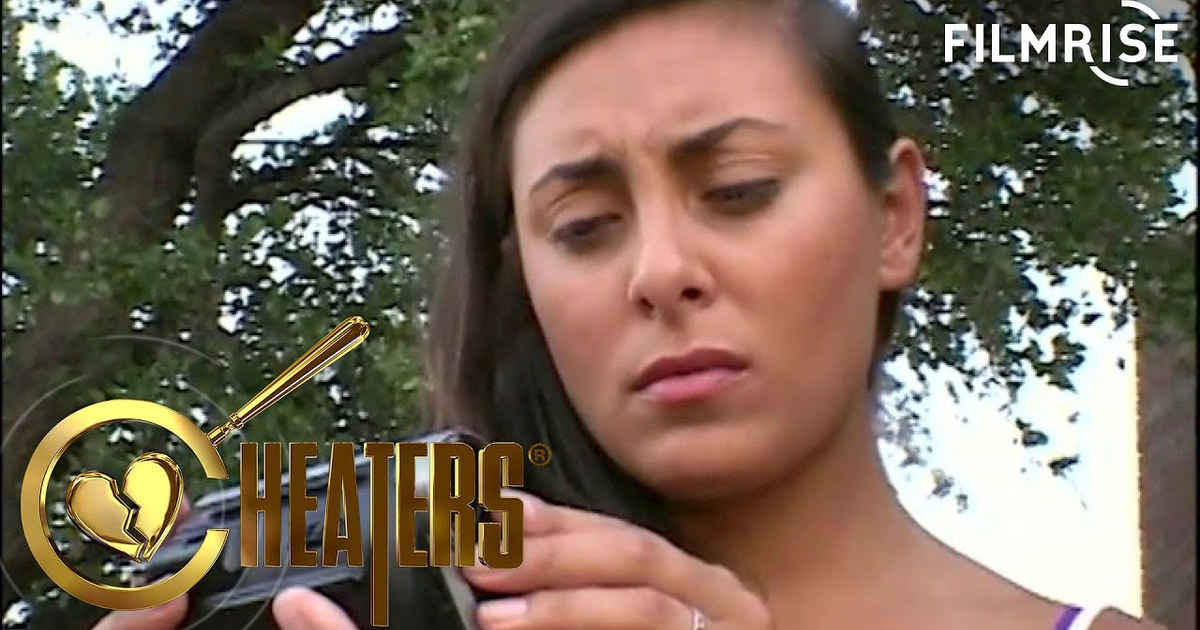
Part 4
Because that's the format's ecology. Cheaters was built to recycle. Past participants were routinely brought back — to react, to gloat, to settle a score, sometimes all three inside one segment. It cost the production almost nothing, it filled the half-hour, and it turned casual viewers into regulars.
[[VIDEO]]
Binge a handful of episodes from any season and you'll notice the same faces drifting back in like weather. That's not a glitch. That's the business model. A cheap weekly show can't afford a cast and can't afford actors, so it does something stranger: it builds a recurring ensemble out of real people who never auditioned, never negotiated a contract, and never got a real exit.
Stephanie Garland isn't a character. She's a person the show now has on speed dial. That's a weirder thing to be than a villain.
The Machine Behind the Couch
To understand why that recycling exists, you have to understand what kind of animal Cheaters is. It's a syndication show — sold station to station, slotted late at night, produced on a budget that would embarrass a regional car commercial.
The agency in the title is, according to the show's own framing, an actual private investigations business. Not a set piece. A firm with its name on the door of the program and a phone number for people who suspect their partner.
And every episode opens with a claim, printed right there on screen, that you're about to watch “actual true stories filmed live.” That claim has been part of the package since 2000.
2000 is not a random year to plant a flag in. Survivor premiered on CBS in May of 2000. Big Brother premiered on CBS in July of 2000. All at once, the whole culture was arguing about what “real” even means on television — and into the middle of that argument walks a low-budget Dallas show holding a night-vision camera, saying: ours is realer.
Hollywood was circling the exact same idea. The Truman Show, Peter Weir's 1998 film, runs 103 minutes and asks what happens when a man's entire life is a broadcast. EDtv, Ron Howard's 1999 comedy, runs 122 minutes and asks what happens when an ordinary guy volunteers for the camera. Cheaters didn't get a movie's runtime. It got 22 minutes and a detective.
The Stabbing, and What We Actually Know
You can't talk about this show for long before somebody brings up 2003. Host Joey Greco was reportedly stabbed during a confrontation with a participant while filming. It became the show's most famous moment, and it's the moment most often cited as proof that whatever line existed between real and staged had collapsed for good.
So let's be exact, because I'm not going to lie to you about this one. What we know: a confrontation happened, Greco was reportedly stabbed, and the story became legend — the clip people pass around like a souvenir. What we don't know: the specifics. Later reporting raised doubts about what actually occurred, and Greco's own public comments over the years have only muddied it further.
Nobody outside that production was standing in that room. So don't call it fake. Don't call it real. Call it unresolved — and notice how comfortable this show is with unresolved. For a program whose entire pitch is surveillance and evidence, “we can't actually verify this” is a hell of a signature.
The Ethics Part, Without Me Wagging a Finger
Here's what you should know going in. Not a lecture — just math.
Participants sign releases. The footage gets edited. The narration frames everything before your eyes ever reach it — “investigation day one,” “the bewitching hour approaches,” a calm voice telling you what you're about to feel. By the time an episode airs, three separate machines have already shaped the story.
And then there's Kristen Bledsoe.
She's the co-worker in the Elena Connor case, and the show names her on national television. As far as the record shows, she never came to the program. She didn't volunteer for this. She didn't sit in the chair. And on camera, she says the exposure is going to affect her career.
That line is the sound of a real person doing the math in real time. Not a confession. Not a villain's monologue. Just somebody calculating out loud what a syndicated half-hour is about to cost her.
Sit with that before you decide the show is harmless fun.
It Didn't Fall Out of the Sky
None of this was born in a vacuum. The Jerry Springer Show ran from 1991 to 2018, turning fights into daytime inventory. Cops hit Fox in 1989 and made the ride-along a genre. Maury started in 1991 and built an empire out of paternity tests. Blind Date showed up in 1999 and turned dating into a punchline with a laugh track.
The lineage runs deeper, too. An American Family put a real family on PBS in 1973 and scandalized the country. MTV's The Real World started in 1992 and taught a generation that being watched was a career path.
So what did Cheaters actually contribute? Not humiliation. Humiliation was a solved problem by then. Cheaters' specific innovation was the detective frame — the case file, the briefing, the surveillance log, the day-by-day countdown. Everybody else filmed a fight. This show filed a report.
Why the Trick Works So Well
The detective briefing is the engine of the whole thing. Watch what it does.


