Part 1
You Have Probably Seen the Trailer
You have probably seen the trailer, even if you never knew what you were watching. A woman screaming that a man is a bastard. A phone shoved into somebody's face. A promise to produce handcuffs. A host saying easy now, like he is breaking up a bar fight and not a ten-year relationship. Then the caution card: adult themes, strong language, parents strongly cautioned. That is the thirty-second version of Cheaters, and it is the version that travels.
The full show has been running for decades, built on the Cheaters Detective Agency and its private eyes, fronted for years by Joey Greco and narrated in a voice that sounds like a true-crime documentary that decided to have fun. Every hour promises real stories filmed live, documenting the pain of a spouse or lover caused by infidelity. It says it is dedicated to the faithful and presented to the false-hearted, to encourage their renewal of virtue. And then it shows you an ambush.
But here is what the promo never says out loud: the show never actually asks whether someone is cheating. By the time the cameras roll, that question is settled. The real question Cheaters asks, over and over, for an hour at a time, is this: when you finally see the truth with your own eyes, does it set you free, or does it just give you better footage of your own pain?
This episode is the cleanest test case the series has ever handed over. Angelina Osterman has been with Jonathan Chan for ten years. Chan is 37 and works as an analyst. Angelina's parents divorced when she was two, and a sixteen-year custody battle followed, and she has carried that hurt into every serious decision since. She is not afraid of Jonathan. She is afraid of becoming her parents. That is the whole setup.
[[AD]]
What the Cameras Actually Catch
The machinery is the star of the first act, and it deserves a beat of appreciation. Cheaters Detective Agency deploys what the narration calls a border unit. Investigators run a preliminary inquiry, then a day four, a day six, a day ten. Locations get logged. A background check gets ordered. It is Cops (1989) with a wedding registry, the same handheld urgency, the same procedural voice, only the crime is love.
Day four: agents sit outside Chan's office and watch him leave. He drives to an apartment complex nobody recognizes and vanishes between two buildings. Twenty minutes later he reappears, carefully escorting an unknown woman to his truck. The pair make for a nearby bar, where they share body heat to fight the frigid night air, which is the narrator's phrasing, not mine. After the last call for alcohol, they return to the complex and disappear inside.
Listen to how that is written. The tanked twosome. The counterfeit couples retreat. The clandestine cottage. That is not a police report. That is a voice with one eyebrow raised, and it is doing a very specific job: it makes surveillance feel like moral clarity. Every deadpan clause tells you who to root for before a single person has spoken a word.
[[AD]]
Day six brings the detail that turns a case into a story. Chan leaves work, drives to a grocery store, walks in empty-handed, and emerges with a bouquet. Agents are hopeful the arrangement is for Angelina. It is not. The apartment he keeps returning to turns out to be a corporate unit paid for by his own company, and his companion, identified only as Cara, is the resource manager in charge of the keys. Then the show drops the kicker: Cara has been married for seven years, with an anniversary just around the corner.
That is the moment the footage stops being a case file and starts being a trap with three people in it. Detectives also pull a recorded phone call to show that Angelina is the one genuinely deceived while Chan and Cara enjoy their retreat on the company's dime. The show is not gathering facts anymore. It is building a verdict and looking for a courtroom.
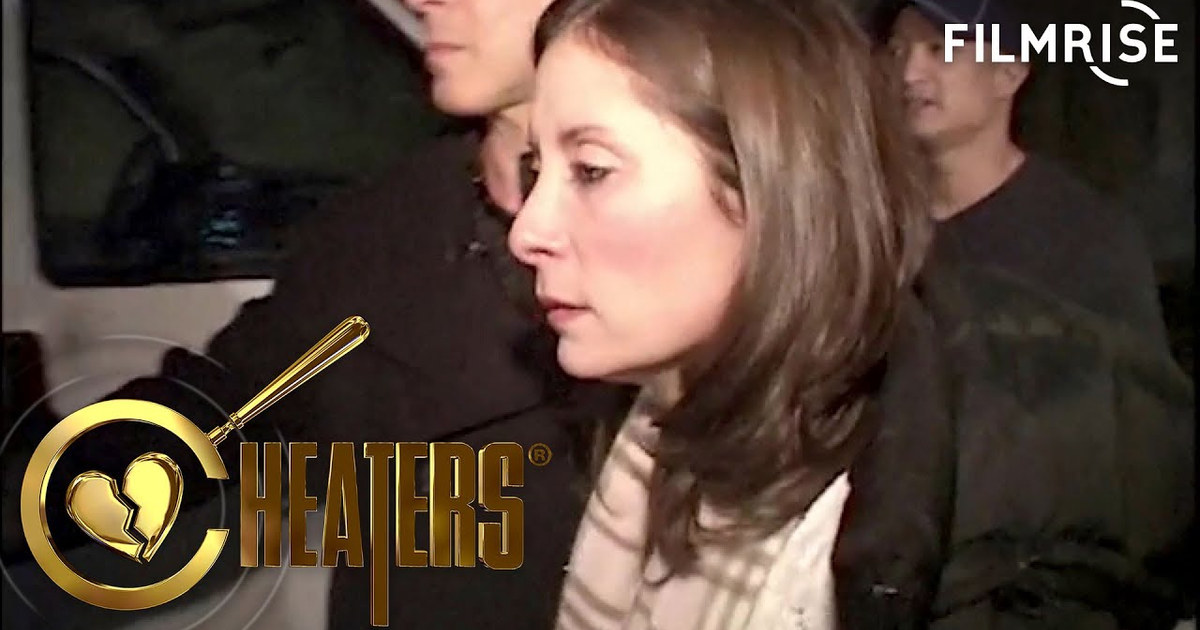
When Joey Greco finally sits Angelina down with the findings, she does the thing that makes this episode different from a hundred others. She does not gasp. She recognizes. It is a coworker. Her name is Cara. She asks whether those were flowers. Then she says the line that ought to be studied in every documentary class: can we just go? I really just want to go.
That is a person who already knew and was waiting for permission to stop pretending. And that is the first honest answer to our question, delivered later in the same hour by another guest, Eve Cullen, who says it plain. She was almost relieved, because she hates being told she is crazy and imagining things. There was proof right in front of her. She was right. Surprise, bitches. You just got busted.
[[AD]]
The Collateral Damage Speech
Spoiler warning: from here to the end of this piece we are inside the confrontation, and it gets loud. If you would rather watch the ambush unspoiled, go find the episode first.
The ambush happens in an alley and a doorway, with names yelled into the dark. It is not what you think. Get away from me. You whore. The show bleeps the middle and keeps the rest. Break it up, ladies. Not in my parking lot, from a man who is almost certainly a stranger to everyone involved. The editing leans on hard cuts and asterisks, and the whole scene has the texture of a bar fight a camera crew walked into on purpose.


