Part 4
And listen to it. That on-camera shotgun is not isolating dialogue. It is grabbing the room: the clink of glasses, the low roar of a jukebox, the door hinge, wind across the capsule. The audio noise floor does the same job the video noise floor does. It says we were there, and so was everything else. A lav hidden on a wire would have sounded better and felt like a setup.
The 1/3-inch chip is also a location scout. It cannot see in the dark, so the show's grammar gravitates toward sources: bar signage, parking-lot floods, headlights, a television glowing in a window. The crew did not pick those locations because they were cinematic. They picked them because the camera could make a picture there at all. What reads as a style choice was a performance envelope. And it became the show's visual canon: the bar, the bench, the parking lot, the doorway.
Here is the crossover nobody talks about. The same PD150-class cameras were the indie film pipeline of the moment. Chris Kentis shot Open Water on DV in 2003, and the dread in that movie comes from the same sensor limitations the Cheaters crew were fighting in a parking lot. Reality and narrative were shooting on the same glass, the same gain, at the same time. The difference is that one was cast and one was documented, and half the audience still cannot tell which is which.
The Grain Is the Alibi
[[VIDEO]]
Here is the argument, and I am planting a flag on it: the grain is the alibi.
Noise reads as truth. That is not a technical claim. It is an audience-response claim, and it is the most valuable accident in the history of the format. A clean, lit, well-exposed, color-graded frame reads as staged. It reads as a commercial. It reads as something somebody built. A noisy, gain-cranked, auto-iris-hunting frame reads as something somebody caught, raw material snatched from the world before it got away. The audience does not know the difference between a chip's noise floor and a lie detector. They just know which one feels like proof.
Run the counterfactual. If the Cheaters crew had rolled up with a cinema camera, a gaffer, and a 1x1 LED panel, the bar footage would look like a soap opera, and it would land like a soap opera. Instead they showed up with a prosumer camcorder, zero lights, and a budget that could not cover both a clean image and a fast schedule. The limitation accidentally produced the most credible evidentiary image on television. Every true-crime producer since has been chasing that texture with better cameras and worse results.
You can watch them chase it, and you can watch them lose. Modern streamers shoot 4K, log-encode for maximum latitude, and then pay colorists to add grain, add halation, add softness back into a lens that was too sharp, add a fake gate weave so the frame feels organic. They are buying the accident. They are paying six figures for what a three-thousand-dollar camcorder gave away for free.
The edit is complicit. Editors leave the search in: the whip pan, the rack of the zoom, the moment the operator finds the subject and holds too long. A polished cut would trim that. Leaving it in sells the catch. You are not watching a scene. You are watching someone find a scene, which is a completely different kind of evidence.
The Interview Look, or the Other Half of the Argument
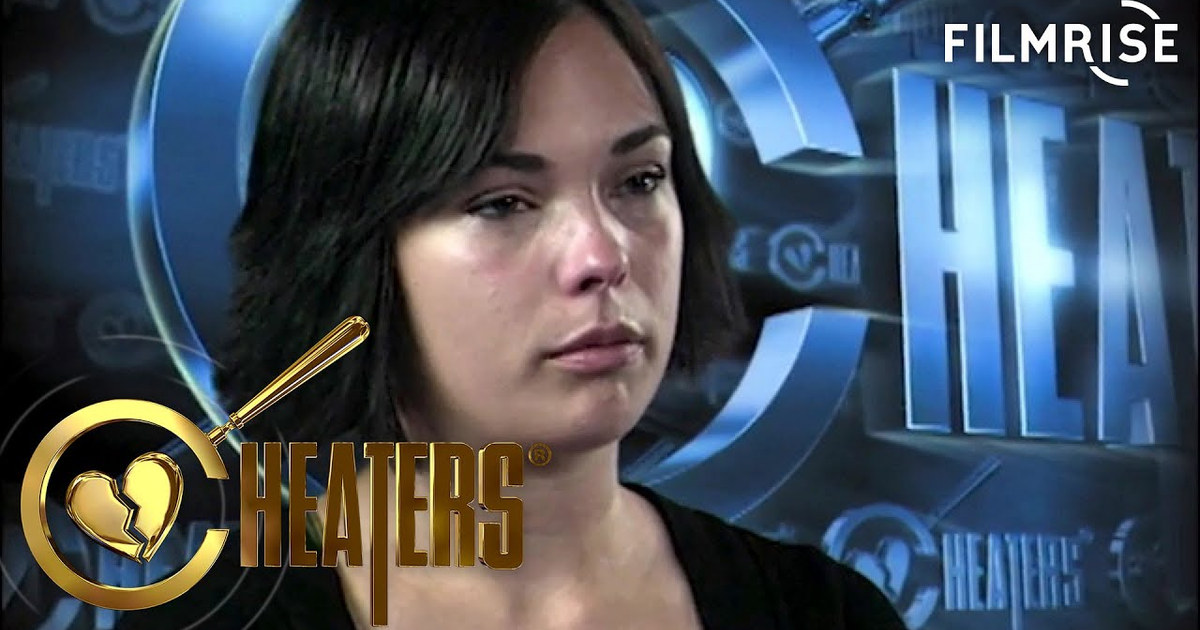
Cut to the sit-down with KJ Quinn, and look at the setup, because it is the exact inverse of the bar footage. She is placed in front of a window, daylight behind her, which any DP would flag as a mistake, with no fill on her face and no flag on the glass. Natural light does the work. It wraps her, it falls off, it leaves the background hot and her face open and soft. It is cleaner than the surveillance. It is calmer. Frankly, it is better.
And it is doing narrative work. She says she went back to waiting tables 'because I've done it before and I've pushed through it.' She talks about Quinn's mood changing, about him shaving every day instead of every other day, about coming home after a shift to a man who was mad that the house wasn't clean, who left her feeling, in her words, like she was non-existent. The plea underneath is the one the show always cuts for: she just wants him back.
That contrast, soft and clean and human in the interview, blown out and noisy and anonymous in the surveillance, is the whole moral structure of the show rendered in exposure. This is the human. That is the evidence. Two cameras, two lighting philosophies, two competing claims on the truth. The interview look says trust me. The surveillance look says do not trust me, verify. And audiences walk away believing the ugly one.
The Lineage, From Salesman to Nanook
None of this was invented on a syndicated set. The DNA goes back to Salesman, the Maysles brothers' 1969 documentary, Albert and David Maysles, 85 minutes, following door-to-door Bible salesmen through Florida and Massachusetts. Its ethic is the handheld camera inside the room, available light, sound that belongs to the space. No lights. No marks. No second takes. The same brothers would shoot Gimme Shelter in 1970 and capture a murder on film by refusing to stop rolling.


