Part 3
Cheaters runs on that engine at syndication speed. Every episode is an enlargement — the corridor, the door, the parking lot, the bench. The difference is that Antonioni and De Palma had to manufacture their ambiguity. Cheaters points a doubler-stacked zoom at a hotel entrance and lets the real world supply it for free.
Cops, America's Most Wanted, Unsolved Mysteries: The Betacam Inheritance, Degraded on Purpose
The television side has its own family tree, and it's easy to trace. Cops landed on Fox in 1989. America's Most Wanted landed on Fox in 1988. Unsolved Mysteries had been on NBC since 1987, and between the three of them they set the visual contract for reality crime: shoulder-mounted 2/3-inch broadcast gear, available light, tape that goes a little grainy and a little green the moment the sun drops.
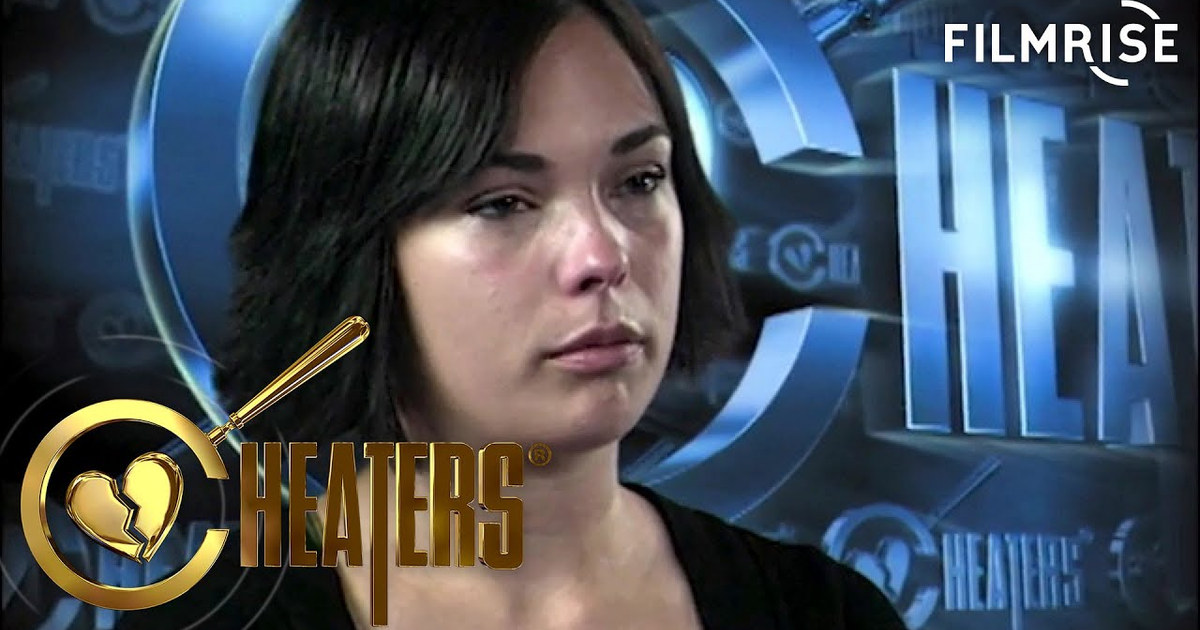
Cheaters — hosted, in this era, by Joey Greco — inherited that kit and then degraded it on purpose. Gain up. Available light only. No fill, no bounce, nothing that would make a hotel hallway look like a set. The show's own opening card leans all the way into the evidentiary claim, telling viewers they're about to see actual true stories filmed live. The degraded image is the receipt for that sentence. If it looked good, you wouldn't believe a frame of it.
And that's the whole argument in one image. A long lens, a locked-off car, a stairwell decision, a door that stays closed, an audio track doing the crying. Syndicated, cheap, and — shot for shot — more disciplined than most of what gets called prestige.
What to Watch For: Count the Faces, Count the Doorways
Go back and rewatch the hotel sequence with a notepad. Count how many times the camera cuts to a face, and count how many times it cuts to a doorway, a hallway, an elevator bank, a stretch of parking lot. Get the ratio. That ratio is the argument. The show withholds the payoff shot and hands you the approach — and that restraint is the entire difference between surveillance and spectacle. Spectacle wants you to see the kiss. Surveillance wants you to see the door the kiss walked out of.
Next, we get into the glass itself: the gain-cranked DV, the bar footage, and why the ugliest image on television turns out to be the most trustworthy one.
[[AD]]
Gain-Cranked DV and the Aesthetics of Proof: Why the Bar Footage Looks the Way It Does
Investigation Day Three. The midday hotel rendezvous is still burning a hole in the log, so the mobile unit stays glued to Quinn's bumper when he clocks out of work and rolls to a nearby bar. Ground units go in first and find him at a table with a woman nobody has briefed them on. They lean into one another. They whisper. One kiss. Then another. They pay the tab and push out through the driver's-side door, where Quinn pulls his companion in close for an extended makeout session before she finally breaks away, walks around the hood, and drops into the passenger seat.
Now watch it as a shot instead of a story. The camera is outside, on the sidewalk, working in available darkness with the lens wide open at the long end of a 12x zoom. Every time a body crosses the neon sign, the auto-iris hunts: one frame hot, one frame crushed, the whole exposure breathing like a chest. There is no key light. No bounce card. No C-stand within a city block. There is a bar sign, a sodium streetlight, and a camcorder.
The Kit That Shot the Evidence
Name the format honestly, because the format is the story. Tape-based MiniDV. A 1/3-inch CCD camcorder of the Sony DSR-PD150 or PD170 class, the workhorse of mid-2000s field production, with the gain pinned to the top of the menu. No lighting kit anywhere in the kit. An on-camera shotgun mic picking up the room as much as the subject. 480 interlaced lines. 29.97 frames per second. That is the entire package that produced some of the most convincing-looking evidentiary footage in the history of American television.
The lens is fixed, too, which matters more than people admit. There is no swapping to a fast prime when the light drops. You zoom in and the maximum aperture falls off a cliff, so by the time the operator is tight on Quinn's face across the parking lot, the glass is starved and the sensor is compensating with gain. Depth of field flattens. The background mushes into a wash of bokeh and noise. The subject floats in a sea of his own locale.
Every one of those choices leaves a fingerprint. Crank the gain and the shadows fill with chroma noise, red and blue confetti crawling through the blacks where a clean camera renders smooth. Point a CCD at a neon sign and you get vertical smear, a bright bar of light bleeding up and down from the clipping highlight, a signature no modern CMOS sensor reproduces the same way. Wide-open glass at the long end goes soft at the edges and smears the speculars off the bar's signage. And with no key light, faces are lit by whatever the location happened to give them: a beer sign, a parking-lot flood, the blue wash of a television above the rail.
Interlace is a character actor here, too. 480i was authored for CRT sets, and when modern platforms and flat panels deinterlace it, they smear the motion into a soft ghost, half-frames blended into mush. Combing artifacts, the jagged teeth you see on a shoulder when someone turns fast, get smoothed into a texture that is somehow both older and more believable. The footage was made for one screen and it looks its most authentic on a screen it was never designed for.


