Part 2
[[AD]]
The dialogue at the bench is the real climax. "Who is she?" "That's my home girl." Bar Alicia, bluntly: I am his girlfriend, he's been with that girl two years. Brooklyn's answer lands like a dropped light stand — she's been talking to him for two months. Two years. Two months. One lie with two different lengths.
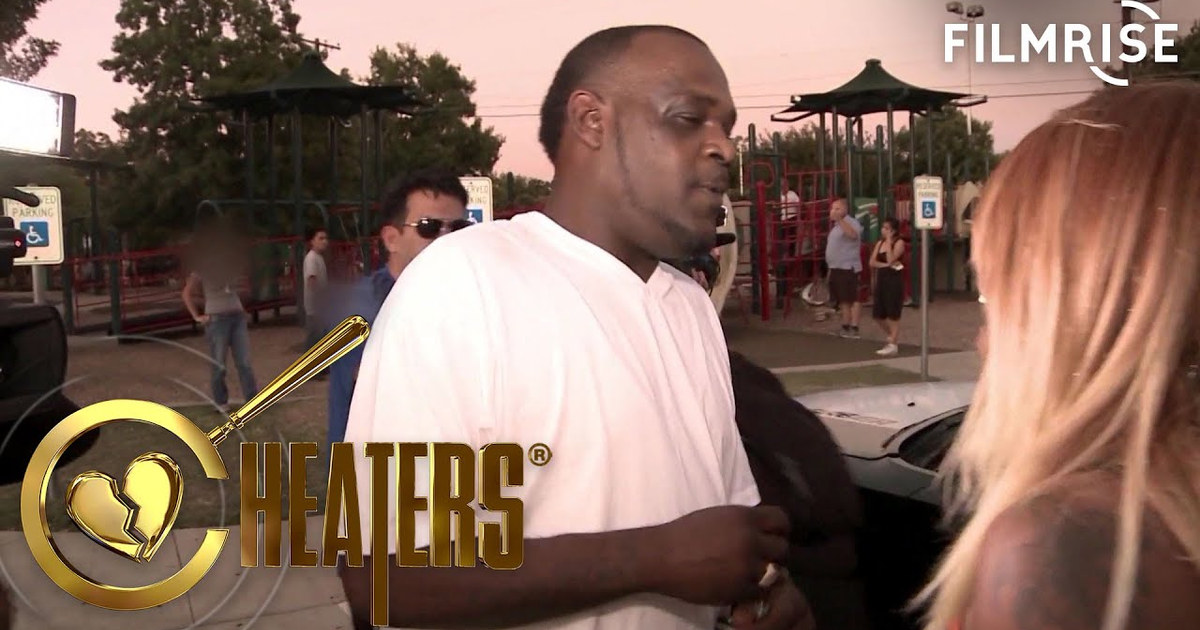
Then Bar Alicia and Chris end up screaming at each other by the car — money, bills, whose car it is, who makes what — and it devolves into exactly the kind of fight you can't shoot pretty. So the show doesn't try. The frame goes tight, the audio saturates, and the person holding the camera is the only person in the scene who isn't yelling. That's the job. That's always been the job.
The follow-up card is almost better than the fight. Chris maintains his innocence and blames his twin brother. Cheaters looked into it. There is no twin. He also claims Bar Alicia was never his girlfriend — just a thing — while Brooklyn tells producers only that she got hers and he got his. Bar Alicia's closing line is the sharpest in the episode: she is not going to let any man make her into The Other Woman.
[[AD]]
The Elizabeth Green Coda: When the Subject Takes Over the Camera
Then the episode pivots to Elizabeth Green, who walked in on her husband and his nude model in an earlier installment. She describes the moment she saw the footage — something clicked in her brain, so when the van arrived she wasn't waiting. "I got out of the van." That's the whole transformation in five words. She goes from being the object of the lens to the operator of it.
Her segment is a different genre, and it's shot differently. The original confrontation is chaos: she destroys the piece he'd been working on, says she's not typically a violent person, says that piece of work had it coming because he destroyed her. In the update, she's seated, soft light, shallow depth of field — call it an 85mm wide open — talking about what she misses. Not him. Coffee in the morning. Fifteen years. "I don't want the relationship back. But I'm sad for what I have lost." Soft light, soft lens, hard sentence. Whoever lit that interview knew exactly what they were doing.
That's the trick of this show, and it's why the format has survived for decades. The surveillance footage is ugly, the confrontation footage is uglier, and then the show sits you in a chair under a nice key light and lets a person be honest for ninety seconds. Contrast. That's all cinematography ever is — the difference between two shots.
I can already hear the objection: it's a reality show, nobody's framing anything. I'd push back. Look at where they put the camera. Look at what they choose to hide behind a windshield. Look at how long they're willing to sit in a parking lot waiting for someone to walk out of a building. That restraint is a choice, and it's made by people with less time, worse conditions, and no prep day at all.
One more craft note before the confrontation itself. Listen to how much of this episode is carried by the mundane — a door held open, a parking lot, a woman eating ice cream. Cut this episode down to only the dramatic beats and it runs four minutes. It runs long because the cameras stayed rolling through the boring parts, and the boring parts are the only reason the kiss means anything.
[[VIDEO]]
Everything above is in the source clip — the park, the Charger, the ice cream, the bench, the white T-shirts, the twin brother who doesn't exist. What you're watching in the upload is a production with zero budget for coverage that still lands a beginning, a middle, and an ending out of a park bench and a long lens.
What to Watch For
Rewatch the park scenes and clock the compression. Every time Chris and Brooklyn share a frame, they're stacked — never side by side in depth, always flattened into one plane. That's the long lens arguing, visually, that they're a unit. Then watch what happens in the confrontation: the second the camera goes handheld, the compression disappears and the frame opens up, and suddenly it's a whole park full of witnesses. The camera changes its mind about the story at the exact same moment Bar Alicia does.
Also watch the light. Noon at the bench, high and hard on those white shirts. Open shade at the strip mall. Whatever was available inside the van. None of it is pretty. All of it is usable. Then catch the tonal whiplash of the Elizabeth Green update — soft interview lighting, a woman talking about missing coffee in the morning, a closer that hits harder than any confrontation in the episode.
The takeaway: you don't need a crane, a budget, or a look. You need to be there, point the camera at the right thing, and refuse to look away. Cheaters has been doing that for years, and Bar Alicia's case is one of the cleanest examples on record — the surveillance gets you in the door, but the interview is what you remember. Stay tuned for the next breakdown, where we dig into how the show cuts on the yell instead of the silence, and what the vans actually carry.


