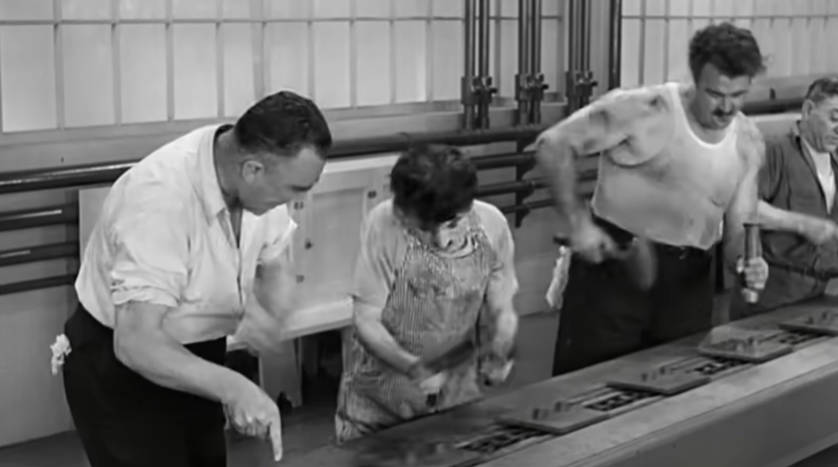
You've seen the clips, right? That frantic little man, covered in grease, desperately trying to keep up with an unstoppable machine. It’s Charlie Chaplin, and that unforgettable scene from his 1936 masterpiece, *Modern Times*, isn't just a slapstick masterpiece – it's a hilarious, heartbreaking look at what happens when humans become cogs in a giant industrial machine.
*Modern Times* was Chaplin's final outing as the Little Tramp, and it perfectly captured the anxieties of its era. As silent films gave way to "talkies," Chaplin stuck to his roots, using mime and physical comedy to tell a story that resonated deeply with a world grappling with the Great Depression and the relentless pace of modern industry.
The Assembly Line Nightmare
The factory scene is where it all comes to a head. From the moment the factory boss appears on a massive screen, barking orders to speed up the conveyor belt, you know things are about to go sideways. Our beloved Tramp is just one of many workers, tasked with the mind-numbing job of tightening bolts on an endless stream of products.
He tries, bless his heart, to keep pace. His hands fly, his body contorts, but the machine is always faster, always more demanding. A supervisor leans over him, adding to the pressure, and Chaplin's movements become more frantic, almost involuntary, mirroring the very gears he's meant to control.
[[AD]]
Then, the moment everyone remembers: The Tramp is literally sucked into the machinery. He becomes part of the conveyor belt, pulled through a series of giant cogs and gears in a dizzying, balletic sequence that is as terrifying as it is utterly absurd.
When Man Becomes Machine
When he's finally pulled out, backward and disoriented, the real genius of the scene unfolds. He's not quite right. His eyes are glazed over, and his body still twitches as if he's still tightening imaginary bolts. The machine hasn't just processed the product; it's processed *him*.
He grabs two wrenches and, in a daze, starts "tightening" everything he sees. People's noses, fire hydrants, even the buttons on a woman's dress – he sees them all as bolts needing his attention. It's a hilarious but poignant illustration of how repetitive labor can strip away your humanity, turning you into an extension of the very machinery you operate.
[[AD]]
The chaos escalates quickly. He chases the poor woman down the street, still determined to "fix" her buttons. The police get involved, leading to a frantic chase that ends with Chaplin back inside the factory, randomly pulling levers and causing even more mayhem in the control room.
[[VIDEO]]
His final act of rebellion? A joyful, anarchic dance through the factory floor, splashing oil everywhere and wielding his wrenches to disrupt the entire production line. It's less about malice and more about a complete break from sanity, a defiant laugh in the face of an unforgiving system.
Why It Still Resonates Today
More than 80 years later, this scene remains incredibly powerful. It’s a masterful piece of social commentary wrapped in brilliant physical comedy. Chaplin critiques the dehumanizing aspects of industrialization, the endless grind, and the feeling of being disposable in a system that values output over well-being.
Think about our world today: the gig economy, burnout culture, the pressure to constantly be "on." While we might not be tightening bolts on a physical assembly line, many of us feel that same frantic pace, that same fear of falling behind. Chaplin’s *Modern Times* reminds us to pause, laugh, and perhaps even question the machines that govern our lives.
[[AD]]
It's a testament to Chaplin's genius that a silent film scene from nearly a century ago can still speak volumes about our modern anxieties. So, if you haven't watched *Modern Times* in full, do yourself a favor. It’s a classic for a reason.
What other classic film moments perfectly capture the human spirit against impossible odds? Join us next time as we explore another unforgettable sequence from cinema history!


