Part 3
Megan Fox’s uncomfortable shutdown of a flirty reporter is a case study in how context changes everything. At the time, Fox — known for *Transformers* (2007, directed by Michael Bay, 144 minutes) and *Jennifer’s Body* (2009, written by Diablo Cody, 102 minutes) — was frequently subjected to interviewers who treated her as a pin-up rather than a performer. She shut one down with a cold, dismissive reply. Years later, Fox spoke openly about how objectification shaped her career and her mental health. The shutdown that once read as diva behavior now reads as self-preservation. The craft nerd’s takeaway: a single clip can’t be judged without the full timeline. The code compiles differently depending on the environment.
What ties all these moments together is a shared understanding of the interview as a format with implicit contracts. The interviewer agrees to ask questions in good faith. The celebrity agrees to answer in good faith. When one side breaks the contract, the other has a choice: absorb the hit, deflect, or shut it down. The best shutdowns are the ones that make the breach visible without escalating. Hardy’s “What on earth are you on about?” does this. Ramsay’s steak lecture does this. Jordan’s silence does this. They don’t just win the moment; they expose the machinery that made the moment possible.
For the craft nerds, the lesson is simple: a shutdown is not an outburst. It’s an edit. It’s a deliberate cut in the flow of an interview, a boundary drawn in real time. The genre fans get the thrill. The craft nerds get the technique. And the best shutdowns — the ones that endure — give both audiences exactly what they came for.
The Synthesis: Why These Moments Matter to Both Camps
So here we are. You’ve watched the genre fans cheer every time a celebrity verbally body-slams a rude interviewer. You’ve watched the craft nerds nod approvingly at the timing, the tone, the boundary-setting. Now let’s talk about why both camps are actually right—and why these moments matter more than ever.
[[AD]]
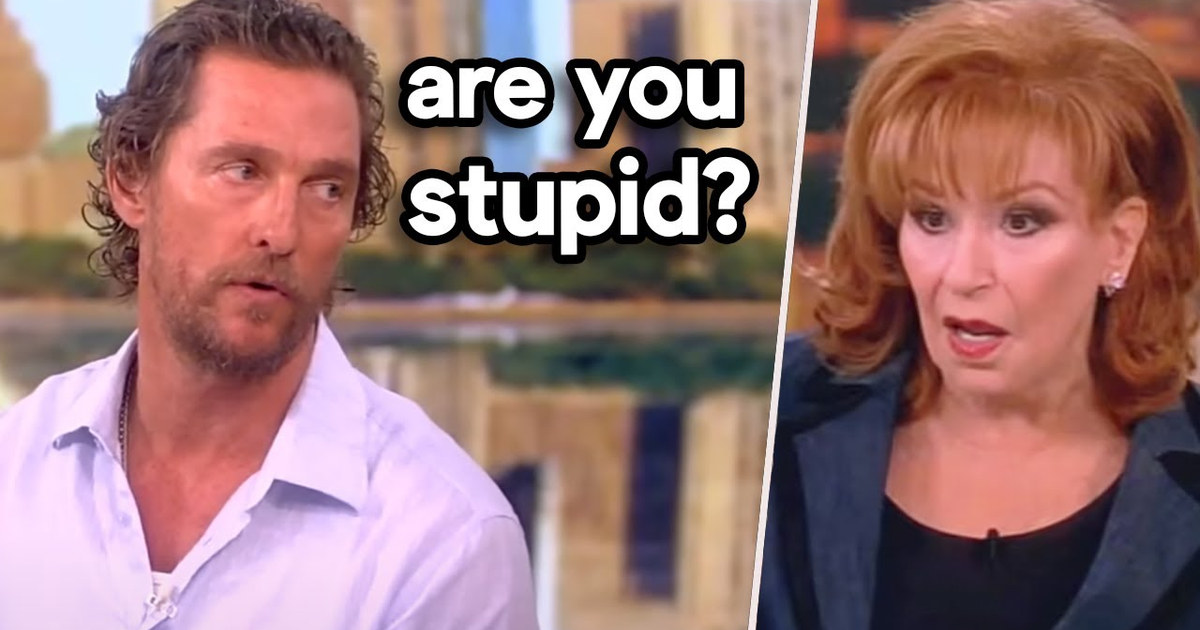
For the genre fans, it’s simple: you came for the fight. And nothing delivers like a movie star who refuses to be a punching bag. When Matthew McConaughey sat across from Joy Behar and she interrupted him to insult his friend Novak Djokovic—calling him an antivaxer—you could feel the temperature drop. McConaughey was there to promote his film, but Behar turned it into a political ambush. Then she asked if he could get elected in Texas being anti-gun. His response? “Playing a game that I’m not interested in playing.” That’s a knockout. No raised voice, no meltdown—just a clean, decisive shutdown. Genre fans live for that.
Craft nerds, meanwhile, appreciate the engineering. Look at Tom Cruise in that 2005 interview with Peter Overton on Australia’s 60 Minutes. Overton asked about Nicole Kidman, Cruise’s ex-wife. “Was Nicole the love of your life?” Cruise deflected. Overton pushed. “You’re stepping over a line now,” Cruise said, his voice tightening. “You’re stepping over a line. You know you are.” Then came the kicker: “Take responsibility for what you want to know. Don’t say what other people… Just put your manners back in.” That’s not just anger—that’s a masterclass in verbal jujitsu. Cruise didn’t storm off. He stayed, he controlled the frame, and he made Overton look like the one who’d misbehaved. Craft nerds rewind that clip to study the pause before “You’re stepping over a line.” It’s a lesson in escalation and de-escalation.
But here’s the thing: both audiences get something real. The genre fan gets catharsis. The craft nerd gets technique. And the celebrity? They get their boundaries back. That’s the synthesis.
Now, let’s zoom out. Celebrity interviews have changed. In the old days—think 1970s and ’80s—press junkets were controlled. Studios flew journalists to a hotel, fed them sandwiches, and stars answered the same five questions about the movie. The power was with the studio. Then came the 1990s and 2000s: tabloid culture exploded. Interviewers got more aggressive. David Letterman’s 2013 interview with Lindsay Lohan is a perfect example. She was there to promote her film The Canyons, but Letterman turned it into a rehab interrogation. “Aren’t you supposed to be in rehab now?” he asked. “How many times have you been in rehab?” Lohan’s voice shook. She was on the verge of tears. That wasn’t an interview—it was a public flogging. And it was celebrated as “good TV.”
But the power dynamic has shifted. Social media gave celebrities their own megaphones. They don’t need Letterman anymore. They can go on Instagram, TikTok, or a podcast and speak directly to fans. And when an interviewer crosses a line, the clip goes viral—and the public often sides with the star. Tom Hardy’s 2015 press conference for Legend is a perfect case. A reporter asked about his sexuality. Hardy, visibly annoyed, replied: “What on earth are you on about?” Then, after the reporter fumbled, Hardy said, “Are you asking me about my sexuality? Why?” The room went silent. That clip spread like wildfire. Hardy didn’t lose fans—he gained them. Because he refused to let a lazy, invasive question slide.
This shift didn’t happen in a vacuum. The #MeToo movement changed everything. It reminded us that consent and respect aren’t optional—not in the workplace, not in interviews. When Christina Hendricks was asked about being a “full-figured woman” and an “inspiration,” she shut it down. “You just said it again,” she told the host. That’s boundary-setting in real time. And it’s not just women. Jonah Hill, who’s been mocked about his weight for years, finally snapped when a reporter asked if he was “still the fat guy in Hollywood.” His response: “Do you have any other questions that are smart?” That’s not just a clapback—it’s a refusal to accept disrespect as the price of fame.
So where does that leave us? In a place where both the genre fan and the craft nerd can agree: these moments are unforgettable. The genre fan loves the raw emotion—the McConaughey stare, the Cruise warning, the Hardy confusion. The craft nerd loves the structure—the pause, the pivot, the precise wording that flips the script. And the human being in the middle? They get to say, “I’m not your punching bag.”
That’s why these clips endure. They’re not just entertainment. They’re tiny revolutions. They remind us that fame doesn’t mean forfeiting your dignity. And they give us a blueprint for our own lives: when someone crosses a line, you can shut it down. You can be firm. You can be clever. You can be Tom Hardy saying, “What on earth are you on about?”
Next time, we’re diving into more iconic interviews—including the one that aged the worst. Hint: it involves a nude scene and a very uncomfortable question. You won’t want to miss it.
But before you go: what’s your favorite celebrity clapback? Share it in the comments. Let’s build a library of shut-downs that both genre fans and craft nerds can appreciate.


