Part 1
The Moment That Sparked a Legend: Dolly Parton's Quick Comeback
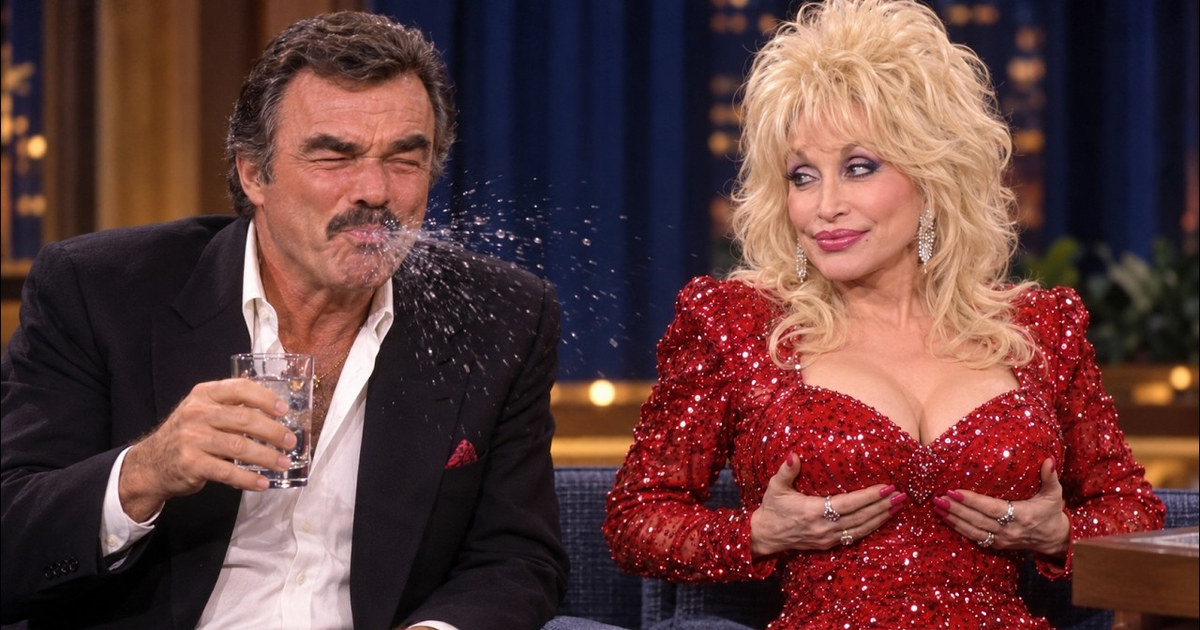
The talk show set is warm, the couch is deep, and the host leans forward with that concerned tilt of the head—the one they use when they're about to ask if you've been wounded by the world. "Weren't you offended that this is so controversial?" The question hangs there, heavy with implication. Dolly Parton doesn't blink. She doesn't shift in her seat. She just smiles that smile—the one that's seen everything and forgiven most of it—and says, "Well, as far as I'm concerned, there's no such thing as bad publicity." The audience erupts. Laughter rolls through the studio like a wave, and Dolly's eyes sparkle with the delight of a woman who knows she's just won the room without breaking a sweat. It's a throwaway line, really. A quick deflection. But in that moment, you see the whole architecture of her genius: the timing, the self-assurance, the refusal to be anyone's victim. She's not just answering a question—she's rewriting the terms of the conversation. And that, right there, is Dolly Parton.
That moment—so small, so perfectly calibrated—is the seed from which a thousand other Dolly moments grow. Because Dolly Parton isn't just a country music icon. She's not just the actress who made us cry in 9 to 5 (1980) and laugh through Steel Magnolias (1989). She's not just the songwriter behind "Jolene" and "I Will Always Love You." She's the master of the impromptu punchline, the queen of turning an awkward question into a standing ovation. And nowhere is that skill more on display than in her talk show appearances—those glorious, unscripted collisions of wit and warmth that have left hosts like Johnny Carson, David Letterman, and Oprah Winfrey alternately blushing, laughing, and completely disarmed. Dolly doesn't just visit a talk show. She takes it over, gently, with a joke and a wink.
Think about the context of that "no such thing as bad publicity" line. This is a woman who has been famous for over six decades. She's been parodied, praised, dissected, and adored. She's been the subject of tabloid rumors so wild they'd make a soap opera blush. And through it all, she's maintained a kind of radical good humor—a refusal to let the noise get under her skin. When a host asks if she's offended, she doesn't launch into a defense. She doesn't lecture. She just flips the script with a one-liner that's both a philosophy and a punchline. That's the Dolly way. She takes the thing that could be a burden and turns it into a bit. And the audience, bless them, eats it up every single time.
But let's back up for a second. Who is this woman who can command a room with a single sentence? Dolly Parton was born in a one-room cabin in Locust Ridge, Tennessee, in 1946—the fourth of twelve children. She grew up poor, but she grew up dreaming. By the time she was a teenager, she was already on local TV in Knoxville. By the late 1960s, she was writing songs for other artists and making a name for herself in Nashville. Then came The Porter Wagoner Show, then her solo career, then the movies, then the cultural ubiquity. She's won 11 Grammy Awards, been nominated for two Oscars, and been inducted into the Country Music Hall of Fame. She's a national treasure, a global icon, and a walking masterclass in how to be famous without losing your soul. But the thing that keeps us coming back—the thing that makes her not just respected but beloved—is her wit.
And that wit? It's not a performance. It's a survival mechanism that became a superpower. Dolly learned early that if you can make people laugh, you can make them listen. If you can make them laugh at your own expense, you can control the narrative. That's why she's so disarming when a host asks about her chest or her husband or her plastic surgery. She's already there, ahead of you, with a joke that's funnier and more honest than anything you could have said. She doesn't get defensive. She gets playful. And in doing so, she reminds us that the best way to handle a world that wants to define you is to define yourself first—and make it a punchline.
Take her appearances with Johnny Carson on The Tonight Show. Carson was the king of late night, a man who could make anyone nervous. But Dolly wasn't nervous. She'd sit down, cross those famous legs, and within minutes she'd have Carson giggling like a schoolboy. She'd tell stories about her family, her husband Carl Dean, her wigs, her makeup. She'd flirt, but always on her terms. She'd tease, but never with malice. And when Carson would try to get a little cheeky—asking about her figure or her love life—she'd volley it right back with a line that was somehow both self-deprecating and self-celebrating. It was a dance, and she was always leading.
Then there's David Letterman, who loved to push guests into uncomfortable territory. With Dolly, he met his match. She'd match his irreverence with her own, but with a warmth that softened the edge. When Letterman would ask something outrageous—like whether she'd ever considered posing for Playboy—she'd laugh and say something like, "Well, I don't know if they could afford me." The audience would howl, Letterman would blush, and Dolly would just sit there, radiant and unbothered. She never let a host get the upper hand. She never let a question turn into an interrogation. She just kept being Dolly, and that was more than enough.


