Part 1
The Thesis: Dolly Parton Was a Cinematographer's Dream Because She Understood Light, Texture, and Frame
Dolly Parton’s six-decade career proves that the most cinematic performers are those who treat their own image as a designed object, not an accident of genetics.
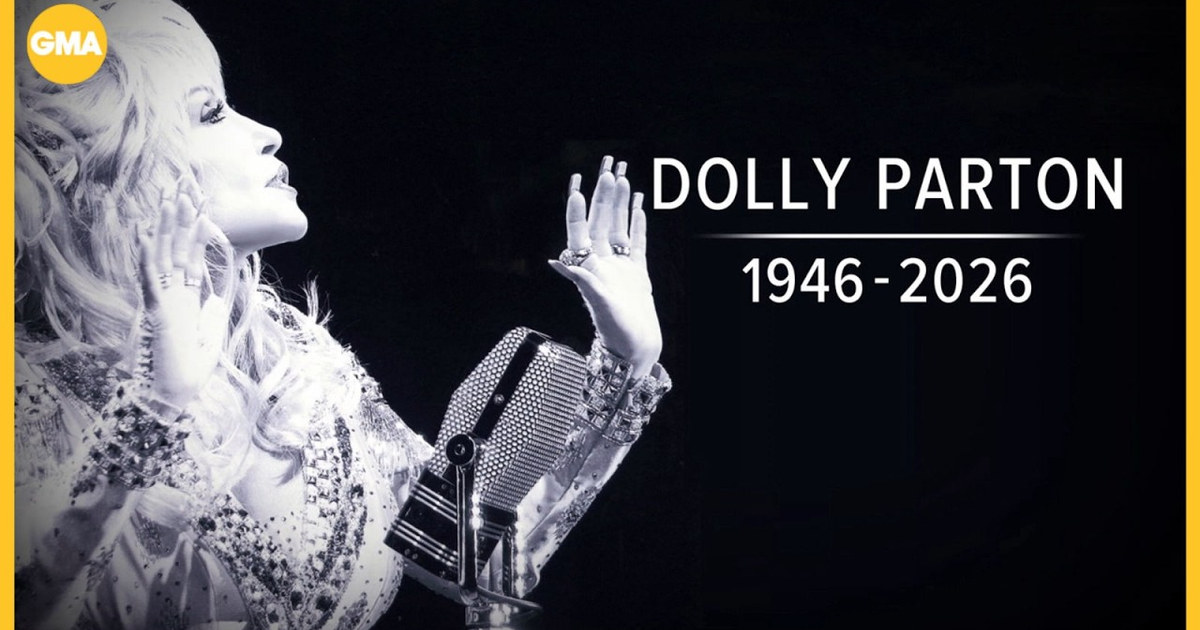
I’ve shot second-unit on music biopics and period dramas. I know what it looks like when a subject understands the camera. Most people don’t. They show up, hit their mark, and hope the DP makes them look good. Dolly Parton never hoped. She designed. She lit herself. She chose her own lenses. She framed herself before anyone else could.
Think about the tools. When you want warmth—real warmth, the kind that makes skin glow like it’s lit from inside—you reach for Cooke S4s. They’re forgiving, creamy, romantic. That’s Dolly in the 1970s: soft, golden, approachable. But when you need the raw, unvarnished energy of a 1970s television variety show, you grab an Angenieux zoom. Fast, a little gritty, prone to flare. That’s Dolly on the Cas Walker Show at age 10—already framed by ambition, already knowing where the lens was.
She was born in 1946 in East Tennessee, the fourth of twelve children. Poverty wasn’t a backdrop; it was the set. Her mother made clothes from scraps, and Dolly wore them on camera—well, on the porch, on the church stage, on the local TV set. By 10, she was performing on the Cas Walker Show in Knoxville. By 13, she stood on the Grand Ole Opry. The raw footage of her early life is unpolished, but it’s already framed by a girl who knew exactly where to stand.
Here’s the quote that every cinematographer should tape to their light meter: “I ain’t going to change my image. I’m going to make a fortune out of it.” That’s not a punchline. That’s a production design decision. She looked at the notes from executives—change your hair, change your makeup, change your look—and she treated them like a bad lighting plan. She rewrote the script. She kept the wigs, the nails, the rhinestones, and she made them her signature. That’s not vanity. That’s craft.
In cinematography, we talk about “book lights”—a tiny, flexible light you can hide anywhere to add a sparkle to an eye or a highlight on a cheekbone. Dolly built her entire persona like a book light. She knew exactly where to place the glint. She understood texture: the difference between a cheap sequin and a hand-sewn rhinestone under a 10K fresnel bounced into muslin. She understood frame: how to fill it without overwhelming it, how to let a co-star breathe while still owning the shot.
That’s why she became a cinematographer’s dream. She didn’t just perform for the camera; she collaborated with it. She gave you something to light. She gave you contrast, color, movement. She gave you a subject who was already in character, already in costume, already in the moment. Your job was just to keep up.
Over the next three sections, I’ll make the case. First, the coat as origin story—Coat of Many Colors, 1971, and how a patchwork jacket became a visual manifesto. Then the 1980s film run: 9 to 5, The Best Little Whorehouse in Texas, Steel Magnolias, and the Bodyguard royalty that changed everything. Finally, the late-career legacy: Dollywood, Imagination Library, and the honorary Oscar at 79. Each one is a different lens on the same truth: Dolly Parton didn’t just survive the camera. She designed it.
The Coat as Origin Story: How Poverty, Patchwork, and a Knoxville TV Show Shaped Dolly's Visual Language
Picture the shot: a single-camera setup on the Cas Walker Show in Knoxville, 1956. A ten-year-old Dolly Parton steps into harsh, flat studio lighting—the kind that bleaches skin and kills contrast. No fill, no diffusion, just raw bulbs. But watch her eyes. She already knows where the lens is. She already knows how to hold a beat. When the applause hits, it’s not just sound—it’s a chemical reaction. “That was just like a shot of adrenaline,” she later said. She was hooked. That’s not a child performer. That’s a star who hasn’t been discovered yet.
That moment is the establishing shot of a six-decade career. But to understand Dolly Parton as a visual icon—the rhinestones, the bouffant, the impossible waistlines—you have to go back further. You have to look at the coat.
“My mama was the first designer I knew,” Dolly said. In a family of twelve kids in East Tennessee, clothes came from scraps. Her mother sewed a patchwork coat out of whatever fabric was left over. Dolly wore it to school. Classmates mocked her. She wrote about it in 1971’s “Coat of Many Colors.” That song isn’t just a hit—it’s a visual manifesto. It says: I will take what you reject and turn it into gold. That’s a cinematographer’s instinct. You frame the ugly, the broken, the makeshift—and you light it until it glows.
Later, the rhinestones and the bouffant became armor. “People said, ‘You’ve got to change your image,’” Dolly recalled. “I said, ‘I ain’t going to change my image. I’m going to make a fortune out of it.’” She understood that in a visual medium, silhouette is story. The bigger the hair, the tighter the waist, the more she controlled the frame. She wasn’t hiding—she was designing herself like a set. Every sparkle is a practical light. Every curl is a compositional choice.


