Part 3
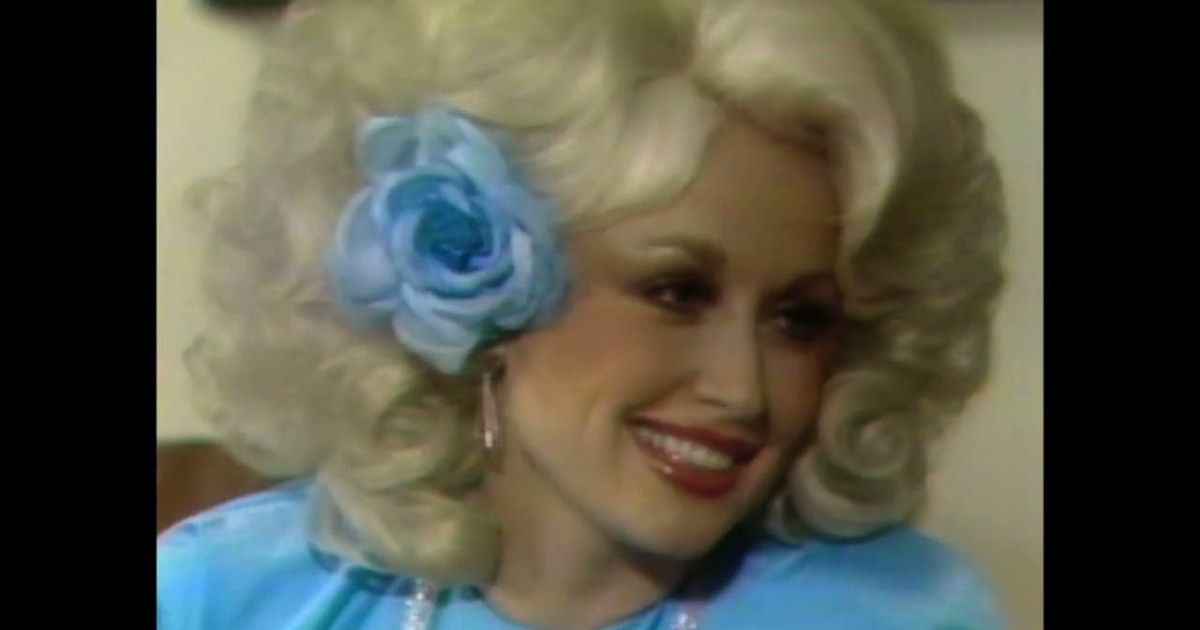
Then there's the fairy tale sequence. Walters tries to tell Dolly's life as a storybook: 'Once upon a time, there was a little girl... she wanted to find the other slipper... she was a fairy princess and she lived happily ever after.' Dolly doesn't mock it. She doesn't roll her eyes. She lets Walters tell it. But earlier, she said something that cuts through the fairy tale: 'I wanted more than to just be a farmer's daughter, even though I'm proud to be.'
That's the key. She's proud of where she came from, and she wanted more. Both things are true. The consensus wants to flatten that into a single joke: the poor girl who made good and now winks at her own poverty. But Dolly never winks. She holds both truths at once — the pride and the ambition. That's not a punchline. That's a philosophy.
Her class politics show up in her work, too. In 9 to 5 (1980), directed by Colin Higgins, she plays Doralee Rhodes, a secretary who's harassed by her boss, Franklin Hart Jr. (Dabney Coleman). The film is a comedy, but it's about class and gender — about women who are treated as servants and decide to take control. Dolly isn't mocking Doralee. She's playing her with dignity. The wigs and the curves are still there, but they're not a joke. They're a uniform.
[[AD]]
In Steel Magnolias (1989), directed by Herbert Ross, she plays Truvy Jones, a small-town hairdresser in Louisiana. Truvy is working-class, warm, and wise. Dolly plays her with the same dignity. She's not laughing at these women. She's honoring them. The hair, the makeup, the curves — they're part of the job, part of the armor. They're not a punchline.
Contrast that with how the media treated other country stars. Loretta Lynn, Tammy Wynette, Porter Wagoner — they were often caricatured as hillbillies, their rural roots used as a punchline. Dolly is often seen as the one who escaped that stereotype by laughing at it. But she didn't escape it. She owned it. She said, 'I'm very real where it counts. And that's inside.' The outside was the armor. The inside was the class.
The consensus says she turned her poverty into a punchline. But a punchline is something you throw away. Armor is something you keep. Dolly kept hers. She still keeps it. And that's not a joke. That's a strategy.
Dismantling the Consensus, Part 3: The 'Joke' Reading Ignores What She Said About Marriage and Freedom
The consensus is that Dolly Parton's marriage to Carl Dean was a bit. A punchline. Nobody ever saw him. She was on the road constantly. She joked about temptations, about not wanting to know what he did, about not prying. The consensus says: see? Even her marriage was a joke. She was in on it. But that reading isn't just lazy—it's wrong. Dolly's marriage wasn't a gag. It was a radical model of partnership, and the joke is on anyone who can't see that.
Start with the Barbara Walters interview, because that's where the consensus gets its ammo. Walters asks the obvious question: 'If what you want most is freedom, why have a husband away someplace to see six weeks a year?' Dolly doesn't flinch. She says, 'But he has the same freedom.' Then she adds, 'We have our foundation. We have our roots. We have all the things that everybody's looking for, and that's happiness in a marriage.' That's not a punchline. That's a philosophy. Walters is pushing the traditional script—marriage means togetherness, daily presence, visible proof. Dolly flips it. Freedom isn't the opposite of commitment. It's the foundation of hers.
Then there's the temptation quote. Walters asks about temptations on the road. Dolly corrects her: 'I didn't say that. We never had temptations.' But then she goes further: 'If by being apart, if we should meet somebody, I would never tell him. He would have never known and it wouldn't hurt him.' The consensus hears a wink-wink, nudge-nudge joke. But it's not. It's a boundary. She's saying: I don't want to know. I've got better things to do than sit around wondering. That's not a joke. That's a choice—a deliberate, clear-eyed decision about how to protect a marriage that works for her.
Dolly and Carl Dean have been married since 1966. That's 57 years—longer than most celebrity marriages last in dog years. The consensus treats it as a punchline because we never see him. But Dolly has always said the marriage works because of the freedom. In 2023, she told interviewers that Carl is her biggest supporter. The 'joke' reading erases nearly six decades of a working partnership. It reduces a real, functioning marriage to a bit because it doesn't look like the ones we're used to.
Contrast that with how the media treats other celebrity marriages. Taylor Swift and Travis Kelce are photographed together constantly. Beyoncé and Jay-Z built an empire on public appearances—and public scandals. Kim Kardashian's marriages played out on reality TV. The consensus expects joint red carpets, Instagram posts, coordinated outfits. Dolly and Carl never did that. The consensus says: it must be a joke. But Dolly says: it's freedom. The consensus is wrong. It's not a joke. It's a different model—one that prioritizes individual autonomy and private trust over public performance.
Yes, Dolly does make jokes about herself. She says, 'I make more jokes about myself than anybody.' She says, 'I know they make fun of me, but actually all these years the people has thought the joke was on me, but it's actually been on the public.' That's funny. But it's also true. And the consensus uses that humor to avoid taking her seriously. The consensus says: she's in on the joke. I say: she's in on the business. And the business is being a superstar.
Dolly Parton wasn't a joke. She was a strategist. The wigs, the curves, the rhinestones—they weren't a gag. They were a uniform. She said it herself: 'I would never stoop so low as to be fashionable.' That's not a joke. That's a declaration. And the consensus, for all its flattery, misses the point. She wasn't laughing at herself. She was laughing at us. Not because we were stupid, but because we thought she was kidding.
Next time, we'll look at how Dolly's 'backwoods Barbie' image became a template for other stars—from Reba McEntire to Miley Cyrus—and why the consensus still can't take a woman in a wig seriously.


