Part 1
The Stand-Up: A Beat That Changed Everything
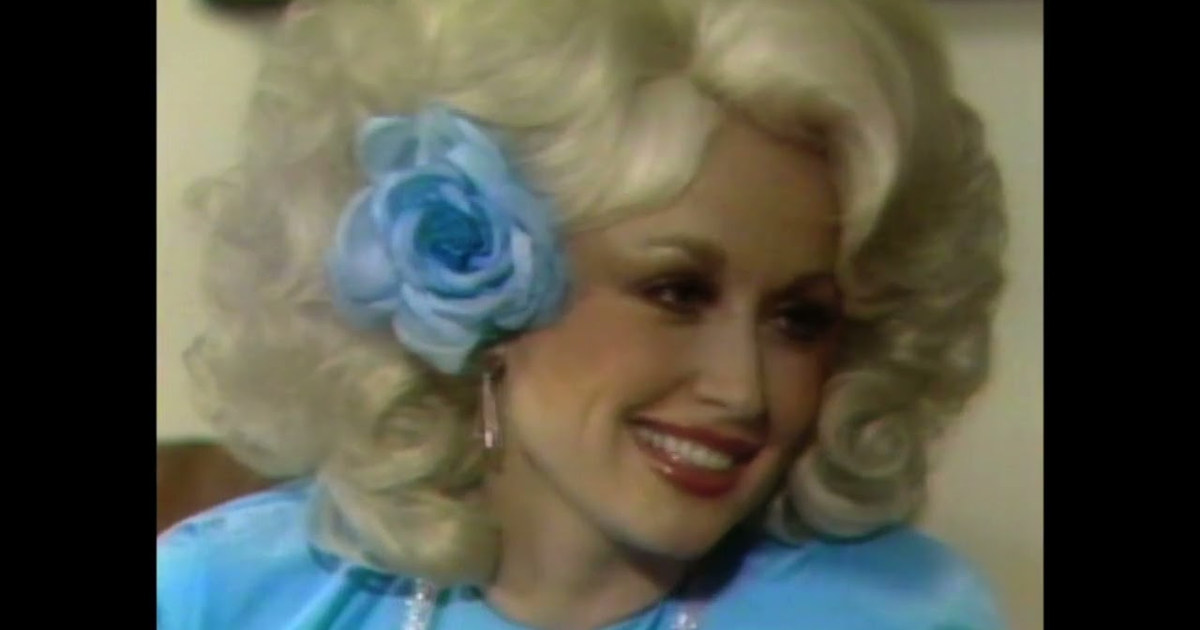
Barbara Walters leans in. It’s 1977. The No Frills interview. Dolly Parton is 31. Walters asks her to stand up. Dolly laughs. “I’m not all that curvy in this outfit,” she says. Walters pushes. Dolly stands. The audience gets what it came for. But watch her face. She’s in control. This isn’t exploitation. It’s choreography.
Cut to the transcript. Walters asks about measurements. Dolly deflects: “I always just say that I weigh 120.” A joke. A shield. But also a fact. She’s been answering this question since she was 11, 12, 13. The body came early. The armor came later.
Here’s the thread: Dolly’s appearance is a Trojan horse. She built it. She rides it. She lets people stare at the horse so they don’t notice the army inside. The army is her mind. Her voice. Her business. Her soul.
In 1977, Dolly Parton is already a country superstar. “Jolene” and “I Will Always Love You” are behind her. She’s written thousands of songs. She’s toured relentlessly. She’s built an empire from a log cabin on the banks of the Little Pigeon River. But mainstream America still sees a cartoon. Barbara Walters is about to find out she’s talking to a CEO.
The interview is part of ABC’s No Frills series. No frills. No glamour. Just Barbara Walters and a subject. But Dolly doesn’t do no frills. She does extreme frills. The blonde wig. The colorful clothes. The well-known physical attributes. They’re all part of the package. And the package is a weapon.
Walters starts with childhood. “Tell me about your childhood,” she says. Dolly’s answer is pure Dolly. “Well, there’s really quite a bit to tell. I don’t know how far back you want to start.” Walters says, “Let’s start at the beginning.” Dolly: “I was born in a little log cabin. On the banks of the Little Pigeon River. And of course, at that time, we only had three other children. There’s 12 children there. There’s eight younger than me.”
That’s the setup. Twelve kids. A log cabin. No running water. No electricity. Dolly Parton grew up poorer than poor. But she didn’t stay poor. She had a plan. And the plan started with a look.
Walters asks, “Dolly, where I come from, would I have called you a hillbilly?” Dolly doesn’t flinch. “If you had have, it would have been something very natural, but I would have probably kicked your shins or something.” A joke. A warning. Then she gets serious. “No, actually. I think you probably are. The people that grew up where I was were the ones that you would consider the Li’l Abner people, Daisy May and that sort of thing. They took that kind of thing from people like us. But we were very proud people, people with a lot of class. It was country class, but it was a great deal of class. And most of my people were not that educated, but they are very, very intelligent. Good common sense, horse sense we called it.”
Horse sense. That’s the key. Dolly Parton has horse sense. She knows exactly what she’s doing. She knows the camera is on her. She knows the audience is watching. She knows they want the blonde wig. The curves. The laugh. So she gives it to them. And while they’re distracted, she takes everything else.
Walters asks about her childhood dreams. Dolly says, “I wanted more than to just be a farmer’s daughter, even though I’m proud to be. I just wanted pretty things. I wanted money to buy the things that I had always been impressed with as a child. I wanted to be a star.”
She became a star. But not the kind of star Walters expected. By 1977, Dolly had already written “Jolene” and “I Will Always Love You.” She had already been inducted into the Grand Ole Opry. She had already won a Grammy. She was already a businesswoman. She owned her own publishing company. She controlled her own masters. She was not a dumb blonde. She was a smart brunette in a blonde wig.
Walters asks, “Dolly, did you look like this when you were a kid?” Dolly laughs. “Not quite. I mean, you didn’t have the blonde wig, but when you went to school, when you were 11, 12, 13…” She trails off. The implication is clear. She developed early. She got attention. She learned to use it.
That’s the origin story. The body came first. The armor came second. The armor is the wig. The makeup. The clothes. The persona. It’s not a mask. It’s a suit of armor. And Dolly wears it like a knight.
Back to the stand-up. Dolly stands. She smiles. The blonde wig. The extreme clothes. And behind her eyes, a calculator running. She knows exactly what she’s doing. She’s not being exploited. She’s exploiting the exploiters. She’s giving them the horse so they don’t see the army.
The army is her mind. Her voice. Her business. Her soul. And it’s about to march.
The Log Cabin, the Hillbilly, and the Horse Sense
Cut to black. Rewind. 1946. Sevier County, Tennessee. A one-room log cabin on the banks of the Little Pigeon River. No running water. No electricity. Dolly Parton is born. She's one of twelve children. Eight come after her. The cabin is small. The family is large. The love is loud.


