Part 1
The Consensus: Dolly Parton's Image Was a Joke She Was In On
Here's the take you've heard a thousand times. Dolly Parton's early image—the towering blonde wigs, the rhinestones, the curves, the makeup—was a self-aware joke. She got it before we did. She was in on it. She dressed like a caricature so we'd underestimate her, then she'd win us over with that voice. It's the read you get from podcast hosts, YouTube essayists, and think pieces from the 2010s onward. And it's flattering—to Dolly, and to us. It says she was smart enough to play dumb, and we were smart enough to see through it.
I think that reading is wrong. Or at least, it's incomplete in a way that matters. Dolly wasn't joking. She was dead serious. The image wasn't a gag—it was a business strategy, a suit of armor, and a declaration of independence. And she said so herself, on camera, in 1977, to Barbara Walters.
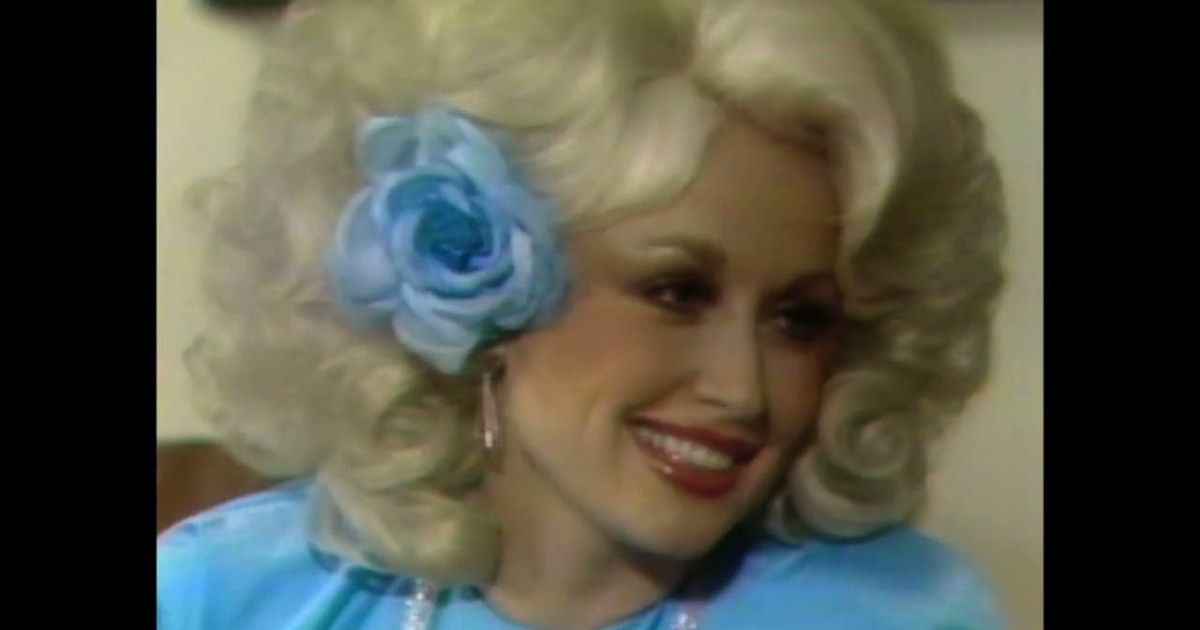
That interview—part of Walters' No Frills series—is the Rosetta Stone for everything Dolly became. She's 31 years old. She's already a Grand Ole Opry star. She's already six years past her split from Porter Wagoner, the country music partner who helped launch her but also tried to hold her back. She's already pivoting to pop, already planning the crossover that would make her a global icon. Walters asks about the wigs, the measurements, the 'extreme clothes.' And Dolly doesn't deflect with a joke. She explains the strategy.
'I would never stoop so low as to be fashionable,' she says. 'That's the easiest thing in the world to do. So, I just decided that I would do something that would at least get the attention. Once they got past the shock of the ridiculous way I looked and all that, then they would see there was parts of me to be appreciated.'
That's not a punchline. That's a mission statement. She's telling Walters—and us—that the image was a tool. A way in. A deliberate choice to be so visually loud that people would stop and stare, and then, once she had their attention, she could hit them with the talent. The wigs weren't a joke. They were a door.
The consensus reading gets the surface right. Dolly is funny. She is in on it. She does mock herself—'I'm not all that curvy in this outfit,' she tells Walters, deadpan. She jokes that if she hadn't been born with her figure, she'd have bought one. She calls show business 'a money-making joke.' She's quick, she's warm, she's self-deprecating. All true.
But the consensus stops there. It treats the image as a costume she put on to fool us. I say it was a uniform she put on to go to work. And the work was becoming a superstar. Over the next three sections, I'm going to dismantle the 'joke' reading piece by piece. First, it erases her agency and her business mind. Second, it misreads her class politics—she wasn't mocking her roots, she was weaponizing them. Third, it ignores what she actually said about her marriage, her freedom, and her ambition. By the end, you'll see that the woman who told Barbara Walters 'I know exactly what I'm doing' wasn't kidding. She was building an empire.
Now, to be fair: the consensus isn't stupid. Dolly did make jokes about herself. She still does. In that same 1977 interview, she says, 'I make more jokes about myself than anybody because I enjoy it.' She's not a solemn figure. She's a comedian as much as a country music star. But funny isn't the same as kidding. A stand-up comic can be dead serious about the craft while making you laugh. Dolly was dead serious about the business while making us laugh. The joke was never on her. As she told Walters, 'All these years the people have thought the joke was on me, but it's actually been on the public.' That's not a punchline. That's a warning.
Dismantling the Consensus, Part 1: The 'Joke' Reading Erases Her Business Mind
The consensus argument goes like this: Dolly Parton's image was a joke because she said so. She told Barbara Walters in that 1977 interview, 'I make more jokes about myself than anybody because I enjoy it.' She called show business 'a money-making joke.' She said, 'I know exactly what I'm doing and I can change it at any time.' The consensus reads this as: see? She's in on it. It's performance art. She's winking at us. The joke is on the public, not on her.
I think that reading is wrong. Not stupid — wrong. It's the lazy way out. It takes a woman at her word when she's being playful and ignores her when she's being precise. And Dolly Parton, even in 1977, was being very precise.
That's not a joke. That's a business plan.
Start with the line everyone quotes: 'Show business is a money-making joke.' Read it again. She's not laughing at herself. She's laughing at the industry. She's saying the whole thing is a joke — the glamour, the hype, the machine — so I might as well make money off it. That's not self-deprecation. That's a critique of the business. And it's a strategy. If the game is rigged and ridiculous, you don't sit out. You play it better than anyone else. Dolly didn't invent the joke. She just refused to be the punchline.


