Part 1
The Punchline as Power Move: How Self-Deprecation Became Their Secret Weapon
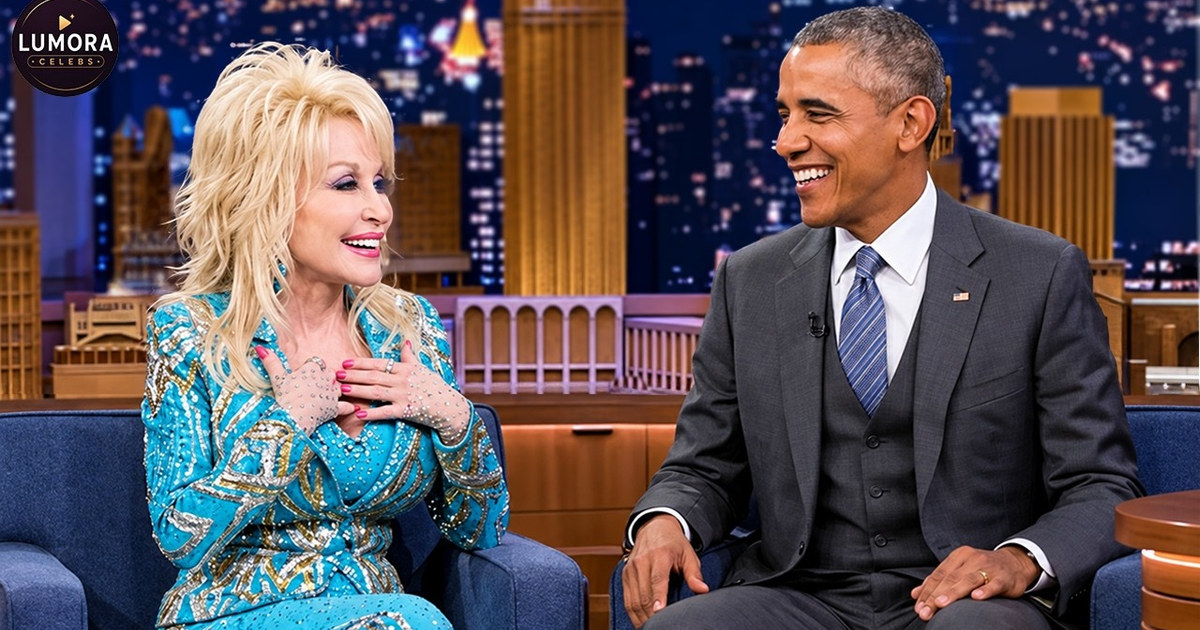
You have probably seen the trailer for Dolly Parton's Rockstar album or Barack Obama's latest Netflix documentary. But have you ever wondered why they can make fun of themselves in ways that would sink other celebrities? You know the moments: Dolly grinning, "There ain't nothing big about me but my mouth and my boobs." Obama deadpanning about being "gray and grizzled" and "just counting down the days till my death panel." These aren't gaffes. They're calculated, and they land like precision strikes. Why does self-deprecating humor work so well for Dolly Parton and Barack Obama, and what does it reveal about their public personas?
Dolly Parton, the country music legend and cultural icon, and Barack Obama, the 44th U.S. president, come from vastly different worlds—one from the Smoky Mountains of Tennessee, the other from Honolulu and Chicago—yet both have mastered the art of making themselves the butt of the joke. And they've done it in eras when public figures are scrutinized like never before. Their secret? They don't just deflect criticism; they own it, wrap it in a punchline, and hand it back to us with a wink.
Consider Dolly's approach to her own image. She once quipped, "I always say the boob jokes are not near as funny as most of the boobs that tell them." It's a line that does three things at once: it acknowledges the joke, turns it back on the joker, and reminds you she's in on it. Compare that to Mae West in She Done Him Wrong (1933), who wielded double entendre and self-aware sexuality like a weapon. West's delivery was all innuendo and control; Dolly's is warmer, more down-home, but the effect is the same. Both women understood that if you define your own caricature, no one else can use it against you.
Obama's version is cooler, more ironic. In 2014, he appeared on Between Two Ferns with Zach Galifianakis, trading insults about his birth certificate and his approval ratings. The bit worked because he seemed genuinely amused by his own absurdity. He even joked with Jay Leno about growing up in Kenya with Donald Trump: "We had constant run-ins on the soccer field and he wasn't very good and resented it." That's not a defense; it's a preemptive strike. By laughing first, he takes the sting out of the conspiracy theories.
Ronald Reagan used humor in the 1980s to charm and deflect—remember "I am not going to exploit, for political purposes, my opponent's youth and inexperience"? But Reagan's wit was often scripted, a tool of the office. Obama's is more modern, more self-aware. He doesn't just tell jokes; he lets you see him enjoying them. That's the ironic twist: the most powerful man in the world, laughing at his own expense, makes you feel like you're in on the joke rather than the target of it.
So why does this work? Self-deprecation disarms critics. If you call yourself a boob before they do, the insult loses its power. It humanizes the powerful—Obama's "death panel" joke at the 2013 White House Correspondents' Dinner turned a grim political attack into a shared laugh. It creates intimacy: we feel like we know them because they've let us see them not taking themselves too seriously. And it lets them control the narrative around their perceived flaws. Dolly's body, Obama's birth certificate, his aging—these are things others use to define them. By joking about them first, they define themselves.
Dolly takes it further. When someone called her a hooker, she responded, "I guess I should feel hurt, but I don't cuz I pattern my look after a hooker who better than me." That's not just deflection; it's a reclamation. She's not denying the comparison; she's owning it and making it part of her legend. It's the same energy she brought to her cameo in The Beverly Hillbillies (1993), where she played herself as a larger-than-life caricature. She knows exactly what you think of her, and she's already three steps ahead.
Obama's humor also serves a strategic purpose. When he joked about his birth certificate with Jay Leno, he was addressing a fringe conspiracy theory that had real political traction. By making it a punchline, he didn't just dismiss it; he made it ridiculous. The same goes for his "gray and grizzled" routine. Aging in office is a visual reminder of mortality and stress. By pointing it out first, he turns a vulnerability into a relatable moment. You can't use a man's age against him if he's already joking about his death panel.
This is the power move: self-deprecation isn't a sign of weakness; it's a display of confidence. It says, "I know who I am, and I'm not threatened by your opinion." For Dolly, it's an extension of her authenticity. She's never pretended to be anything other than what she is—a rhinestone-studded, big-haired, big-hearted icon who knows exactly what she's doing. For Obama, it's a way to navigate the absurdity of modern politics without losing his cool. Both use it to maintain likability and authority at the same time.
In a culture that loves to tear down its heroes, Dolly and Obama have found a way to be both beloved and respected. They've turned the punchline into a power move. And that's why we can't get enough of them—because they make it look easy, even when we know it's anything but.


