Part 2
And then there’s her famous line: “The boob jokes are not near as funny as most of the boobs that tell them.” That’s Dolly flipping the script on hecklers and interviewers alike. She’s not just deflecting—she’s returning fire with a smile. It’s the kind of line that makes you want to stand up and applaud, because she’s taken the thing people tease her about and turned it into a weapon. A velvet one, but a weapon nonetheless.
Contrast that with Obama’s approach. Obama deflects with irony. He’ll say he’s gray and grizzled, counting down the days till his death panel, and the joke works because it’s understated. Dolly amplifies with exaggeration. She doesn’t downplay the boobs—she cranks them up to eleven and dares you to keep up. Both control the narrative, but they do it from opposite directions. Obama shrinks the target; Dolly makes it bigger than life. And somehow, both leave the audience laughing with them, not at them.
Take the “hooker convention” moment. Someone yelled, “It’s not a hooker convention, it’s a Dolly Parton concert.” Her response? “I guess I should feel hurt, but I don’t, ’cause I pattern my look after a hooker—who better than me?” That’s not just a comeback; it’s a thesis statement. She’s owning the comparison, embracing the caricature, and turning a potential insult into a badge of honor. Who better than her, indeed.
Then there’s the 2017 Jimmy Kimmel interview where she says she sleeps in her makeup in case of an earthquake in LA. It’s a vulnerable admission turned into a charming quirk. She’s always ready for the camera—even at 3 a.m. Most stars would never admit something so vain or so practical. Dolly makes it sound like a survival strategy. And in a way, it is. She’s built a career on being perpetually on, perpetually Dolly. The joke isn’t that she’s vain; it’s that she’s prepared. For anything. Even the apocalypse.
[[AD]]
The deeper point here is that Dolly’s self-deprecation isn’t self-diminishing. It’s self-mythologizing. She turns every potential insult into a badge of honor. Every joke about her body becomes a story about her agency. Every jab becomes a chance to remind you that she’s the one holding the pen. She’s not laughing at herself—she’s laughing at the idea that anyone else could get there first.
If Obama’s humor is a shield, Dolly’s is a crown. Next, we’ll see what happens when the joke is on someone else—and they still win.
Stop Three: The Improv Instinct—When the Audience Becomes the Scene Partner
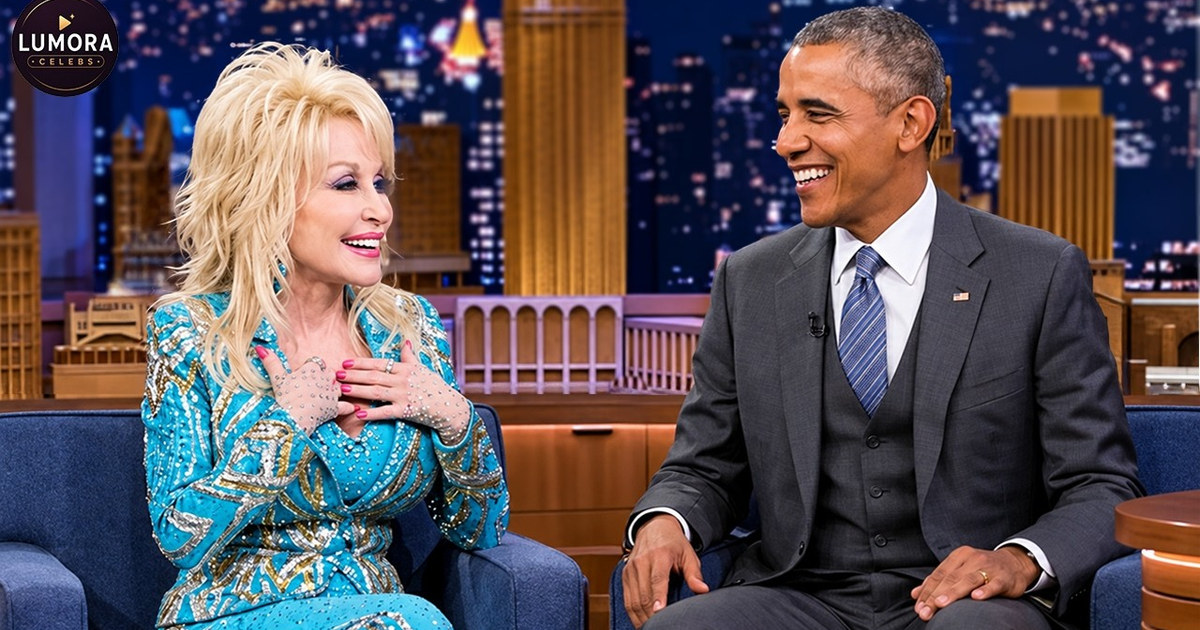
First, look at this: Dolly Parton’s hand hovering over a button. It’s a tiny gesture, but it tells you everything about how she turns a dare into a duet. The moment happens on Late Show with David Letterman in the 2010s. Letterman, never one to shy away from a bit, looks at Dolly and says, “I dare you to take off all your clothes right now.” Most guests would laugh it off or blush. Dolly doesn’t flinch. She starts unbuttoning, then pauses and says, “You may have to help me with this, ’cause this is hard here.” The audience screams. In that split second, she’s turned a host’s dare into a striptease bit—without ever losing control. She’s not the butt of the joke; she’s the director of it.
Analyze the mechanics. Dolly uses the host’s dare as a setup, then escalates just enough to be funny, not crude. She brings the audience in. The “help me with this” line is a masterclass in making the crowd complicit. Suddenly, everyone in the studio—and everyone watching at home—is in on the joke. She’s not just performing; she’s inviting us to perform with her. That’s the improv instinct: treat the audience as your scene partner, not your spectator.
[[VIDEO]]
Fast-forward to 2016 on Jimmy Kimmel Live! Dolly tells a pregnant Kimmel, “If you need a wet nurse, you call me.” Then, after a beat, she clarifies: “For the baby.” The audience roars. She’s playing with boundaries but always lands on the right side of charm. The pause is everything. It gives us time to go there—and then she pulls us back. She’s not being crude; she’s being playful. And she’s making Kimmel part of the bit, not just the target.
But Dolly’s humor isn’t just for laughs. Take her advice to teenagers: “Act like it’s raining every day and wear your rubbers.” It’s a double entendre, sure, but it’s also genuinely practical. Dolly’s humor often works on two levels: the laugh and the life lesson. She’s the kind of comedian who can make you giggle and then make you think. That’s a rare gift.
Now, compare that to Barack Obama’s 2015 Jimmy Kimmel interview. Obama talks about his phone being like a toddler’s toy—no camera, no music, just email and a weather box. Then Kimmel asks for Hillary Clinton’s email address. Obama: “I can’t share it with you, but I don’t think she’d want you to have it.” It’s a political joke that also humanizes him. He’s not just the President; he’s a guy who can’t take a decent photo and who respects his Secretary of State’s privacy. The audience laughs, but they also learn something about him.
The pattern is clear: both Obama and Dolly use improvisation to turn interviews into performances. They don’t just answer questions—they redirect the energy. The audience becomes part of the act. When Obama jokes about his phone, he’s inviting us to see him as a regular person. When Dolly unbuttons her shirt, she’s inviting us to join her in the mischief. They’re not just talking to the host; they’re talking to us.


