Part 4
Analyze the marriage as a creative freedom structure. Dolly says the marriage gives her everything a person needs, including freedom, which she feels you must have to be creative. She calls it a "special kind of sacred freedom." She says she's a flirt, her husband's a flirt, and it's not a threat. She says she's married but not dead, and faithful "as best I know how." That's not a tabloid headline—that's a cinematographer's note on how to keep the lens from fogging: give the subject room to breathe.
The business plans are production design for a future brand. Dollywood USA in East Tennessee, near Gatlinburg, described as a fantasy city, a Smoky Mountain Fairyland, sort of like Disneyland. Cosmetics, a clothing line for the average American public, sold at Kmart. She says she's not a designer but has ideas, and she knows her audience because she grew up with them. That's not vanity—that's the long game. The wigs, the shoes, the mansion, the museum plans, the Dollywood idea—all of it is continuity. She is building a star image that can survive the illness, the reviews, and the rumors.
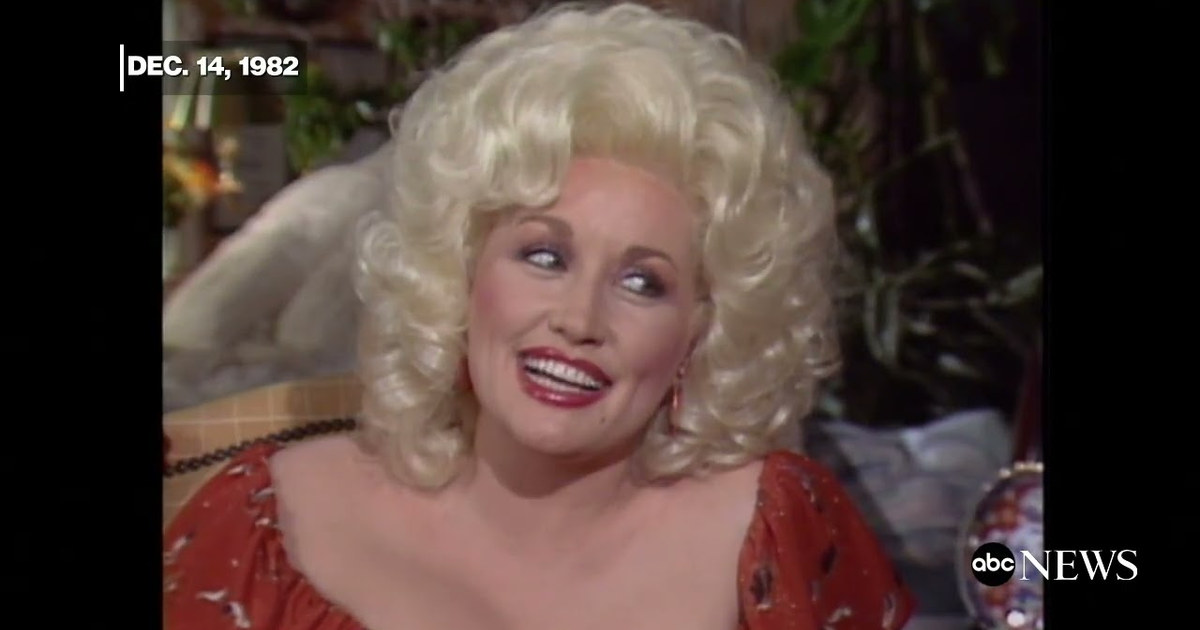
This home interview is the master shot that explains the close-ups. Every close-up of Dolly Parton—on stage, on screen, in a magazine—is only possible because of what's happening in this house: the rooms of clothes, the wigs on stands, the husband who won't be filmed, the business plans sketched out in a music room with a bed added for recuperation. It's all one continuous take. And the next time you see Dolly Parton on screen, watch the lighting—not just the hair. Because the hair is just the wig. The lighting is the life.
What to Watch For: The Next Time You See Dolly Parton On Screen, Watch the Lighting—Not Just the Hair
The next time you stream *9 to 5* (1980, 109 minutes, on Hulu and Prime Video) or *The Best Little Whorehouse in Texas* (1982, 114 minutes, on Peacock and Tubi), don’t just stare at the wigs. Watch the light. Watch how the camera treats her. That’s where the real story lives.
In *9 to 5*, director Colin Higgins and DP Reynaldo Villalobos key Dolly like a lead from her very first scene. She’s lit with a hard, bright key from camera left, a crisp eyelight, and a warm backlight that separates that famous blonde halo from the fluorescent office background. The contrast ratio is punchy—maybe 4:1—so her skin glows while the secretarial pool behind her falls into a slightly cooler, flatter wash. That’s not accidental. That’s a DP saying: this is the star. She’s not a guest in this movie. She’s the engine.
Compare that to *The Best Little Whorehouse in Texas*. Here, the lighting shifts. In the musical numbers, DP William A. Fraker goes big: hard sources, saturated gels, and a key that’s almost theatrical. But in the dramatic scenes—especially the quieter moments with Burt Reynolds—Dolly is sometimes framed like a guest star in her own film. The key softens, the contrast drops, and the camera starts sharing the frame more equally. Watch the scene where she sings “I Will Always Love You” to Reynolds. She’s lit with a single soft source, almost a practical from the window, and the background falls off into near-black. It’s intimate, but it’s also smaller. The star is being asked to be human, not just a spectacle.
That contrast—hard and bright for comedy, soft and low-contrast for intimacy—is the whole thesis of Dolly Parton’s star image. She’s a construction. Hair, wardrobe, lighting, business strategy. And the 1980s TV interview is the evidence. When she sits in that home interview, the lighting is all practical. Soft window light, maybe a bounced 1x1 LED for fill, and a warm practical lamp in the background. The contrast ratio is maybe 2:1. It’s designed to sell intimacy. It says: this is the real Dolly. But it’s just as deliberate as the hard key in *9 to 5*.
She says it herself in that interview. She wants to be a meaningful artistic person. Not the all-American joke with the boobs and the hair and the tight belts. She wants people to know there’s some brains beneath the wig and a heart beneath the boobs. That’s not just a quote. That’s a lighting brief. The home interview uses soft contrast to let her be vulnerable. The film footage uses harder, brighter setups to sell comedy and performance. Both are true. Both are Dolly.
So the next time you see her on screen—whether it’s *9 to 5*, *The Best Little Whorehouse in Texas*, or even *Steel Magnolias* (1989, 117 minutes, on Netflix)—watch the key light. Watch the contrast ratio. Watch whether she’s framed like a lead or like a guest. That’s the tell. That’s the cinematography of a star.
And keep watching. The next piece will look at how Dollywood USA actually developed, how her cosmetics and clothing lines fit into the same image-making plan, and what other 1980s film roles did with her persona. Because the construction never stops. It just changes lenses.
Now it’s your turn. What’s the first Dolly Parton performance you remember? And more importantly—how was it lit? Was she keyed like a lead, or framed like a guest? Drop your answer in the comments. We’ll see you in the next one.


