Part 3
[[VIDEO]]
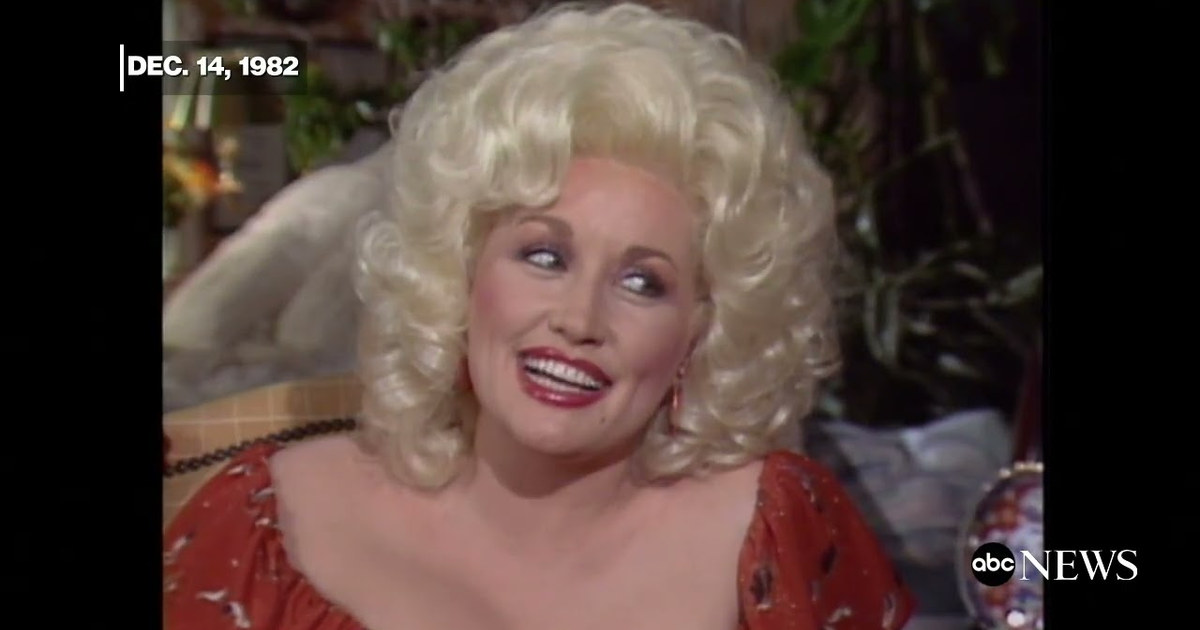
The Best Little Whorehouse in Texas, directed by Colin Higgins and co-starring Burt Reynolds, was a different kind of production. Dolly calls it “very draining” and “very stressful.” Part of that was the moral issue of whether to do it at all, coming from a very religious family. Part of it was the blood on the project—literal and figurative. She felt the movie didn’t get good reviews, but her acting was “as good as I could do.” That’s a performer measuring her own work when the external validation isn’t there.
The rumor mill becomes a framing device. The interviewer asks about the mysterious illness. Dolly addresses rumors head-on, including the breast reduction rumor, with the line: “It took me years to get them this big. Why would I want to take them down?” It’s a joke, but it’s also image control. She’s telling the press: you don’t get to reframe me. I frame myself.
This is the cost of a morally loaded role. The illness isn’t just a medical event; it’s a production problem with lighting implications. A star who is “as good as new” but admits to depression from not being able to work. A woman who says she’s a private person, but whose body becomes public property. The whorehouse picture drained her, and the recovery became a kind of second act—one where she had time to think about what she really wants.
She says, “I must take better care of myself.” She wants to enjoy the simple things rather than going full blast. That’s a lighting change. The key light softens. The contrast drops. The star is still there, but the exposure is different.
And then there’s the question: “Are you a star now?” Dolly answers, “Yeah, I think I’m a star. But as far as what people call a star…” She defines the Dolly Parton star as accomplishing every possible thing, meaning something, not being “the all-American joke” with the boobs and the hair and the tight belts. She wants to be a meaningful artistic person. That’s the thesis in her own words: the star image is a construction, and she’s the one holding the light meter.
The interviewer pushes: can you give that up? The boobs, the hair, the tight belt? Dolly says, “I want people to know there’s some brains beneath the wig and a heart beneath the boobs.” She could get away with less, but she likes more. So maybe she’ll go the other way. That’s not a contradiction; that’s a cinematographer’s choice. You light for the look you want, and you don’t apologize for the style.
She also says she wants to produce her own films, like Goldie Hawn, so she can control the Dolly character. The Dolly character is not different from Dolly—it’s just that in show business, you have to control the frame. That’s the lesson of The Best Little Whorehouse in Texas and the illness that followed. The star is a collaboration between the performer and the audience, but the performer has to be the director of photography.
So when you watch The Best Little Whorehouse in Texas (1982), don’t just watch the musical numbers. Watch the negative space around Dolly. Watch the way she holds herself in the scenes with Burt Reynolds. Watch the way the film tries to sell a morally loaded story with a wink and a smile. And then remember: she passed out on stage after this. She was out for four months. She came back weak and frightened. That’s the cost of being a star who refuses to be a joke.
Scene Beat 3: The Home Interview as Master Shot—Carl, the Mansion on the Hill, Dollywood USA, and the Business of Being Dolly
The camera settles on a two-story colonial just outside Nashville—the house Carl built himself twelve years ago after he and Dolly toured colonial homes all over the South. She calls it "only a small mansion on the hill," and this is where she comes not to let her hair down but to take it off. It's the master shot of the entire Dolly Parton story: the place where the star image is maintained, repaired, and prepped for its next close-up.
[[AD]]
As a location scout, I'd call the living room the money shot. Dolly says it's the prettiest room in the house because it reminds her of what she thought elegance was when she was a little girl reading magazines. That's not just décor—that's production design for a self-made myth. The dining room is the least used room, a table for twelve that rarely sees a full house. Four bedrooms. The oversized master suite is the sanctuary: sunken tub, kitchenette, and enough square footage to park a grip truck. Then there are the two full-size rooms just for her clothes—racks she's keeping for the museum she plans to build one day. And the numbers: 350 wigs, more than 2,000 pairs of shoes. Shoes and jewelry, she says, are her two weaknesses. If you've ever lit a star's dressing room, you know this isn't excess. It's inventory.
Then there's Carl. He's tall, good-looking, and refuses to be on camera. Dolly says she stopped asking him after so many years. He told her ten years ago not to ask him to do that stuff because he doesn't want to be recognized at the hardware or the co-op. She confirms he exists, and she loves him. In a business where every relationship is a photo op, Carl is the one frame you'll never see—and that's exactly the point.


