Part 2
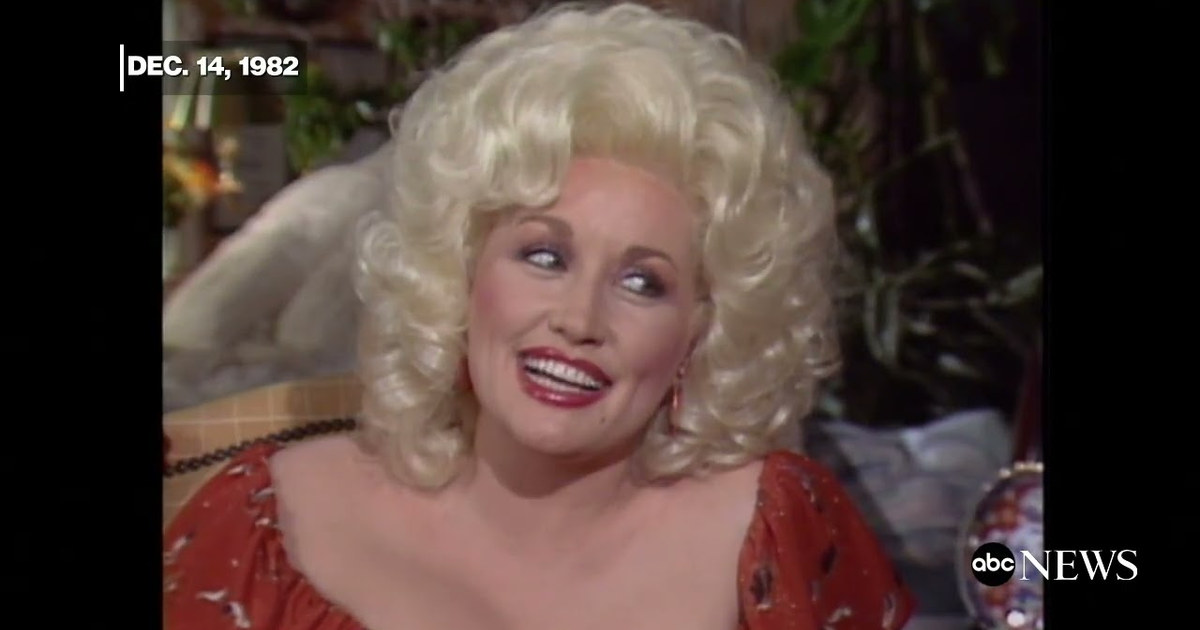
That’s the whole thesis in one exchange. The image is a choice. The lighting is a choice. The house is a choice. And the interview is the behind-the-scenes footage that shows you the choices being made in real time. She says she wants to produce her own films, like Goldie Hawn, so she can control the Dolly character. The interviewer asks what the Dolly character is, and whether it’s different from Dolly. Dolly starts to answer—and the transcript cuts off. But we don’t need the rest. We’ve already seen the master shot.
What we’ve established here is the frame: Dolly Parton’s star image was built like a lighting setup, and the 1980s TV interview is the behind-the-scenes footage. Next, we go to the scene beat that started it all—9 to 5, her movie debut, and the five-year plan that became a three-year jump.
Scene Beat 1: 9 to 5 (1980) and the Five-Year Plan That Became a Three-Year Jump—How a Debut Was Framed
Open on the moment in the interview when Dolly Parton says she made a five-year plan to cross over from country to pop and become a movie star. Then she hit in just three years with 9 to 5. On screen, that jump looks effortless—but as a second-unit shooter, I can tell you it was framed that way on purpose. The film’s cinematography didn’t just capture Dolly; it built her star image in real time, using bright, high-key office lighting and wide lenses that made her presence readable even in a three-hander with Jane Fonda and Lily Tomlin.
9 to 5, directed by Colin Higgins and released in 1980, runs 109 minutes. It’s a workplace revenge comedy where Dolly plays Doralee Rhodes, the secretary whose boss, Franklin Hart Jr. (Dabney Coleman), spreads rumors that she’s sleeping with him. The film opens with Dolly’s title song over a montage of real working women—typewriters clacking, coffee pouring, commuters trudging. That’s the first insert package, and it tells you everything: this is a movie about labor, and Dolly is the face of it.
Watch how Higgins and cinematographer Reynaldo Villalobos shoot the office. Fluorescent banks overhead, white walls, no shadow pockets—classic high-key. That flat, even light could wash out a performer, but Dolly’s styling (big blonde wig, tight belt, bright pink blouse) pops against it. Wide lenses (likely 35mm and 40mm) keep all three women in frame during group scenes, so Dolly never gets lost. She’s not a cameo; she’s a full character, and the camera treats her that way.
Now think like a second-unit director. You’d shoot inserts: close-ups of hands on a typewriter, a coffee cup with “World’s Best Boss” irony, reaction shots of Dolly rolling her eyes or smirking. Those cutaways do more than establish setting—they build her personality. When Doralee ties Hart up and threatens him, the coverage gets tighter, but the lighting stays bright. That’s a choice: the comedy stays light, and Dolly’s star image stays luminous.
In the interview, Dolly admits she was new in Hollywood and might have been a surprise to a few people at 9 to 5. But she knows who she is. That’s the thesis in a nutshell: the image was already fully designed before the film camera rolled. She didn’t need the movie to invent her; she needed it to frame her. And Higgins’s camera did exactly that—no murky shadows, no hiding the wig. Just clean, bright framing that let her be the Dolly we already knew from country TV.
She also says the “Dolly character” and Dolly are the same. That’s not a dodge; it’s art direction as autobiography. The big hair, the tight belts, the “cheap trash” look she borrowed from True Confession magazines and the “floozies” in her hometown—that’s a visual language she built long before Hollywood. On the set of 9 to 5, the costume and makeup teams just amplified it. The cinematography’s job was to not get in the way.
[[AD]]
Context matters: before 9 to 5, Dolly was a country star on the state fair and rodeo circuit. She’d had pop hits, but movie stardom was the next frontier. Her five-year plan became a three-year jump. That timeline is the anchor. The film’s framing—bright, wide, ensemble-friendly—made the crossover look natural. But it was a calculated visual strategy: present her as one of the girls, yet unmistakably the star.
So when you rewatch 9 to 5, don’t just watch the jokes. Watch the lighting. Watch how the camera keeps Dolly in the frame even when she’s not speaking. Watch the inserts that establish her as a working woman with a personality. That’s how you frame a debut. And it’s why, three years after her five-year plan, she was already a movie star.
Scene Beat 2: The Best Little Whorehouse in Texas (1982), the Illness, and the Cost of a Morally Loaded Role
Dolly had just wrapped The Best Little Whorehouse in Texas (1982) when the lights went out—literally. She passed out on stage. Four months of downtime followed. Weak and frightened, she retreated to her home outside Nashville, to the care of her husband, Carl. That’s the scene beat. Now let’s talk about what it means for the star image.
In cinematography, we talk about negative space—the area around the subject that defines the subject. Dolly’s illness is the negative space of her stardom. When the lighting rig is switched off, what’s left? A bedroom with a bed added to the music room so she could write and rest. A woman who admits to female problems, bleeding gastric polyps, surgery, and an emotional component: depression from not being able to work. She says, “I’m as good as new now,” but the subtext is a star who has been dimmed.


