Part 2
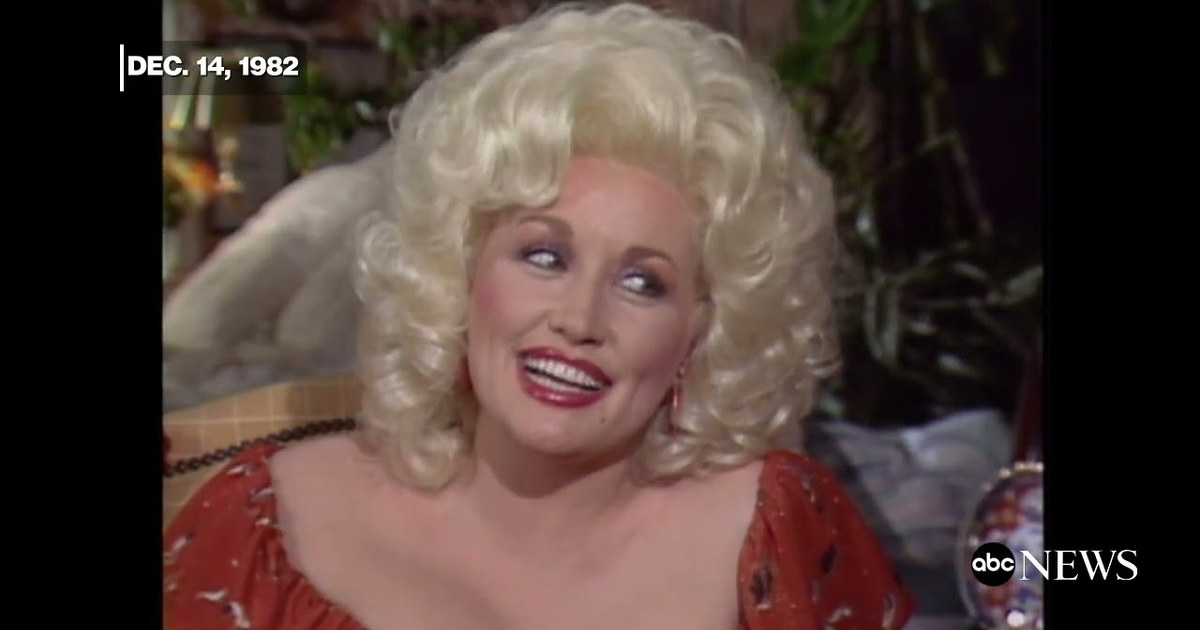
And yet, she knows the power of her image. Barbara pointed out that Dolly herself mentioned the boobs and the hair and the tight belts. Can she give that up? Dolly said, 'I want people to know there's some brains beneath the wig and a heart beneath the boobs. And I think people are beginning to see that. I can get away with now if I chose to change my look. I think I could get away with less. But I like more. So maybe I'll go the other way.' That's Dolly in a nutshell. She's not trapped by her image; she owns it. She can dial it up or down, but she chooses up. Because why not?
The interview also touched on her desire to produce her own films, like Goldie Hawn, so she could control the Dolly character. Barbara asked what the Dolly character is and if it's different from Dolly. Dolly started to explain, but the transcript cuts off. Still, the question lingers. Who is Dolly Parton? The woman who passed out on stage in 1982, who spent four months in silence, who came back with a joke and a mission. She's not just a star. She's a survivor. And she's got a lot more to say.
If you take anything from this moment, take this: Dolly Parton almost lost it all. But she didn't. She took the time to heal, to think, to redefine what success means. And when she came back, she came back with a new perspective. She wanted to enjoy the simple things. She wanted to mean something. She wanted to be more than a joke. And she did it. She became a legend. Not just because of her talent, but because of her humanity. She let us see the woman behind the wig. And that's why we love her.
The Dolly Character: Brains Beneath the Wig
So there she is, fresh off a four-month forced break, sitting in her music room with a bed wedged in because she couldn’t even stand long enough to write. And Barbara Walters—because of course it’s Barbara—asks the question everyone’s been whispering: “Are you a star now?” Dolly doesn’t blink. “Yeah, I think I’m a star. But as far as what people call a star…” And then she drops the line that should be printed on every business card in Nashville: “I don’t want to be the all-American joke, you know, just with the boobs and the hair and the tight belts. I want to be a meaningful artistic person.”
That’s not a throwaway. That’s a mission statement. Because for years, the industry had been perfectly happy to treat Dolly Parton as a punchline with a great voice. A cartoon. A pair of heels and a wig that could be seen from space. And she knew it. She’d been playing the game since she moved to Nashville the day after she graduated from high school in 1964. She’d paid her dues on the Porter Wagoner show. She’d written “Jolene” and “I Will Always Love You” on the same day, for crying out loud. But by 1982, she was done being the joke. She wanted to be the one telling it.
And here’s the thing that separates Dolly from every other blonde bombshell who ever graced a stage: she never accidentally became a character. She chose it. Every rhinestone, every inch of hair, every tight belt—that was a decision. A deliberate, calculated, brilliant decision.
She tells Barbara about growing up in Sevierville, Tennessee, in the Smoky Mountains. And she says something that sounds like a confession but is really a flex: as a little girl, she didn’t admire the schoolteachers or the church ladies. She admired the “floozies” and the “cheap trash” in town. The women with the bright lipstick and the tight dresses and the loud laughs. She thought they were sexy. She thought they were free. And she decided, right then, that’s who she wanted to be when she grew up.
[[AD]]
Now, you can laugh at that. A lot of people did. But think about what she’s actually saying. She looked at the women society had written off—the ones everybody else called trash—and she saw power. She saw a way out. She saw a costume that would let her walk into any room and own it. That’s not an accident. That’s a business plan.
And that’s why she tells Barbara she wants to produce her own films. She name-checks Goldie Hawn—who by 1982 had already produced and starred in Private Benjamin (1980, directed by Howard Zieff, 109 minutes) and was about to do Swing Shift (1984, directed by Jonathan Demme). Dolly watched Goldie and thought, That’s the move. If I control the product, I control the character. I control the Dolly that the world sees.
Barbara asks the obvious follow-up: “What’s the Dolly character, and is the Dolly character different from Dolly?” And Dolly’s answer is the mic drop of the whole interview. “No.” There is no separation. The wig is not a disguise. The makeup is not a mask. The Dolly you see on stage is the same Dolly who writes the songs, runs the business, and goes home to Carl at night. She’s not hiding behind the image. She’s using it. There’s a difference.
She says it plain: “I want people to know there’s some brains beneath the wig and a heart beneath the boobs.” And then she adds the kicker: “I can get away with now if I chose to change my look. I think I could get away with less. But I like more. So maybe I’ll go the other way.” She’s not trapped by the image. She’s choosing it. Every single day.


