Part 1
The Moment She Almost Lost It All
Picture it. It's 1982. Dolly Parton is on top of the world. She's just wrapped her second major movie, The Best Little Whorehouse in Texas, and her debut, 9 to 5, made her a household name. She's the queen of country, the crossover princess, the woman with the biggest hair and the biggest heart in Nashville. And then, mid-performance, she drops. Passes out cold on stage. Just like that, the lights go out. Not just on the stage, but on her entire life. For four months, silence. No concerts, no interviews, no Dolly. Just rumors. And fear. If you were a fan, you were scared. If you weren't a fan, you were curious. What happened to the woman who seemed invincible?
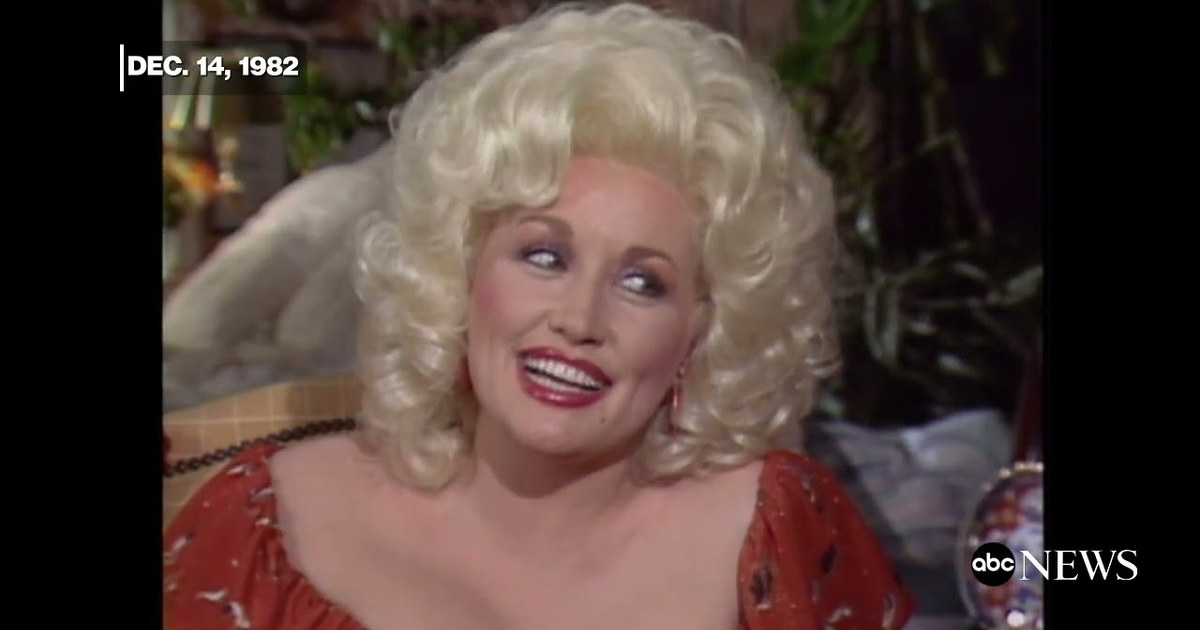
That's where Barbara Walters comes in. In the summer of '82, Dolly invited Barbara into her Nashville home for her first interview since the illness. And let me tell you, this isn't just any interview. This is the moment Dolly Parton pulled back the curtain on the Dolly character and showed us the human underneath. If you've never seen it, you're in for a treat. If you have, you know exactly why it still matters.
The house itself is a character in this story. Dolly and her husband Carl looked at colonial homes all over the South before Carl built this one himself twelve years earlier. It's a mansion on a hill, but Dolly calls it 'only a small mansion.' The living room is her favorite because it reminds her of what she thought elegance was when she was a little girl reading magazines. The dining room seats twelve but is rarely used. There are four bedrooms, including the one with the original furniture from their wedding fifteen years ago. The master suite is their sanctuary, with a sunken tub and its own kitchenette. And then there are the two full-size rooms just for Dolly's clothes. She's keeping them for the museum she plans to build one day. She also has 350 wigs and over 2,000 pairs of shoes. Shoes and jewelry, she says, are her two weaknesses. While recuperating, a bed was added to her music room so she could write and rest. This is not just a house; it's a fortress of normalcy for a woman whose life is anything but.
But let's back up. How did Dolly get here? She didn't just wake up a superstar. She clawed her way up from the state fair and rodeo circuit, where she was a country star but wanted more. She made a five-year plan: cross over from country to pop and become a movie star. Most people would take the full five years. Dolly did it in three. Her movie debut, 9 to 5, in 1980, alongside Jane Fonda and Lily Tomlin, was a massive hit. She wrote the title song, got an Oscar nomination, and became a household name. Then came The Best Little Whorehouse in Texas in 1982, directed by Colin Higgins, based on the Broadway musical. It was a risk. It was racy. It was controversial. And it took everything out of her.
So when she passed out on stage, the rumors started flying. Was it exhaustion? Drugs? A breakdown? The tabloids had a field day. Some even whispered that she'd had breast reduction surgery. Can you imagine? Dolly Parton reducing anything? When Barbara asked her straight out, Dolly didn't flinch. She said she had gastric polyps and female problems. The polyps were bleeding and had to be removed. And then she delivered the line that only Dolly could deliver: 'It took me years to get them this big. Why would I want to take them down?' The audience laughed. Barbara laughed. Dolly laughed. But beneath the joke was a serious truth: she was sick, she was scared, and she was human.
The emotional toll was real. Dolly admitted that The Best Little Whorehouse in Texas was draining. It was stressful. There was a moral conflict because she came from a very religious family. And there was 'a great deal of blood on the project.' She felt the movie didn't get good reviews, but she also felt her performance was as good as she could do. And if she felt good about it, she could live with that. That's the thing about Dolly: she doesn't need your approval. She needs her own.
But the illness wasn't just physical. Dolly said it was more of an emotional illness, too. Not being able to work, being down in depression. She said, 'I think it goes along with any kind of sickness.' And she pushed back against the idea that stars aren't allowed to be human. 'I think that's one of the biggest mistakes that people can make about the stars, the fact that they deny them a right to be human.' That's a quote that hits you right in the gut. Because she's right. We put celebrities on pedestals and then act surprised when they fall. Dolly fell. And she got back up.
So what changed? Dolly said she realized she had to take better care of herself. She'd worked hard, had a lot of dreams, worked for herself and for other people. But now she wanted to enjoy the simple things rather than going full blast. And when Barbara asked if she was a star, Dolly said, 'Yeah, I think I'm a star. But as far as what people call a star...' She defined it for herself: 'What I call a star, for me the Dolly Parton star, is accomplishing every possible thing that I can. I want to mean something. I don't want to just be some joke. I don't want to be the all-American joke, you know, just with the boobs and the hair and the tight belts or whatever. I want to be a meaningful, artistic person.' That's the thesis of Dolly Parton's entire career. She's not a punchline. She's an artist.


