Part 1
The Thesis: Dolly Parton’s Star Image Was Built Like a Lighting Setup—and the 1980s TV Interview Is the Behind-the-Scenes Footage
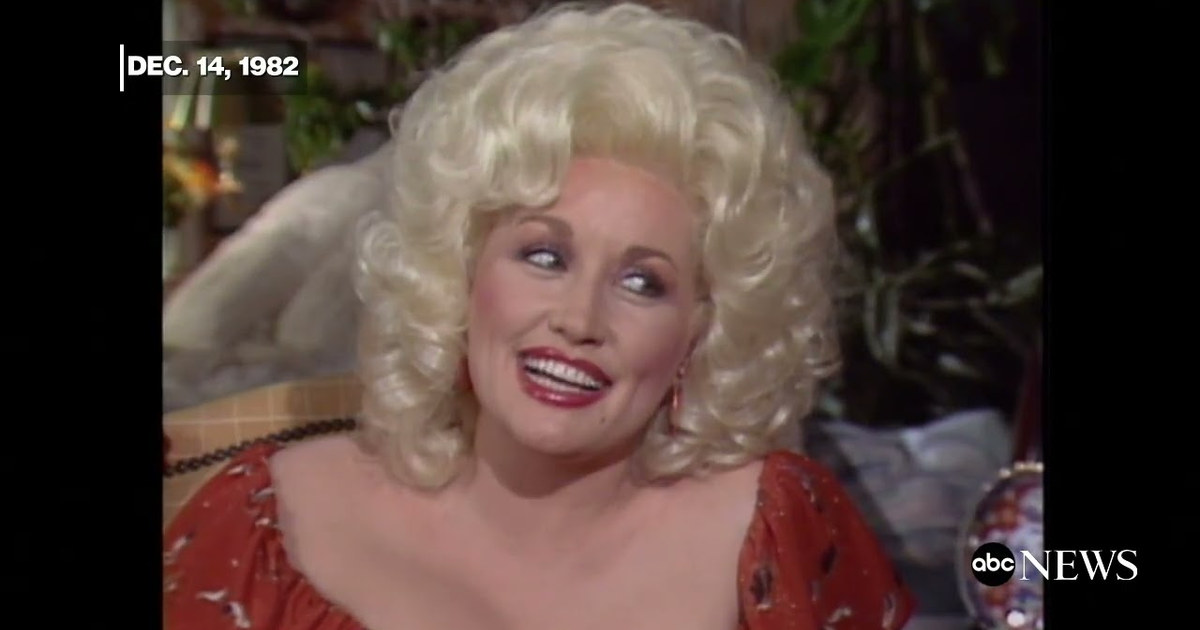
I’ve shot second-unit, so I notice how a room is keyed before I notice what’s on the walls. Give me a living room and I’ll tell you where the practical lamps are, whether the window is blowing out the highlights, and if the key light is soft enough to flatter without looking like a department-store portrait. That’s why the 1980s TV interview with Dolly Parton—conducted at her home on the outskirts of Nashville, likely around 1982–1983, after her illness—isn’t just a puff piece. It’s a lighting diagram for how a country star crossed over to pop and film without losing the audience that loved her on the state fair and rodeo circuit.
Dolly Parton’s public persona is not accidental. It is a deliberately lit, lensed, and art-directed construction, and that interview is the best evidence we have of how she built it. Watch the way the interviewer—Barbara Walters, if the transcript’s “Barbara” is any indication—sits across from her in a room Dolly calls the prettiest in the house because it reminded her of what she thought elegance was when she was a little girl reading magazines. That’s not small talk. That’s set decoration as autobiography.
Before we go further: spoiler warning. We’ll be discussing plot details from 9 to 5 (1980) and The Best Little Whorehouse in Texas (1982). If you haven’t seen them, cue them up first—they’re both worth your time.
Here’s the shot list for this piece. First, we look at 9 to 5, her movie debut, and the comedic framing that made her a movie star just three years after she wrote a five-year plan to cross over from country to pop. Second, we look at The Best Little Whorehouse in Texas and the moral and stress load that led to her passing out on stage and being out of work for four months. Third, we treat the home interview itself as a master shot—a wide, locked-off view of her marriage to Carl, her business plans, and the “Dolly character” she wants to control. The larger argument: this interview is not a puff piece. It is a lighting diagram for how a country star crossed over to pop and film without losing the audience that loved her on the state fair and rodeo circuit.
I’ve keyed enough interiors to know that a living room like this one is lit for comfort, not for drama. There’s window light coming in from the left, probably a 4x4 bounce card just out of frame to fill the shadows, and a couple of practical lamps doing the heavy lifting on the right. The contrast is soft. The color temperature is warm. It’s the kind of setup that says “home,” not “studio.” And that’s the point. Dolly and Carl looked at colonial homes all over the South before Carl built this house himself twelve years before the interview. She calls it “only a small mansion on the hill.” The dining room seats twelve and is the least used room in the house. There are four bedrooms. The oversized master suite has a sunken tub and its own kitchenette. Two full-size rooms are just for her clothes—kept for the museum she plans to build one day. She also keeps some of her 350 wigs and more than 2,000 pairs of shoes. Shoes and jewelry, she says, are her two weaknesses.
That’s not vanity. That’s inventory. And in a second-unit frame, inventory tells you how the star sees herself. The music room, where a bed was added so she could write and rest while recuperating, is the emotional center of the house. It’s also the room where the interview’s subtext lives: this is her first interview since her illness, and she’s sitting in a space designed for recovery, not performance.
When the interviewer asks how she’s feeling, Dolly says she’s “as good as new.” She mentions female problems, gastric polyps, a bleeding polyp that had to be removed. She jokes about the rumor that she had breast reduction surgery: “Are you kidding? It took me years to get them this big. Why would I want to take them down?” The room laughs. But then she gets serious. She says it was more of an emotional illness—not being able to work, being down in depression. She says the whorehouse picture was very draining, a very stressful thing, and that the moral issue of whether or not to do it was hard, being from a very religious family. She says there was a great deal of blood on the project. She felt the movie didn’t get good reviews, but she felt her performance was as good as she could do. And if she feels good about something she’s done, she can live with that.
That’s a star talking about craft, not just charisma. And it’s the kind of honesty that a soft key light and a warm practical can carry without turning into a confessional. The interviewer asks if she’s changed. Dolly says she must take better care of herself, that she’s worked hard and had a lot of dreams, not only for herself but for other people, and now she wants to enjoy the simple things rather than going full blast. Then the question: “Are you a star now?” Dolly says yes, she thinks she is. But she defines it her way. The Dolly Parton star, for her, is accomplishing every possible thing she can. She wants to mean something. She doesn’t want to be some joke—the all-American joke with the boobs and the hair and the tight belts. She wants to be a meaningful, artistic person. And yet, when asked if she can give up the boobs and the hair and the tight belt, she says she wants people to know there’s some brains beneath the wig and a heart beneath the boobs. She thinks she could get away with less. “But I like more. So maybe I’ll go the other way.”


