Part 2
The scene mirrors the gut-wrenching familial scrutiny found in Jonathan Demme’s *Rachel Getting Married* (2008), where every shared glance, nervous laugh, and whispered aside carries twenty years of unresolved domestic baggage. Gina sat on Oprah’s stage visibly trembling, admitting that calling her anxiety an understatement was itself an understatement. The collective tension in that room was electric because everyone understood what was truly on the chopping block: an identity that had remained unchanged through presidential administrations, economic recessions, and the entire lifespan of her adult children.
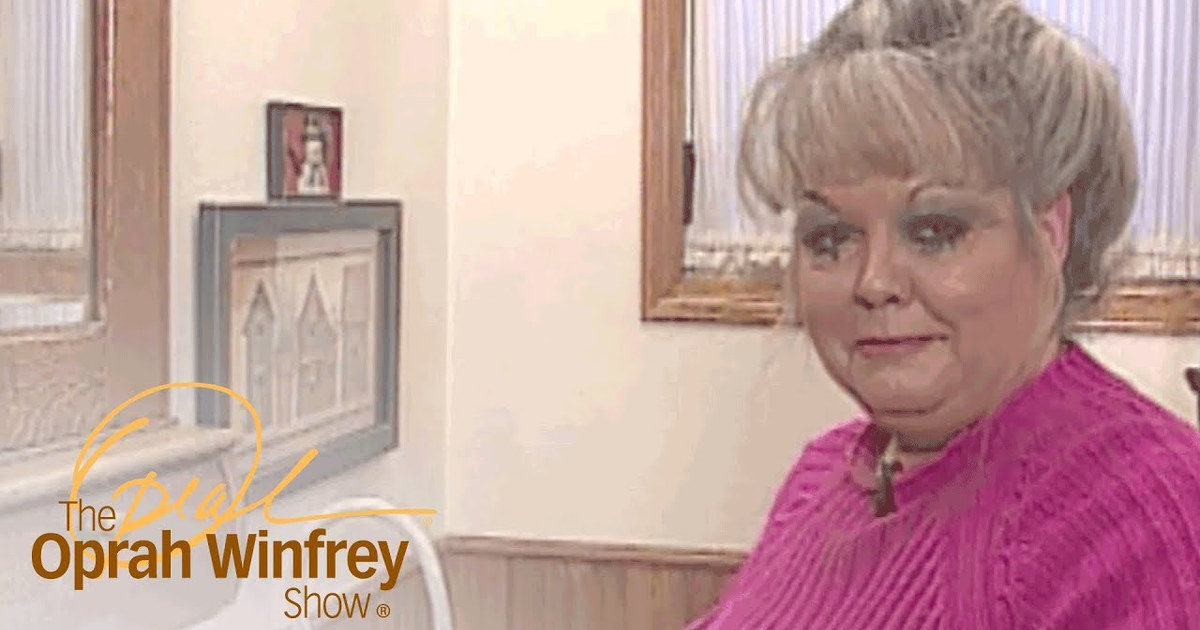
Oprah understood better than any host in broadcast history that you cannot have a triumphant resurrection without first properly mourning the corpse. By rolling the vintage tapes one last time—forcing the audience and the family to gaze upon Jan in all her lacquered, silver-coiffed, taupe-hosed glory—the show deliberately heightened the cliffhanger. The before-reel served as an evidentiary dossier of an era about to be summarily executed on national television, setting up the cathartic explosion that followed.
[[AD]]
The 'Make-Under' Catharsis: Unmasking the Suburban Rapunzel
When the studio doors finally parted, the sonic wave that rolled off the audience was not polite syndicated applause; it was pure, unadulterated pandemonium. Women in the audience were shrieking, hands clamped over mouths, family members weeping in genuine disorientation. Oprah herself was practically vibrating with theatrical glee, instantly coining the terminology that would define the segment: "That’s like a make-down, a make-under! A make-under, fantastic!" It was an immaculate turn of phrase that neatly inverted four decades of daytime television logic.
In a standard television makeover, the subject is typically embellished: layers of product are introduced, posture is corrected, couture is draped to manufacture status. But Jan’s triumph was predicated entirely on stripping away the artifice. With her hair cut, softened, and finally allowed to fall naturally around her shoulders—revealing a jawline and collarbones hidden since the late 1970s—Jan DeVito did not look like an elevated version of an archetype. She looked, shockingly and magnificently, like a human being.
The sheer length of her unspooled hair was the episode’s ultimate revelation. As Oprah marveled, gesturing wildly at the studio monitor, Jan’s hair had been so permanently coiled, pinned, and shellacked into orbit that not even her closest confidants had known how long it truly was. It brought to mind George Cukor’s *The Women* (1939), where the artifice of feminine presentation is meticulously weaponized, parsed, and ultimately deconstructed under the relentless glare of peer scrutiny. In relinquishing the bun, Jan was not merely losing five inches of vertical height; she was surrendering a personal monument.
[[AD]]
Her skin, scrubbed clear of the spackled daytime coats and midnight emergency applications, possessed a luminous warmth that the thick pancake makeup had choked out for decades. The make-under did not make Jan look like a woman desperately chasing her daughter’s youth; it made her look profoundly, effortlessly present. It stripped away the defensive suburban armor to expose an elegance that had been suffocating under aerosol fumes for a quarter of a century.
[[VIDEO]]
The Verdict: What We Leave Behind at the Studio Door
Decades later, the Jan DeVito broadcast endures not because it offers a charming glimpse into the hairstyles of the American midwest, but because it neatly answers the question it so boldly provoked. What happens when the aesthetic armor we construct to survive our youth becomes the prison of our middle age? The answer, as Jan demonstrated with every tentative step down Oprah's runway, is that true transformation is terrifying precisely because it requires us to let ourselves be seen.
In Agnès Varda’s French New Wave classic *Cléo from 5 to 7* (1962), the protagonist spends the first half of the film wrapped in vanity, wigs, and performative posturing, only finding peace when she sheds the false hair, puts on a plain dress, and wanders through Paris observing the world rather than demanding it admire her facade. Jan DeVito underwent that exact cinematic trajectory in a forty-two-minute syndicated television slot. She walked into Harpo Studios as a curated spectacle and walked out as a woman emancipated from her own reflection.
The real triumph of the make-under was never the haircut, the softened makeup, or the retirement of the taupe nylons. It was the reclamation of Jan's humanity from the altar of routine. We build our habits to feel secure, to impose order on an unpredictable world, but security quickly curdles into stagnation when we forget who is underneath the paint. As Jan DeVito proved on that historic Chicago stage, liberation does not come from finding a more flattering mask—it comes from having the raw, trembling courage to finally take it off.


