Part 3
[[AD]]
The Spatial Dynamics of Suburban Conflict
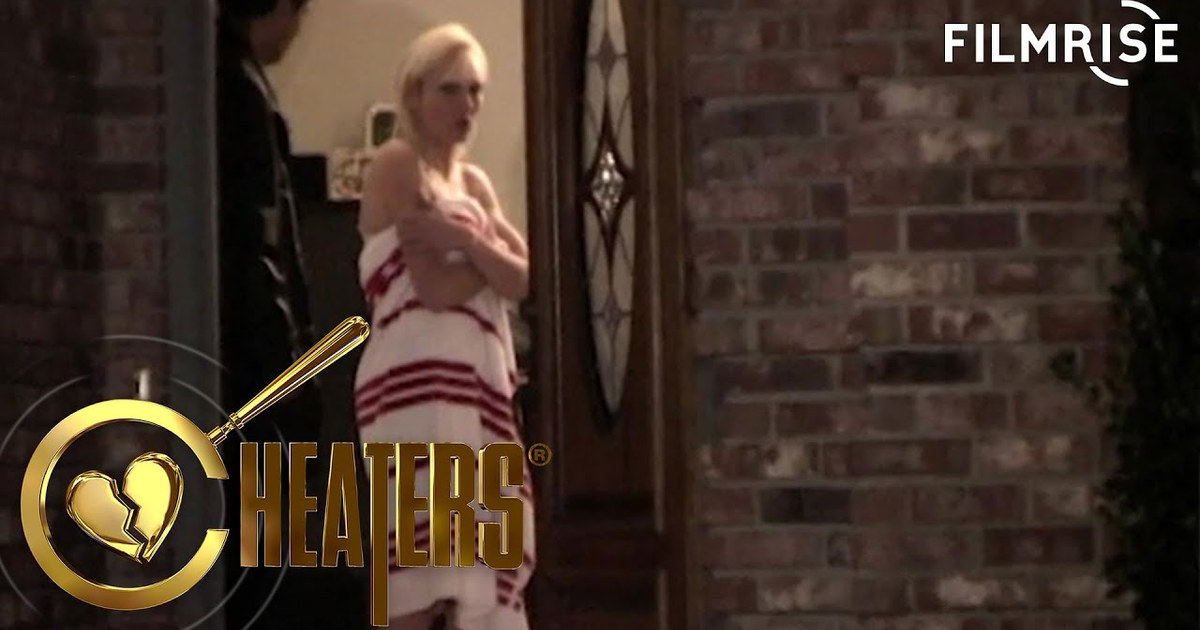
Watch this confrontation through the eyes of a stage blocking director and you will see a fascinating spatial dynamic unfold. When the confrontation turns into a multi-front shouting match, Julie Alexander executes a rapid tactical retreat. She slips out of the hot tub, bypasses the camera line, enters the house, and locks the deadbolt behind her. The physical landscape of the conflict instantly bifurcates into two distinct stages: Harry holding court in the yard, and Julie barricaded behind glass.
Bill approaches the locked door, demanding accountability. Greco and the cameras follow, compressing the physical space against the back door. The sound design here is chaotic yet completely legible: the muffled voice of Julie through the door, the sharp click of the lock, Harry shouting drunken insults from the patio, and Bill's cracked, bewildered voice cutting through the noise. Julie delivers her justification from behind the perimeter: Bill was never there; he was always at the club working; she wanted someone who was present.
The confrontation exposes the absolute devastation of Bill Ladd's domestic reality. In the span of seven minutes, he has not only witnessed the death of his romantic relationship, but he has also been stripped of his home. Harry makes it explicitly clear that Bill's tenure in the house is finished: 'I own the house. You're a boarder.' The realization that he is standing in his own backyard, locked out of his own kitchen, being evicted by his best friend while a reality TV crew records the entire exchange on Betacam SP tape, is the kind of profound psychological trap that no scripted drama could engineer with quite the same raw brutality.
[[AD]]
The Secondary Thread: Tonina Jones and the Ethics of the Frame
In standard Cheaters format, the broadcast buffers its primary narrative by cutting to a secondary retrospective segment. In this episode, we meet 29-year-old Tonina Jones, an individual previously caught on camera during an ambush in a private hotel room. This editorial choice serves as an unintentional, fascinating counter-balance to the raw voyeurism of the Bill Ladd confrontation, giving voice to the subject caught on the receiving end of the lens.
Tonina's interview introduces a sharp critique of the very production apparatus that made the show famous. She speaks frankly about the terrifying physical breach of having a camera crew bypass hotel management and enter a private room with a master key: 'Management should not have given you guys or anyone else a key, because there could have been someone with a gun coming in.' She explains that she was entirely unaware that her partner was married; he had told her he was divorced with a child.
From a media analysis perspective, this retrospective segment functions as an ethical pressure release valve. It allows the production to acknowledge the sheer invasiveness of its methodology while simultaneously packaging that reflection into further consumable content. Tonina reflects on how the experience made her realize she was living a double life that was not truly her, ultimately resolving to prioritize her own boundaries and financial independence. It is an oddly sober, reflective beat in an hour of television otherwise powered by raw domestic adrenaline.
[[AD]]
[[VIDEO]]
The Resolution: Logic Over Emotion
When the dust clears on the Ladd-Alexander-Bennett investigation, the show presents its final post-mortem text cards and closing voiceover. Bill Ladd demonstrates a level of emotional maturity that stands in stark, dignified contrast to the chaotic environment he was subjected to. After the initial adrenaline recedes, Bill realizes that retaliating or sinking into despair is fundamentally unproductive: 'It's not worth it, and she's not worth it.' He decides to pack his belongings, take the financial and logistical hit, and establish an independent life away from both of them.
Even more remarkable is Bill's attempt to extend an olive branch to Harry. Bill takes the philosophical position that thirty years of brotherhood should not be permanently discarded over a single moral failure. But in a tragic final subversion of expectations, it is Harry who rejects the reconciliation. Bennett refuses to re-establish contact, choosing to maintain his casual relationship with Julie Alexander and severing the three-decade friendship permanently.
This resolution satisfies the genre enthusiast by delivering a clean, unambiguous moral dividing line: Bill walks away with his dignity intact as the wounded protagonist, while Harry and Julie are left standing in the wreckage of their own short-sighted choices. Simultaneously, it satisfies the craft enthusiast by demonstrating how real-world human behavior frequently defies the tidy, redemptive arcs of traditional fiction. Real life does not wrap up with neat reconciliations; it ends with lease disputes, packed boxes, and unanswered phone calls.
[[AD]]
Why This Machine Still Fascinates
Two decades after this footage was broadcast, the episode remains a high-water mark for the syndicated surveillance genre. For the viewer chasing raw pulp, it offers the ultimate trifecta: the 30-year betrayal, the pool-table striptease, and the hot-tub showdown. It is an unvarnished slice of American working-class tragedy, captured with high-contrast tabloid intensity.
For the student of media engineering, it provides an invaluable look at the mechanical infrastructure of early unscripted television. From the optical challenges of residential perimeter surveillance to the real-time blocking of multi-camera field ambushes, every minute of the broadcast demonstrates how raw reality is captured, shaped, and delivered to an audience hungry for emotional truth.
Whether you approach Cheaters as high-octane trash TV or as a brilliantly calibrated technical operation, the conclusion remains the exact same: when the systems of human trust fail, the cameras are always ready to document the crash.


