Part 2
The Melodramatic Core: The High Cost of the Tabloid Trope
For the viewer who tunes in purely for pulp storytelling, this sequence hits every single pleasure center of mid-tier American melodrama. It possesses the heightened, almost operatic sleaze of an afternoon soap opera, but with the terrifying texture of reality. There is an agonizing disparity between Bill Ladd's earnest, slow-drawl monologue about wanting to propose marriage and the visual reality of his surrogate brother casually dismantling that future over a slate pool table.
The genre thrives on this specific emotional asymmetry. Bill is portrayed as a working-class man bound by an old-fashioned code of loyalty. He has shared a domestic space with Harry Bennett across three decades—a duration longer than most marriages. In the genre economy of Cheaters, betrayal by a romantic partner is painful, but betrayal by the domestic anchor—the roommate who collects your rent and drinks your beer—is existential ruin. It crosses the boundary from a standard domestic dispute into a complete destabilization of a man's home environment.
The sensationalist voiceover narration leans hard into these thematic beats, using evocative Western colloquialisms—noting that Julie is 'roping in another cowboy' and describing the lovers as being clasped together 'like a belt in a western buckle.' While highbrow critics often dismiss this writing as lowbrow schlock, within the logic of syndicated pulp, it serves an essential structural function: it anchors the visual data into a recognizable regional mythology.
[[AD]]
Temporal Compression: Days Four and Six
Editing reality footage is fundamentally an exercise in data compression. You are taking weeks of uneventful stakeouts and reducing them to a six-minute runtime that establishes pattern, frequency, and escalation. The Cheaters editorial deck establishes this cadence by skipping directly to Day Four after a two-day hiatus. Once again, Julie's vehicle is logged curbside. Once again, the long-lens cameras track the subjects to the living room couch, capturing smiles, physical intimacy, and an unhurried migration toward the private bedrooms.
By Day Six, the show introduces temporal cross-cutting that elevates the tension from passive surveillance to an active countdown clock. The editorial team juxtaposes Julie entering the residence with Bill's real-time movements. We see Bill unexpectedly needing to leave for work early to plan for an incoming shipment at the venue. He encounters Julie or attempts to coordinate logistics with her, completely unaware that his daily departure is the exact synchronization trigger for her encounters with Harry.
The choreography of near-misses is handled with razor-sharp editorial efficiency. Julie covers her presence with casual misdirection, claiming she was simply planning to call her friend Tracy to shoot pool. Harry and Julie operate with the casual confidence of people who believe they have mapped their partner's operational schedule down to the minute. The camera catches a parting kiss at the threshold just before Bill's timeline intersects with theirs, providing the final piece of corroborating evidence required to close the file.
[[AD]]
The Control Room Reveal: Joey Greco's Psychological Handoff
The transition from observation to intervention occurs inside the mobile command unit—typically a modified surveillance van parked blocks away from the target zone. This is where host Joey Greco operates as both an empathetic anchor and a tactical director. Greco's presence in reality television history is iconic precisely because of his ability to pivot between solemn, paternal counseling and cold logistical execution without missing a beat.
When Bill is seated before the monitor, Greco does not immediately drop the bomb. He conducts a calibrated diagnostic, walking Bill through the investigative timeline step-by-step. He presents the pool game footage first, establishing the breach of trust in incremental steps. Bill watches the screen, his cognitive processing visible in the heavy set of his jaw. The realization does not land in an explosive scream; it lands as a profound, system-halting shock: 'With my roommate Harry? Yeah... my roommate Harry.'
Greco then delivers the operational status report that turns contemplation into kinetic action. The subjects are not off in some distant hotel room; they are currently at the residence, in the backyard jacuzzi, at that exact second. This is the catalyst that shifts the complainant from passive grief to tactical mobilization. The crew moves. The narrative state shifts from Investigation to Confrontation.
[[AD]]
Spoiler Warning: Breakdown of the Live Confrontation Sequence
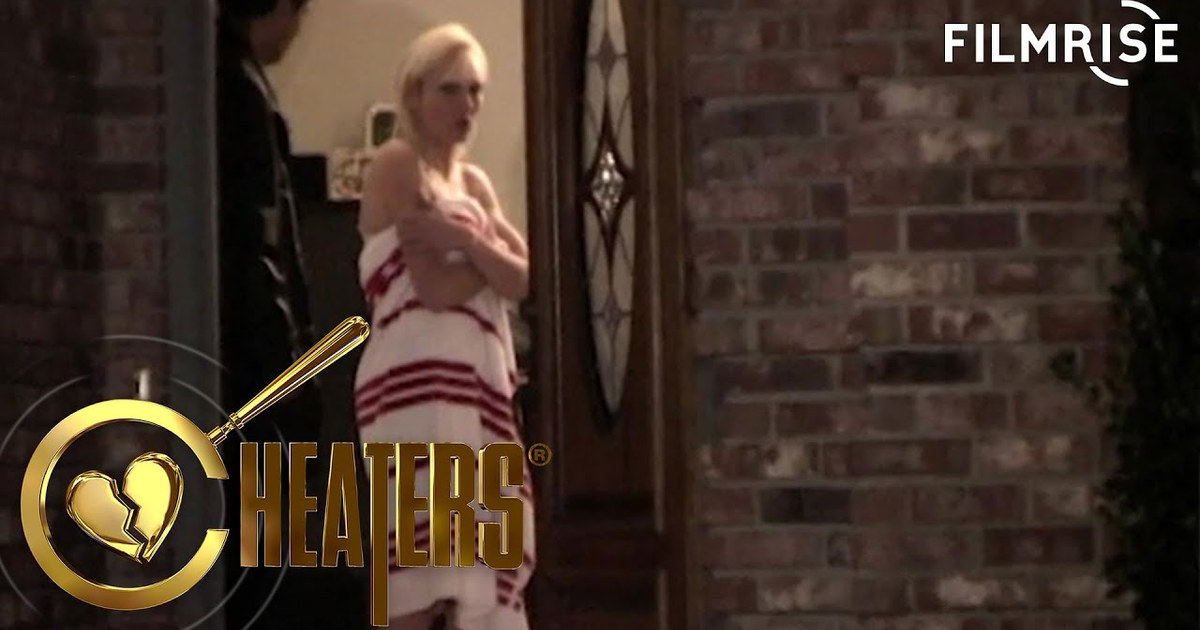
What occurs next is an unvarnished masterclass in live-action staging and spatial containment. The production crew approaches the residential property on foot under cover of dusk. Greco enforces silence to maintain the element of surprise, herding Bill, the primary camera operator, the secondary boom operator, and the security detail into a tight tactical wedge. They push past the perimeter fence and penetrate the backyard space where Harry Bennett and Julie Alexander are caught completely off guard in the hot tub.
The initial shockwave triggers an immediate defensive routine from Harry Bennett. Harry does not default to shame or denial; he defaults to territorial dominance. Rising from the water, his immediate response is not an apology to his friend of 30 years, but a furious jurisdictional challenge directed at the production crew: 'Who are you guys? Get out of my yard! Out of my yard now!' This is a textbook psychological deflection mechanism, using property rights to shield against moral accountability.
Greco moves into the hot zone with practiced spatial control, keeping his body positioned between the conflicting parties while directing the narrative traffic. When Harry attempts to deflect, Greco forces the focal point back onto the human cost, pointing directly at Bill: 'This is your friend for 30 years! Do you want to explain to the man that you say you love?' Harry's counter-attack cuts to the very bone of Bill's domestic pride: 'Hey, if you knew what you were doing, that wouldn't be if you're a girl! You know what it took to keep a girl?'


