Part 3
This is not a small rhetorical trick. It's a century-old habit, and it has a paper trail.
The Camera Has Been Here Before
Outside cameras have been pointing at Appalachia since the movies learned to talk — and long before that. In 1915, the silent melodrama 'The Mountain Girl' put a mountaineer heroine on screen for audiences who had never set foot in a holler. It wasn't alone. The teens and twenties churned out 'mountaineer' pictures the way the fifties churned out Westerns: noble savages in homespun, feuds on the ridge, innocence under threat. The region wasn't a place. It was a genre.
[[VIDEO]]
Fast-forward to 1964. CBS sends a crew into eastern Kentucky and comes back with 'Christmas in Appalachia,' a documentary that shows poverty the way a holiday special shows snow — as atmosphere. Charles Kuralt narrates. The cameras find barefoot children, a coal camp, a family opening charity boxes. It's tender. It's also a case study. The people on screen are evidence, not narrators.
That's the through-line. From 'The Mountain Girl' to 'Christmas in Appalachia,' the mountains get filmed, not consulted. And in 1995, a scholar named J.W. Williamson finally named the pattern in his book 'Hillbillyland: What the Movies Did to the Mountains and What the Mountains Did to the Movies.' His argument, in plain terms: Hollywood didn't discover Appalachia. It invented it — and then sold the invention back to the country as truth. The mountaineer became a stock character, like the cowboy or the gangster, and stock characters don't get to define themselves.
So when the interviewer asks about a 'myth,' he's not being neutral. He's inheriting a century of framing. He's asking the woman to confirm or deny a story that was written about her before she was born.
She Doesn't Call It a Myth
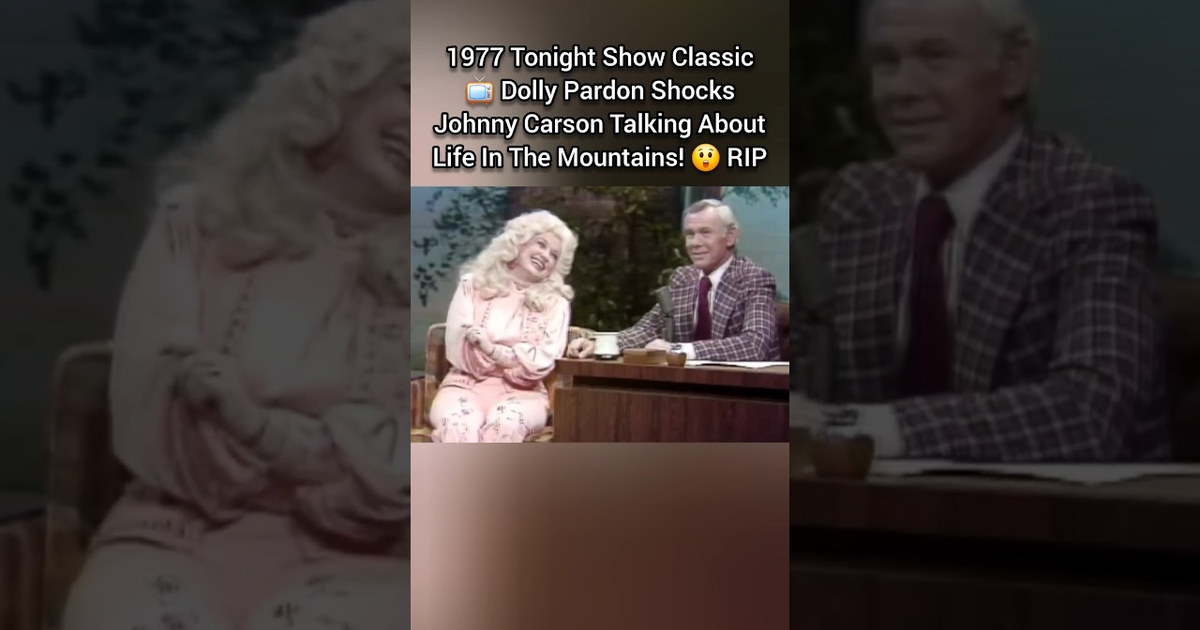
Now watch what she does with the question. She doesn't argue about the word. She doesn't say, 'Well, actually, it's complicated.' She says: 'It is very true.' Then she gives him numbers. Twelve years old. Her own mother at 14. Babies starting at 15. Twelve children by 35. One set of twins. Parents still young and healthy.
And then she lands the line that should be printed on the wall of every documentary editing suite in America: 'That's just the way of life in the country.'
That phrase is the thesis of the clip. Not 'we were victims.' Not 'we were backward.' Not 'please explain us to yourselves.' The way of life. She is not asking for pity. She is correcting the record. She's saying: you came here with a question about a myth, and I'm telling you about a Tuesday. My mother got married. She had babies. They're healthy. That's the country. That's the life.
The interviewer wanted folklore. She handed him a family tree.
The Law Was Never a Myth
Here's the part that makes the 'myth' framing collapse completely. Child marriage wasn't a mountain legend. It was American law. For most of the 20th century, most U.S. states allowed minors to marry — often with parental consent, sometimes with a judge's signature, sometimes below the age of consent for sex. It wasn't a regional quirk. It was the statute book.
As recently as the 2010s, loopholes remained wide open in states like Kentucky, West Virginia, and Tennessee. A 2018 PBS NewsHour investigation into child marriage in America laid out the numbers: hundreds of thousands of minors married legally in the U.S. between 2000 and 2015, some as young as 12, often to adults. The advocacy group Unchained At Last, founded by Fraidy Reiss, has spent years pushing state legislatures to close those loopholes — and in many states, they're still fighting.
So the practice the interviewer calls a 'myth' was, in fact, legal, documented, and defended by the people living it. Which raises the question the clip never answers: if it was legal, common, and openly described by the woman on screen, what exactly is the documentary supposed to expose?
Maybe nothing. Maybe the exposure is the audience's. Maybe the point is that you came here expecting a folk tale and got a legal history instead — and you don't know which one to be more uncomfortable about.
The Refusal Is the Power
The clip refuses to tell you what to think. It doesn't cut to a scholar. It doesn't add somber music. It doesn't caption the woman's answer with a statistic. It just lets her say 'that's just the way of life in the country' and then it moves on — or ends. That refusal is not a failure of journalism. It's the most honest thing in the frame.
[[AD]]
Because the moment you decide whether her life is a myth, a tragedy, or a tradition, you've done the exact thing Williamson warned about: you've made the mountains into a movie again. You've cast her. You've given her a role. And she never asked for one.
She asked you to listen. That's the whole stop on this tour. The word 'myth' was doing heavy lifting — and she set it down.
Stop 4: What the Clip Leaves Out—and Why That Matters
Now let’s walk to the part of the gallery where the frame is empty. The clip you just watched is a masterclass in what a camera can erase. We hear about a mother married at 14, a first baby at 15, twelve children by 35. We hear about a 12-year-old bride. But we never hear the subject’s name. Not once. We don’t know how old she was when the cameras rolled. We don’t know how many children she has. We don’t know if she finished school. We know she was married at 20 and has been married for 10 years. That’s it. Her entire life beyond that is a blank spot on the map.


