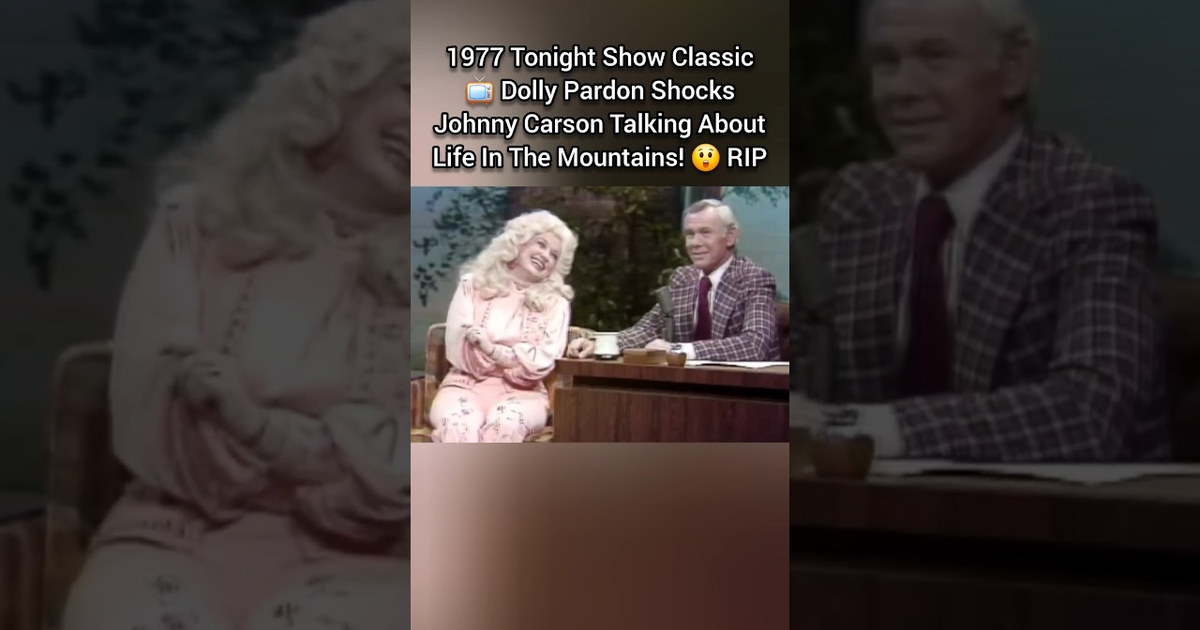
Part 2
Here's the part that stops you cold: she was 35 when she finished. Thirty-five. That's the age a modern American woman is often just starting her family — or deciding whether to. In this household, 35 was retirement from the delivery room, and she and her husband were, in her words, "still young and very healthy."
So why does that arithmetic read as shocking to us and as a plain fact to her? Because the numbers only mean what the economy around them means.
A Family Was a Workforce
In rural Appalachia in the 1930s and 1940s, a large family wasn't a lifestyle choice. It was an economic unit. Children were hands: they hoed, hauled water, tended livestock, watched younger siblings, and eventually brought in wages or crops. On small mountain farms with no mechanization and no safety net, more children meant more labor and more chances that some would survive to support their parents in old age.
The historical record backs this up. The 1940 U.S. Census — the first to ask detailed fertility questions of women — documented markedly higher childbearing in rural, agricultural, and low-income populations than in urban ones. Later, the Appalachian Regional Commission's reports on eastern Kentucky and West Virginia repeatedly flagged family size as both a response to poverty and a contributor to it: more mouths, thinner margins, and children leaving school early to work. The pattern wasn't a mountain peculiarity. It was what rural poverty looked like across much of America before mid-century. Appalachia just held onto it longer, and got photographed for it.
That's the context the clip never supplies. Without it, twelve babies in twenty years reads as recklessness. With it, it reads as strategy — a hard, unsentimental bet that a bigger family was a safer family.
You've Already Met This Family on Screen
If the twelve-child household feels familiar, that's because American film has shown it to you before. In Coal Miner's Daughter — Michael Apted's 1980 Loretta Lynn biopic, running 125 minutes and starring Sissy Spacek and Tommy Lee Jones — the Lynn family of Butcher Hollow, Kentucky, is rendered as exactly this: a crowd of children in a coal-camp cabin, where the oldest daughter marries at 13 and the household runs on sheer volume. Spacek won the Academy Award for Best Actress for it. The film doesn't moralize about the family size. It just shows you the room.
Then there's The True Meaning of Pictures: Shelby Lee Adams' Appalachia, Jennifer Baichwal's 2002 documentary, which turns the camera on the photographer who spent decades shooting eastern Kentucky families in their homes. The film is really about the ethics of looking — who gets to frame whom, and what the frame leaves out. The households in Adams' photographs are large, crowded, and often startling to outsiders, and the documentary forces you to ask whether you're seeing a family or a specimen.
That question is the one this clip quietly hands you. The woman being interviewed isn't a character in a biopic or a subject in a portrait series. She's a daughter describing her mother, and she's doing it with affection.
The Warmth Is the Hard Part
Go back to the exchange. "My mother and daddy are still young and very healthy." The interviewer answers: "That's great." That's it. No gasp. No follow-up about maternal mortality, no question about how a 15-year-old managed a first birth in a rural county with limited medical care. Just two people agreeing that it's good news the parents are alive and well.
[[AD]]
She is proud. That's the tone. Proud of her mother's endurance, proud of the size of the family, proud that both parents came through it. The interviewer meets her there. The moment is warm, not tragic — and that warmth is the hardest thing for a modern viewer to sit with, because it refuses the script we came in holding. We arrived ready to be horrified. She handed us a family portrait instead.
So ask yourself the question this stop is built around: at what point did you stop hearing this as a family story and start hearing it as a public-health statistic? Because that shift didn't happen in the room. It happened in you. She never framed it as a crisis. She framed it as her mother's life, and she framed it kindly.
That doesn't mean the numbers aren't real, or that 15-year-old mothers in 1940s Appalachia faced risks we should pretend away. It means the meaning of the numbers is contested — and she gets a vote. She was there. We weren't.
Stop 3: The Word 'Myth' and Who Gets to Define a Region
Rewind the tape. Before the woman says a word about her mother, before the number 12 lands like a dropped plate, the interviewer asks a question that has already decided what the answer means. 'Is it a myth,' he says, 'that all young ladies from the mountains get married very young?'
Listen to that word. Myth. Not 'practice.' Not 'pattern.' Not 'law.' Myth. It's a curator's word. It belongs in a museum case next to a diorama of moonshine stills and dulcimers. By asking whether the thing is a myth, the interviewer has already framed the woman's life as folklore — a tall tale that may or may not be true, a specimen to be verified. She hasn't spoken yet, and she's already been turned into an exhibit.


