Part 1
The Interview That Should Reframe Every Appalachian Romance on Film
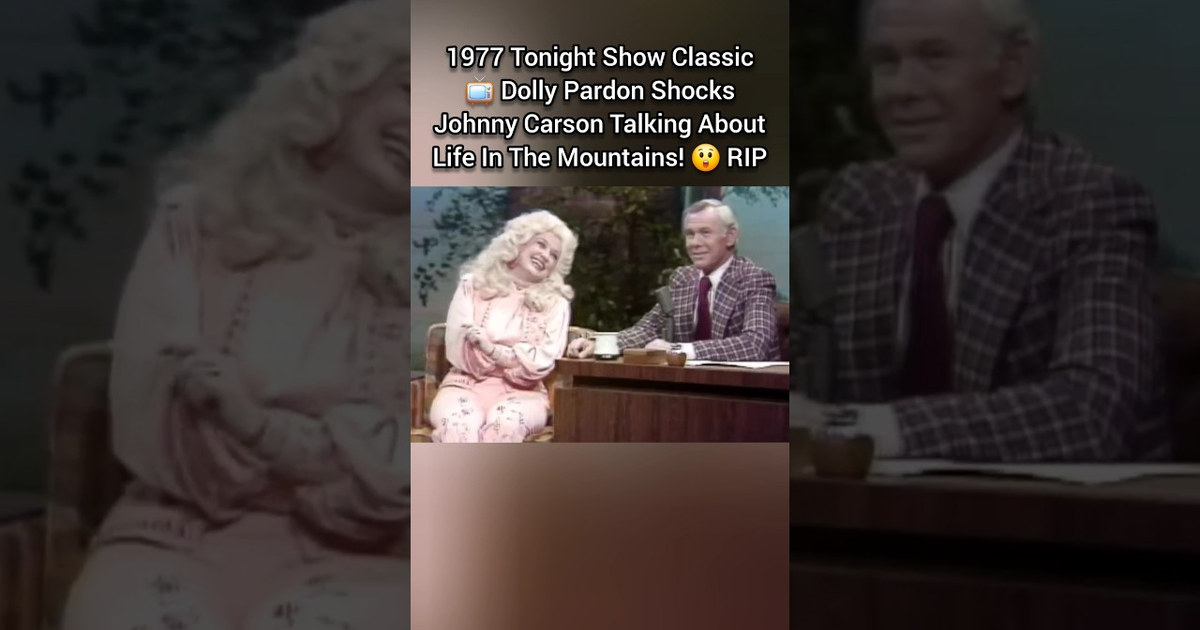
She says it plainly, almost offhand: married at 20, ten years in. The follow-up lands like a test — is it a myth that all young ladies from the mountains get married very young? Her answer doesn't flinch: "It is very true." Then the specifics start dropping. People married as young as 12. Her own mother at 14. First baby at 15. Her twelfth child at 35. One set of twins in the bunch. And her mother and daddy? Still young, still healthy. "That's just the way of life in the country."
That's not a vibe. That's a dataset.
I've spent a lot of my career behind a camera, often on second unit, which means I shoot the shots nobody puts in the trailer — the establishing stuff, the inserts, the coverage that has to be true even when the story is a lie. And I can tell you exactly where Hollywood goes wrong with the mountain South. It lights the hollows like a fairy tale and shoots the people like folklore. Fog rolling off a ridge at magic hour, a banjo somewhere off-frame, a jar of moonshine catching a practical. It's gorgeous. It's also a dodge. The real story isn't atmospheric. It's demographic. And this interview — a woman calmly reciting her family's birth and marriage math like she's reading a seed catalog — is the evidence that every Appalachian romance on film has been avoiding.
Run the canon and watch how consistently the movies reach for mood over numbers. John Boorman's Deliverance (1972, 109 minutes) gave us the most quoted mountain sequence in film history and almost none of its actual people — the locals are a threat, a punchline, or a dueling banjo. Maggie Greenwald's Songcatcher (2000, 109 minutes) is a love letter to balladry, and I mean that as a compliment, but it frames mountain women as vessels for old songs, not as women with twelve kids and a calendar. Debra Granik's Winter's Bone (2010, 100 minutes) gets closer than almost anyone — Jennifer Lawrence's Ree Dolly is a teenager carrying an adult's load — yet the film's gravity is crime and clan, not the marriage-and-birth arithmetic that produced the clan in the first place. John Hillcoat's Lawless (2012, 116 minutes) turns the Bondurant brothers into Prohibition-era myth, all backlight and blood. Ron Howard's Hillbilly Elegy (2020, Netflix, 116 minutes) aims for memoir and lands on melodrama, with Amy Adams and Glenn Close doing heavy lifting the script never earns. Five films, five decades, one shared blind spot: none of them would know what to do with a line like "she had her twelfth one when she was 35."
Here's the cinematographer's complaint, and I'll be technical about it because that's where the truth lives. When you light a mountain community like a fairy tale, you're making a choice with consequences. You backlight the fog with a 12K through a diffusion frame and you get halos. You dapple the porch with a cucoloris and you get nostalgia. You shoot faces at a 45-degree angle with a soft key and a warm practical and you get nobility — or you get menace, depending on the score. What you almost never get is ordinariness. Census-data ordinariness. The look itself is an argument: these people are timeless, therefore they are not like you, therefore you don't have to do the math. But the math is the story. Marriage at 20, ten years married, mother at 14, first baby at 15, twelfth child at 35, one set of twins. A script supervisor would flag that in a heartbeat — not because it's implausible, but because it's so specific it demands to be tracked. Hollywood doesn't track it. Hollywood fogs it.
And notice what the woman does with her own numbers. She doesn't perform tragedy. She doesn't perform triumph. She offers them as fact, then adds the kicker — her parents are still young and healthy — and closes with the only thesis she needs: "That's just the way of life in the country." That's a woman who has thought about this more than any screenwriter has. She knows the myth question is a trap, and she walks straight into it with a yes, because the myth and the truth happen to be the same thing here. The myth is that it's exotic. The truth is that it was ordinary. Films keep choosing exotic.
So let's do what the movies won't. Over the next three sections I'm going to treat this interview like production notes and break down exactly where the scripts fall apart. First, the age problem — why a 14-year-old bride and a 15-year-old mother break every three-act structure Hollywood owns, and why filmmakers quietly age characters up or cut them out. Second, the family math — twelve children by 35, one set of twins, and what that actually does to a household, a budget, and a shooting schedule. Third, the light — why the way these films are shot betrays the story they claim to be telling, and what a truthful frame would look like instead. Keep the interview in your head. Every number in it is a scene some movie decided not to shoot.
Body 1 — The Age Problem: Why 14 and 15 Break Every Screenplay
The interviewer says it back like a typo: “12?” One word, flat, disbelieving. The subject doesn’t flinch. “Uh-huh. Of course, that’s the girls that mature earlier.” Then the laughter comes — not cruel, not shocked, just the sound of a room where this math has always added up. That beat is the whole movie Hollywood refuses to shoot. Because if you put that exchange on screen, you can’t keep the camera at a safe distance. You have to get close, and close is where the age problem lives.


